3D printed car is as strong as steel, half the weight, and nearing production
March 1, 2013
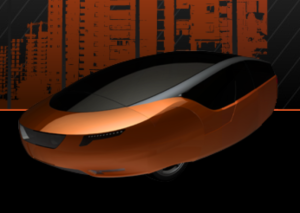
(Credit: Urbee)
Picture an assembly line not that isn’t made up of robotic arms spewing sparks to weld heavy steel, but a warehouse of plastic-spraying printers producing light, cheap and highly efficient automobiles.
If Jim Kor’s dream is realized, that’s exactly how the next generation of urban runabouts will be produced, Wired reports. His creation is called the Urbee 2 and it could revolutionize parts manufacturing while creating a cottage industry of small-batch automakers intent on challenging the status quo. ,,,
(More)
Comments (19)
by trakk
Makes even more sense in building ships (cargo ships) which i am guessing have fewer regulatory hurdles, with lighter weight saving greater amount of fuel compared to conventional cargo ships that are notoriously fuel inefficient.
by Cybernettr
Is 3D printed material really “as strong as steel” but “half the weight?” I would like to see proof of this.
by Bernard
The big question is whether cottage industry producers would be able to afford the bureaucratic safety standard tests that the government would insist on.
by Gorden Russell
You’re right, Bernard, they won’t be able to afford all the tests for safety, emissions, and mileage.
But if some Cal Tech students get together to print out a single car for their own use, will they still be required to pass all those tests? But will the state of California allow them to license it for the streets? Will they be able to get GEICO to insure the car?
The students will be reduced to driving the car on back streets late at night, and if they get stopped by the police, they will just jump out, abandon the car, and run in all directions.
by LivingMetal
How would governments stop people? Once self replicating 3D Printers become commonplace, there will be such a massive proliferation of them that there is no way any government could stop the people, even with massive surveillance systems. There will be mass replication of everything and anything and government will have to realize its too hard for them to over micromanage people and their lives.
by Khannea Suntzu
Ah, free markets at work, “corrected with your tax dollars”.
by Gorden Russell
I just checked out the link to the Wired magazine article. Here’s a quote:
“…he building process they perform is known as “lights out” construction, meaning Kor uploads the design for a bumper, walk away, shut off the lights and leaves. A few hundred hours later, he’s got a bumper. The whole car – which is about 10 feet long – takes about 2,500 hours.”
#
That divides out to 104.167 days, or 3.4722 months. So you could print out 3.456 cars a year.
This information is really changing my idea of colonizing the moon by printing out robots.
If it takes a few hundred hours to print out a bumper, how many hours for a robot? Four hundred, five hundred or six hundred?
One lunar day has 336 hours of sunlight to run the solar-powered printer. Maybe if they had one printer working on the shell, another on the frame (or skeleton), another on the motors and cables, and one last one making the electronics, then they could produce 12 robots a year.
But if those printers were fast enough to put out a robot and a complete new set of printers and the solar cells to power them, then you could double the number of robots every year.
That would make 24 robots the second year, 48 the third, 96 the fourth, and 192 the fifth. That might be enough to start excavating and building a small outpost including a factory for making the pillars and glass panels to enclose a crater in a dome.
So if just one bold venture capitalist can put one robot with the right number of printers on the moon by the end of this decade, then by A.D. 2025 the dome would be started.
So just how long would 192 robots take to dome over a crater the size of the Superdome?
Let me go search out just how long the Superdome took to go up.
by Gorden Russell
Okay, here it is from Wikipedia:
“…construction did not start until August 11, 1971, and was not finished until August 1975…”
It didn’t say how many workers it took.
by Gorden Russell
Here’s something from Tulane University’s Southeastern Architectural Archive:
“After eight years of labor, employing over one thousand people, and costing over $163 million, the Louisiana Superdome…”
It’ll take seven years for 768 and eight years to print out 1536 robots.
by asiwel
Hi, Gordon. I love the idea of 3D printers too … but I just can’t (yet) get a grip around ideas like printing cars and robots. A bumper is a solid piece of block, carefully shaped, etc., yes but solid. Printing a bumper is NOT “printing a car.” A car is an assembly of parts, each with many other moving parts and electrical circuits, etc., made of thousands of substances and “fabricated.” They did not print the motor, cpu, etc. What is needed on the moon or in space is not just a printer but also a human or robot to assemble parts.
by ken
Could we get around that by “rebuilding” a car like frame off restoration. use and old frame and all composite body panels. new motor and drive train.
by gaoptimize
Would have happened sooner if GM and a number of other auto makers had been allowed to fail and been sold off in parts.
by Eldon J. Bloedorn
Hmmm? Why would destroying an auto maker create success?
by TG
Because failure leads to success. Mr. Eddison failed 10,000 times before he created the light bulb.
by Rob
Because GM makes cars people don’t want to buy; tying up capital, human and otherwise; which could be put to better use by smarter business leaders who make things that people want to buy. Raw materials are scarce and GM is wasting them. That’s how the free market moves things forward. Failures are allowed to fail and scarce resources are allocated to those who use them best.
by Shediac
So the banks should have been allowed to fail? How about the subsidized mega farms? Subsidized oil?
by Alex
If 3D printed cars take off, might the price of vehicles start going down…?
by Ian Clarke
No, the ability to fly would keep prices reasonably stable. ;-)
by Bri
I guess it depends if the bottom drops out of that market.