A roadmap for metabolic reprogramming of aging
December 4, 2012
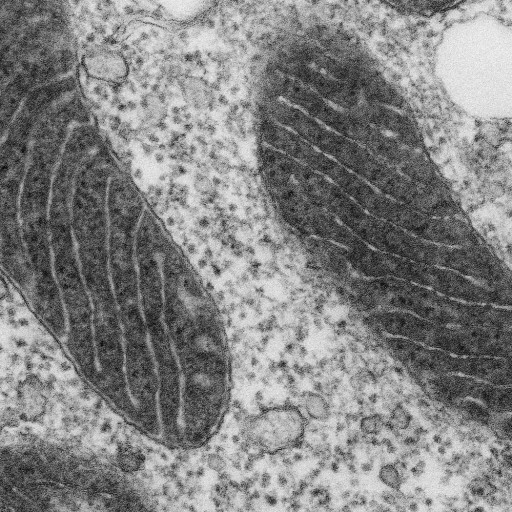
Electron microscope image of a mitochondrion (credit: Tom Deerinck and Jeff Martell/MIT)
To survey previously uncharted territory, a team of researchers at UW-Madison has created an “atlas” that maps more than 1,500 unique landmarks within mitochondria that could provide clues to the metabolic connections between caloric restriction and aging.
The map, as well as the techniques used to create it, could lead to a better understanding of how cell metabolism is rewired in some cancers, age-related diseases and metabolic conditions such as diabetes.
“It’s really a dynamic atlas for regulatory points in mitochondrial function — there are many interesting avenues that other scientists can follow up on,” says John Denu, University of Wisconsin-Madison professor of biomolecular chemistry and leader of the epigenetics theme at the Wisconsin Institute for Discovery (WID). “It could take years for researchers to understand what it all means, but at least now we have a list of the most important players.”
In previous experiments, it’s been shown that consuming less food increases the life span and health span in a range of organisms, from yeast and flies to mice and nonhuman primates. But pinpointing where and how caloric restriction affects cells at a molecular level remains the challenge.
So far, mitochondrial proteins, the molecules that command specific actions in the cell’s powerhouse organelle, are at center stage of metabolic reprogramming.
Denu and colleagues conducted earlier research on the mitochondrial protein Sirt3, where they suggested a link between Sirt3 and the benefits of caloric restriction in situations such as the prevention of age-related hearing loss.
Rewiring metabolism
The new research more broadly identifies pathways in mitochondria that could be behind the rewiring of metabolism. Their work uncovered regulatory processes that maintain mitochondrial health, control cells’ ability to metabolize fat and amino acids, and stimulate antioxidant responses. This rewiring involves the addition or removal of two-carbon (acetylation) chemical groups within regulatory molecules called proteins.
In the study, scientists looked at liver tissue from groups of mice — both with and without the ability to produce Sirt3. Some received a calorically restricted diet and some did not. After one year, they compared protein and acetylation changes among the groups of mice. They found Sirt3 was essential for many of the metabolic adaptations that occur during calorie restriction. These results suggest that therapies, including diet or drugs that enhance Sirt3 function, might provide novel interventions to fend off age-related illnesses.
Joshua Coon, professor of chemistry and biomolecular chemistry at UW-Madison and co-author of the paper, crafted a new technique to find these molecular sites. While the genome plays a key role in an organism’s health, he points out that studying proteins — the molecular machines that carry out an organism’s original genetic instructions — can be more accurate in revealing how a gene functions.
“We’ve taken dozens of primary tissues and profiled their protein content with depth to learn how they vary,” Coon says. “With that information, we have direct knowledge at the molecular level of how an organism is dealing with adaption to diet, or potentially, a given disease state.”
He says using mass spectrometry to look for acetylated proteins from tissue samples is a more fruitful approach to identifying relevant physiological changes. The study, he says, is one of the first of many that will create descriptive maps for other disease models.
To expand access to these enabling technologies across campus, Coon plans to launch the Wisconsin Center for Collaborative Proteomics in 2013. The center has received significant support from the UW and is pending further support via federal funding.