Brussels wants e-identities for EU citizens
May 24, 2012 | Source: Euractiv
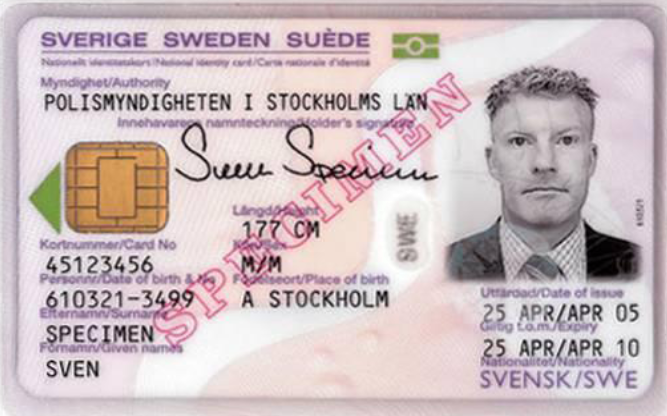
Ihre Papiere, bitte! One concept for an eID card. (Credit: Bruno Rouchouze/EUROSMART eID Working Group)
The European Commission plans legislation that would make electronic IDs compulsory.for all Europeans.
Neelie Kroes, the EU’s Digital Agenda Commissioner, will present by the beginning of June a new legislative proposal which aims “to facilitate cross-border electronic transactions” through the adoption of harmonized e-signatures, e-identities and electronic authentication services (eIAS) across EU member states, according to an internal document seen by EurActiv.
“A clear regulatory environment for eIAS would boost user convenience, trust and confidence in the digital world,” reads the paper. “This will increase the availability of cross-border and cross-sector eIAS and stimulate the take up of cross-border electronic transactions in all sectors.”
Brussels has long been trying to facilitate the emergence of a parallel system of electronic identification, on top of the the real-world existing documents. This has mainly been linked to the struggle for establishing a truly functioning single market, rather than on security grounds.
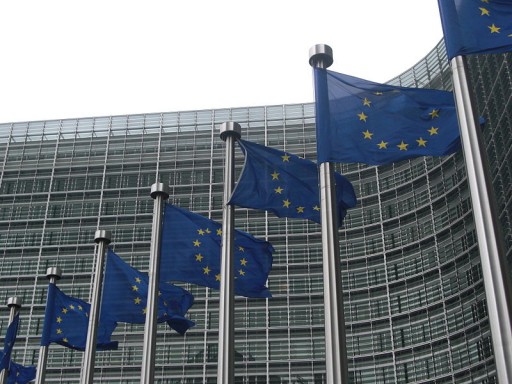
European Union über Alles (credit: Sébastien Bertrand/Wikimedia Commons)
Resistance from member states
Despite the EU’s efforts to increase the security of e-signatures and the confidence in the emergence of virtual identities, citizens and governments have been slow to adopt electronic IDs.
Indeed, e-signatures are still confined to a few sectors, such as universities, while most EU nations have not yet introduced electronic identity cards.
Even if chip-embedded passports are becoming the norm across Europe, e-ID cards have been adopted in only in a handful of countries — Belgium, Estonia, Germany, Italy and the Netherlands. But there is no common system of mutual recognition among states using electronic IDs.
Perhaps more frustrating for the European Commission is that some member states like the United Kingdom do not even have paper identity cards, and the idea of adopting them causes widespread public opposition.
The UK briefly introduced ID cards during the second world war but abolished them afterwards. The use that the Nazi regime made of identity documents to single out Jewish people and send them into concentration camps has been a powerful argument against introducing ID documents across the Channel.
When Tony Blair’s Labor government discussed the idea of ID cards, a citizen movement sprang up overnight to block the plans.
The plan, to be unveiled in the coming days, is even more ambitious than the Commission’s previous legislative attempt, as Brussels now wants to extend the electronic authentication to a number of services, beyond e-signatures, “like electronic seals, time/date stamps, etc,” reads an internal paper prepared by Kroes’ cabinet.
Data theft
Kroes’ success is far from guaranteed. The concept of an electronic identity has in recent years been mainly associated with risks of identity theft and virtual fraud.
Officials say it is paramount that robust security mechanisms are put in place to guarantee the adoption of new electronic services. Justice Commissioner Viviane Reding has already suggested amending Kroes’ proposal to strengthen its data-protection obligations.
Among other things, Reding wants a 24-hour data breach notification to be part of the new regulation. If electronic identities are stolen or risk being wrongly used by non-authorized parties, the owners should be made aware of the data breach within 24 hours, argues the commissioner’s cabinet in an internal document seen by EurActiv.
Comments (10)
by Mr.x
Whats the use of the German under the pictures?Especially since it is taken out of context- the ‘über alles’ signified the wish of some of the German people to unify into common nation state.The song it belongs to was written in 1841!
Maybe you folks should take an honest look at your own countries (uk: video surveillence everywhere; usa: homeland security, patriot act, mandatory blackboxes in cars, abu ghraib, guantanamo, endless wars).If you do so you will find that English would be much more fitting.I guess my comment will be deleted soon.
@SingularityUtopia: The sooner the USA collapses the better. Thankfully the general situation indicates the USA could crumble sooner rather than later. US bigwigs are useless bureaucrats with no genuine desire to improve the world. They have become carried away with their overinflated self-importance.
You see how ridiculous that sounds? Every country/institution wants to improve the world as long as doing is aligned with their own (perceived) interest.
@Gaoptimize:Fortunately, the Constitution and the SCOTUS would protect Americans from this, for now. It is unnecessary anyway.
Sure. And who protects the rest of the world from the Americans?
by someone from europe
The German text is an obvious reference is to Germany’s reputation as being an overly bureaucratic state, and not Nazi Germany. No papers, nothing happens… and there are a whole lot of papers at that!
by Mr.x
@Someone from europe: Yeah obviously.That’s why the underlining of the second picture says “EU over everything”. Maybe you should try not to jump to conclusions (your wording: “obvious reference”). By the way, this is an American website, therefore I think it unlikely to refer to European clichés.As everyone who has visited the USA can attest, it is a faily bureaucratic state itself, as are most bigger, relatively successfull states.Since you could not read the underlining, are from Europe and complain about bureaucracy in other countries I take it that you are probably from one of those European fringe states or non-eu states (e.g Norway,Swiss).In the first case your country has rather interesting stats in other fields, in the second it is not comparable because of size (small) and economic factors (Swiss banking, Norwigian oil).
If we love bureaucracy and surveillance that much, how can you explain this: http://www.dw.de/dw/article/0,,15988514,00.html.
by Giulio Prisco
@Peter Simmons – I wanted to add something, but you have said it very clearly.
I am euroskeptic but not a hardline anti-EU. I think the EU could have a useful role to play, but the problems you mention should be solved first. I have come to consider the (current) EU as one of the main problems of our continent.
by Peter Simmons
The EU is the creation of the European political class, and serves that class. As with all government, it grows constantly, interfering in our lives in more and more ways, and then charging us for the costs of doing so! A giant bureacracy which now has a life of its own and a desire to constantly grow, just like capitalism. It serves no one but those who do very nicely out of it. It’s another robber barons setup, they call it democracy but it’s still robbery.
by Tasha
Well, eIDs are great. But haters will hate.
by Tiago
Portugal also has chipped id cards (since 2008)
by Singularity Utopia
The sooner the EU collapses the better. Thankfully the Greece situation indicates the EU could crumble sooner rather than later. EU bigwigs are useless bureaucrats with no genuine desire to improve the world. They have become carried away with their overinflated self-importance. The world is bigger than the EU thus any EU enforced identity regime would be ineffectual in our global era because not everyone would be forced to comply. Furthermore criminals will easily subvert any safety/security measures (#LuzSec) thus safety/security measures merely inconvenience normal people via needless bureaucracy and diminished freedom.
by gaoptimize
Nigel Farage, is that you? In any case, a growing number of people agree with you and me about the EU. Fortunately, the Constitution and the SCOTUS would protect Americans from this, for now. It is unnecessary anyway. There are creative ways to use cryptography and trust networks to solve this problem without a potentially tyrannical central authority.
by EM
This may soon come to pass in New York. Does anyone have any faith that the SCOTUS will do the right thing and overturn it?