Copper-gold nanoparticles convert CO2, may reduce greenhouse gas emissions
April 12, 2012
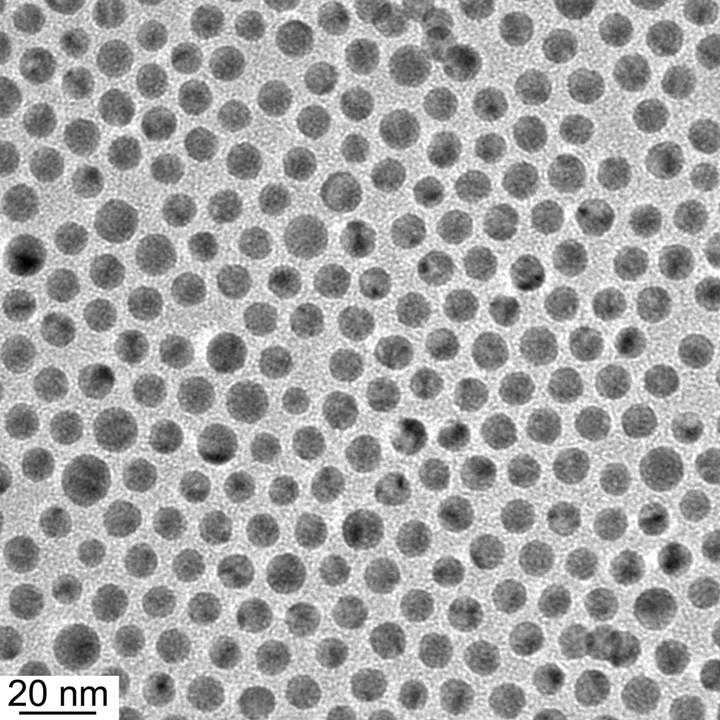
MIT researchers have come up with a way to reduce the energy needed for copper to convert carbon dioxide: nanoparticles of copper mixed with gold.
They coated electrodes with the hybrid nanoparticles and found that much less energy was needed for these engineered nanoparticles to react with carbon dioxide (converting it to methane or methanol), compared to nanoparticles of pure copper.
Kimberly Hamad-Schifferli of MIT’s Hamad-Schifferli Group says the findings point to a potentially energy-efficient means of reducing carbon dioxide emissions from powerplants.
A paper detailing the results will appear in the journal Chemical Communications.
Background
Copper — one of the few metals that can turn carbon dioxide into hydrocarbon fuels with relatively little energy — when formed an electrode and stimulated with voltage — acts as a strong catalyst, setting off an electrochemical reaction with carbon dioxide that reduces it to methane or methanol.
Various researchers around the world have studied copper’s potential as an energy-efficient means of recycling carbon dioxide emissions in powerplants. Instead of being released into the atmosphere, carbon dioxide would be circulated through a copper catalyst and turned into methane, which could then power the rest of the plant.
Such a self-energizing system could vastly reduce greenhouse gas emissions from coal-fired and natural-gas-powered plants.
But copper is temperamental: easily oxidized, as when an old penny turns green. As a result, the metal is unstable, which can significantly slow its reaction with carbon dioxide and produce unwanted byproducts such as carbon monoxide and formic acid.

Comments (5)
by qwe
violates thermodynamics. how does this save emissions? it takes extra energy to convert c02 to methane in the first place, we arent building perpetual motion machines.
by Ahrenius
The methane produced from the coal-to-electricity plant shpuld be consumed on-site at the power plant and not transported for burning elsewhere. Converting the carbon dioxide into methane and then using methane to generate electricity would result in, say, 1.75 times the amount of electricity generated from each unit of carbon dioxide emitted IN A ONCE-THROUGH process. Of course, the carbon dioxide from the methane burn could also be processed back to methane over and over resulting in a theoretical ZERO carbon emission. The biggest economic roadblock to be overcome is the sourcing and cost of the hydrogen required to produce methane from carbon dioxide.
by Ray Rich
If you used methane as a combustion source it would indeed create CO2. To be useful the energy difference between the power needed to create Methane from CO2 and the btus created with have to be net positive. Good stuff for the future the problem lies with how to remove the methane safely from the reaction. Perhaps it would need to be at cryogenic temperatures.
by Lord Penguin
If the methane produced was used as fuel, wouldn’t it just create more carbon dioxide? And the energy released would be less than what was put into it electrically. Unless I’m overlooking something, this would mostly just be useful for providing methane which can be transported or used for other purposes, rather than helping out environmentally.
by SWP
Only if the process was reused. All the captured methane can give off CO2, which can be converted back into methane, but a portion of the energy would be lost every time if the process was converted again and again. However, run it in conjunction with other fuel sources, and the amount of methane increases each time, compensating for the energy loss, and creating more energy than is put in, while still having the traditional fuel source to back it up. However, I’m more concerned about the cost of the copper, which has been steadily rising…