DARPA seeks 2000 percent increase in robot power transmission efficiency
July 6, 2012
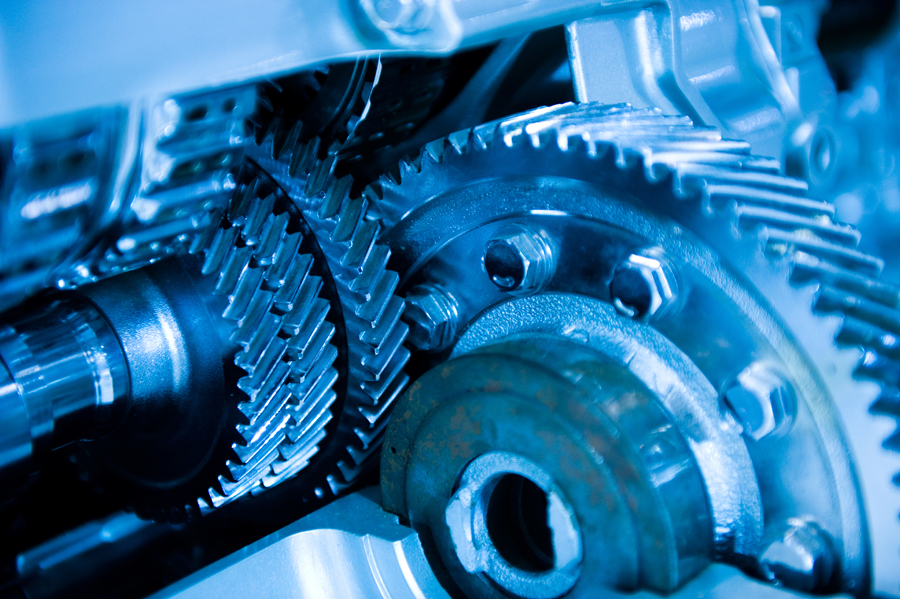
DARPA seeks revolutionary advances in the efficiency of robotic actuation; fundamental research into biology, physics and electrical engineering could benefit all engineered, actuated systems.
DARPA has created the M3 Actuation program, with the goal of achieving a 2,000 percent increase in the efficiency of power transmission and application in robots, to improve performance potential.
A robot that drives into an industrial disaster area and shuts off a valve leaking toxic steam might save lives. A robot that applies supervised autonomy to dexterously disarm a roadside bomb would keep humans out of harm’s way. A robot that carries hundreds of pounds of equipment over rocky or wooded terrain would increase the range warfighters can travel and the speed at which they move.
But a robot that runs out of power after ten to twenty minutes of operation is limited in its utility. In fact, use of robots in defense missions is currently constrained in part by power supply issues.
Humans and animals have evolved to consume energy very efficiently for movement. Bones, muscles and tendons work together for propulsion using as little energy as possible. If robotic actuation can be made to approach the efficiency of human and animal actuation, the range of practical robotic applications will greatly increase and robot design will be less limited by power plant considerations.
M3 Actuation is an effort within DARPA’s Maximum Mobility and Manipulation (M3) robotics program, and adds a new dimension to DARPA’s suite of robotics research and development work.
“By exploring multiple aspects of robot design, capabilities, control and production, we hope to converge on an adaptable core of robot technologies that can be applied across mission areas,” said Gill Pratt, DARPA program manager. “Success in the M3 Actuation effort would benefit not just robotics programs, but all engineered, actuated systems, including advanced prosthetic limbs.”
Proposals are sought in response to a Broad Agency Announcement (BAA). DARPA expects that solutions will require input from a broad array of scientific and engineering specialties to understand, develop and apply actuation mechanisms inspired in part by humans and animals. Technical areas of interest include, but are not limited to: low-loss power modulation, variable recruitment of parallel transducer elements, high-bandwidth variable impedance matching, adaptive inertial and gravitational load cancellation, and high-efficiency power transmission between joints.
Research and development will cover two tracks of work:
- Track 1 asks performer teams to develop and demonstrate high-efficiency actuation technology that will allow robots similar to the DARPA Robotics Challenge (DRC) Government Furnished Equipment (GFE) platform to have twenty times longer endurance than the DRC GFE when running on untethered battery power (currently only 10-20 minutes). Using Government Furnished Information about the GFE, M3 Actuation performers will have to build a robot that incorporates the new actuation technology. These robots will be demonstrated at, but not compete in, the second DRC live competition scheduled for December 2014.
- Track 2 will be tailored to performers who want to explore ways of improving the efficiency of actuators, but at scales both larger and smaller than applicable to the DRC GFE platform, and at technical readiness levels insufficient for incorporation into a platform during this program. Essentially, Track 2 seeks to advance the science and engineering behind actuation without the requirement to apply it at this point.
While separate efforts, M3 Actuation will run in parallel with the DRC. In both programs DARPA seeks to develop the enabling technologies required for expanded practical use of robots in defense missions. Thus, performers on M3 Actuation will share their design approaches at the first DRC live competition scheduled for December 2013, and demonstrate their final systems at the second DRC live competition scheduled for December 2014.
Full details of the program and instructions on how to prepare and submit proposals are provided in the BAA, which is available on the Federal Business Opportunities website.

Comments (17)
by JonD
Combine a Tesla turbine with the concept of a Casimir effect MHD propagational array. If the frequency PWM is properly coupled, to pump each cavity as a slab MASER which resonates in each slot, …it should be able to be variably tuned, and could couple extreme power from one node to the next with low loss. Now, if the Tesla turbine fins are tilted, you’ll get different ellipses in resonance, thus different ratios of coupling. That is a practical use of zero-point. Comments?
by Chrispium
You could have been a writer for Star Trek, they also always used a lot of techno gibberish. :)
Might you be a believer in Free Energy too?
by Bri
Anyone ever hear of the Papps noble gas engine. He was demonstrating it to Caltec, when Richard Feyman was around. Rich thought it was a fraud. During the demo, he noticed a power cord going to the control console. He unpluggd stand Papps flew into a rage. Moments later the engine blew up. Someone died from the shrapnel. Papps sued Caltec. The police and Caltect could find no evidence of fraud ,or explosives, so Papps was never charged with involuntary manslaghter. Caltect settled out of court. As far as I know this story is true. The engine was demonstrated for all the major car manufacturers. It needed no air, and only needed to be charged with noble gases. From the videos on UTube you can see the whole story. Could easily be a hoax, but it sounds very intriging. Another big one that makes me scratch my head is the coral palace. I’m not weak. I’ve cut down trees, and I love rock hounding. Love to carve, and I’ve carved stone. What that man did by himself is impossible. He was a ninety pound weakling I could have crushed him with a heavy glance. To request from the trucker, that he goes away while this stick of a man, quickly loads up stone blocks that weigh tons, more than indicates he knew some trick. The two little local girls who saw him moving the stones at night, said that they just floated. He played with electrical devices. Wrote a almost incomprehensible book on electromagnetism. Just makes you wonder! Any of you know of the John Hutcheson effect?
by Gorden Russell
Bri, it was a good guess (years ago) that he used a block and tackle on a tall tripod to lift a block, swing it a bit with a push, then drop it and move the tripod a little bit and keep on lifting, pushing, swinging and droping.
That’s a better guess than levitation.
by Bri
Like I said, have you ever tried to do that? I have, with things much lighter than tons. Go ahead and try. Then after doing that, think of the magnitude of his palace. Don’t forget he weighed ninety pounds and had health problems since childhood. I’d bet you would be exhausted just setting up the block and takle necessary to lift it, let alone set the attachment points. Your talking about tons of rock. Many of the machine in my shop weigh hundreds of pounds. As I said, I’ve got blocks and tackle, rollers and prie bars. I’m six ft one, about two hundred pounds. In my job, I have to move cabinetry and plywood sheets all day. My doctor remarked how strong my fore arms are. Till you’ve tried for your self, you just don’t realize how monumental the task is. The real kicker is his experiments and writings. The last of which he destroyed. The largest thing I tried to move was a boulder. It probably weighed about one ton. It sounds easy, but it’s not!
by Bri
Don’t take me the wrong way. I’d like to here rebuttles. If I’m wrong I will admit it, and I have no intrest in stifling someone else’s opinion. I didnt evoke levitation, the little girls who saw him at night did. I’m sure they got grief for saying that. If they saw him with a tripod, rope,block and tackle, you’ld expect them to say that. The block and tackle would have to have quite a few loops to reduce the weigh down to his ninety pound maximum force. The poles of the tripod would have to be strong enough not to flex under that weight. I think the largest block he move was around nine tons. He also performed the work in a relatively short time, when he was forced to move the place. All by himself. Anyway I posted this because it’s a stretch for DARPA to ask for a 2000 percent increase. I’m more curious as to what other peoples responce’s might be.
by BJ
Who knows for sure!
Maybe free energy/cold fusion/ warp drive are possible!
by Gorden Russell
But JonD, “Zero-Point Fluctuations and Cosmological Constant” just don’t apply to Afghanistan. The place is already a natural power vacuum.
by Snake Oil Baron
While exoskeletons will help soldiers carry heavier weapons, more ammo, more supplies and such and robot mules (wheeled and legged) will help squads keep more equipment on hand, I wonder if humanoid robots may be used for non-combat roles long before they become weaponized. Having them work as labour and construction assistants so that infrastructure could be assembled in dangerous territory with fewer humans preoccupied and more humans in protection roles. Designing them as a human assistant for non-combat roles in a combat zone might be simpler intermediate challenge than creating a humanoid soldier right out of the gate.
by Spikosauropod
Clearly, the real iron man will be synthetic to the core.
by Bri
When DARPA was asking, “what science fiction tech would you like to see most”" they were hoping that we’d say Iron Man or captain America, they are very close to those. It’s just that darn energy source problem. Human operators of exoskeleton has been on their radar for quite a while. Not faster than light speed. But if you believe in Roswell maybe yes!
by Gorden Russell
Hey GatorALLin…I just discovered a new book:
How to survive a robot uprising : tips on defending yourself against the coming rebellion
by Wilson, Daniel H. (Daniel Howard), 1978-
by Gorden Russell
DARPA is already planning for the next time…the time we have to go back to Afghanistan. Next time they won’t be blowing up human soldiers.
by David Fuchs
If they are talking about limb motion then either, spring load the limbs around a central axis, or recapture the energy via the motor used to drive it.
by GatorALLin
…..skynet thanks you for your service….. (grin)
by Hudi124
This is very important work they are doing here, and the technological advances DARPA makes will surely aid progress in consumer robotics.
by eldras
Americans are brilliant!
What DARPA requests it usually gets.