Experts declare ‘cyber war’ on cancer’s ‘social networking’
September 5, 2012
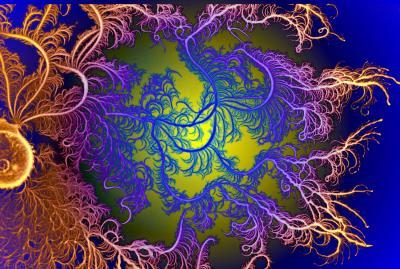
Social bacteria: this colony of bacteria contains pioneer cells that pave the way for colony expansion in the same way that specialized cancer cells prepare for metastasis.(credit: Eshel Ben-Jacob/Tel Aviv University)
In the face of mounting evidence that cancer cells communicate, cooperate and even engage in collective decision-making, biophysicists and cancer researchers at Rice University, Tel Aviv University and Johns Hopkins University are suggesting a new strategy for outsmarting cancer through its own social intelligence.
“We need to get beyond the notion that cancer is a random collection of cells running amok — these cells lead sophisticated social lives,” said Herbert Levine, co-director of Rice’s Center for Theoretical Biological Physics (CTBP) and co-author of the cover article in this week’s Trends in Microbiology that pulls together dozens of recent discoveries about the social behavior of cancer cells.
“Cancer is a sophisticated enemy,” said article co-author Eshel Ben-Jacob, a senior investigator at Tel Aviv University. “There’s growing evidence that cancer cells use advanced communications to work together to enslave normal cells, create metastases, resist drugs and decoy the body’s immune system.”
Ben-Jacob, Levine and Donald Coffey, a noted cancer researcher at Johns Hopkins, suggest that cancer researchers act like modern generals and go after their enemy’s command, control and communication capabilities.
“It’s time to declare a cyber war on cancer,” said Ben-Jacob, who, along with Coffey, spoke this week at a workshop titled “Failures in Clinical Treatment of Cancer” at Princeton University.
Conspiratorial cancer cells
Ben-Jacob said cancer cells have been shown to cooperate to elude chemotherapy drugs, much like bacteria that communicate and act as a team to resist attacks from antibiotics. He said some cancers appear to sense when chemotherapy drugs are present and sound an alarm that causes cells throughout a tumor to switch into a dormant state. Similar signals are later used to sound the “all clear” and reawaken cells inside the tumor.
“If we can break the communication code, we may be able to prevent the cells from going dormant or to reawaken them for a well-timed chemotherapeutic attack,” Ben-Jacob said. “This is just one example. Our extensive studies of the social lives of bacteria suggest a number of others, including sending signals that trigger the cancer cells to turn upon themselves and kill one another.”
The article cites numerous examples of similarities between the behavior of bacterial colonies and cancerous tumors.
“The parallels between the communal behaviors of bacteria and cancer cells suggest that bacteria can serve as a valuable model system for studying cancer,” said Coffey, professor of urology, oncology, pathology and pharmacology and molecular sciences at the Johns Hopkins University School of Medicine. “We believe this approach could be particularly valuable for investigating intractable problems like metastasis, relapse and multiple drug resistance.”
Levine, Rice’s Karl F. Hasselmann Professor in Bioengineering, and fellow CTBP co-director José Onuchic were recruited to Houston last year, thanks in part to a grant from the Cancer Prevention and Research Institute of Texas (CPRIT) that was designed to spur new thinking about cancer and foster collaborations between CTBP scientists and cancer specialists in the Texas Medical Center.
“This opinion article reflects the multidisciplinary strategy of the CTBP — to communicate and work together with researchers across disciplines for solving the biomedical challenges of our time,” said Onuchic, Rice’s Harry C. and Olga K. Wiess Professor of Physics and Astronomy and professor of chemistry.
Ben-Jacob, the Maguy-Glass Chair in Physics of Complex Systems and professor of physics and astronomy at Tel Aviv University, worked previously with Levine and Onuchic on a number of groundbreaking studies about the underlying biophysics of bacterial social behavior. He joined Rice University this summer as senior investigator of the CTBP and adjunct professor of chemistry and cell biology.