‘Fountain of youth’ technique rejuvenates aging stem cells
November 29, 2012
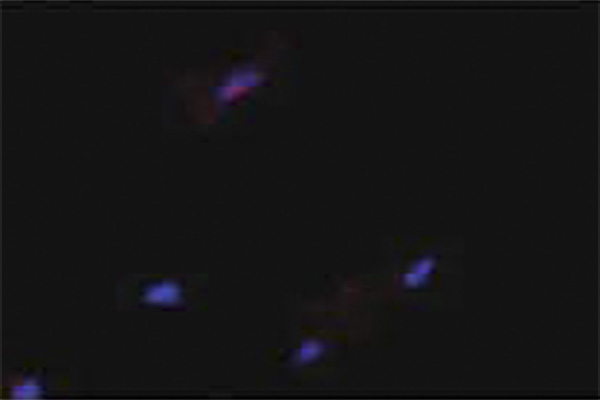
An aged stem cell before growth factors were added (credit: Faculty of Medicine/University of Toronto)
A new method of growing cardiac tissue is teaching old stem cells new tricks.
The discovery, which transforms aged stem cells into cells that function like much younger ones, may one day enable scientists to grow cardiac patches for damaged or diseased hearts from a patient’s own stem cells — no matter what age the patient — while avoiding the threat of rejection.
Stem cell therapies involving donated bone marrow stem cells run the risk of patient rejection in a portion of the population, says Milica Radisic, Canada Research Chair in Functional Cardiovascular Tissue Engineering at the Institute of Biomaterials and Biomedical Engineering (IBBME) and Associate Professor in the Department of Chemical Engineering and Applied Chemistry at the University of Toronto.
One method of avoiding the risk of rejection has been to use cells derived from a patient’s own body. But until now, clinical trials of this kind of therapy using elderly patients’ own cells have not been a viable option, since aged cells tend not to function as well as cells from young patients.
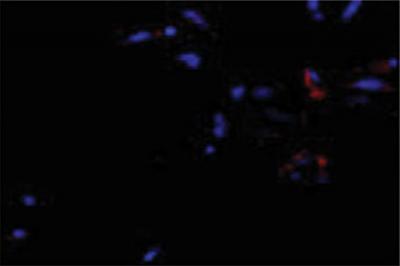
An aged stem cell after growth factors were added (credit: Faculty of Medicine/University of Toronto)
It’s a problem that Radisic and her co-researcher, Dr. Ren-Ke Li, think they might have an answer for: by creating the conditions for a “fountain of youth” reaction within a tissue culture.
Li holds the Canada Research Chair in Cardiac Regeneration and is a Professor in the Division of Cardiovascular Surgery, cross-appointed to IBBME. He is also a Senior Scientist at the Toronto General Research Institute.
Radisic and Li first create a “micro-environment” that allows heart tissue to grow, with stem cells donated from elderly patients at the Toronto General Hospital.
The cell cultures are then infused with a combination of growth factors — common factors that cause blood vessel growth and cell proliferation — positioned in such a way within the porous scaffolding that the cells are able to be stimulated by these factors.
Dr. Li and his team have tracked the molecular changes in the tissue patch cells. “We saw certain aging factors turned off,” says Li, citing the levels of two molecules in particular, p16 and RGN, which effectively turned back the clock in the cells, returning them to robust and healthy states.
Li and Radisic hope to continue their goal to create the most effective environment in which cells from older patients can be given new life. “We can create much better tissues which can then be used to repair defects such as aneurysms,” Li says, as well as repairing damage caused by heart attacks.