Fuel from waste, poised at a milestone
November 15, 2012
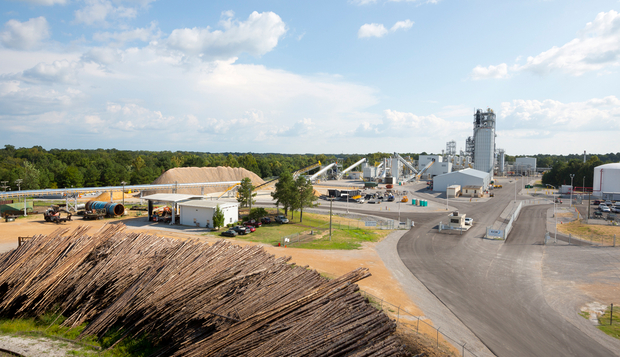
Pine trees being prepared for conversion into cellulosic gasoline and diesel fuels at KiOR’s Columbus, Miss., plant. The company has lined up three buyers. (Credit: Ken Childress for KiOR)
So far, alternative fuels from waste have not moved beyond small pilot plants, despite federal incentives to encourage companies to develop them. That could be about to change, The New York Times reports.
Officials at two companies that have built multimillion-dollar factories say they are very close to beginning large-scale, commercial production of these “cellulosic biofuels,” and others are predicting success in the months to come.
KiOR‘s process removes the oxygen from the biomass and converts the other main ingredients, hydrogen and carbon, into molecules that can then be processed into gasoline and diesel fuel.
Ineos, a European oil and chemical company, is putting the final touches on a plant in Vero Beach, Fla., that would cook wood and woody garbage until they broke down into tiny molecules of hydrogen and carbon monoxide. Those molecules would be pumped into a giant steel tank, where bacteria would eat them and excrete ethanol.
Abengoa, a Spanish firm, has been running a pilot plant in Salamanca, Spain, and in June 2011, broke ground on a $350 million commercial plant in Hugoton, Kan., that is now 50 percent complete, according to Manuel Sanchez Ortega, the chief executive. It is currently slated to open in the third quarter of next year and is supposed to make 25 million gallons of ethanol a year from agricultural waste, wood waste and nonfood crops.
The holy grail is to find a way to profitably make renewable fuels from otherwise wasted biomass, as opposed to valuable food crops.
“If we can do it with biomass, then there is no more discussion of food versus fuel; it’s over,” Mr. Ortega said.