High-carb foods associated with cognitive impairment: Mayo Clinic study
October 17, 2012

People 70 and older who eat food high in carbohydrates have nearly four times the risk of developing mild cognitive impairment, and the danger also rises with a diet heavy in sugar, Mayo Clinic researchers have found.
Those who consume a lot of protein and fat relative to carbohydrates are less likely to become cognitively impaired, the study found.
Researchers tracked 1,230 people ages 70 to 89 who provided information on what they ate during the previous year. At that time, their cognitive function was evaluated by an expert panel of physicians, nurses and neuropsychologists. Of those participants, only the roughly 940 who showed no signs of cognitive impairment were asked to return for follow-up evaluations of their cognitive function.
About four years into the study, 200 of those 940 were beginning to show mild cognitive impairment, problems with memory, language, thinking and judgment that are greater than normal age-related changes.
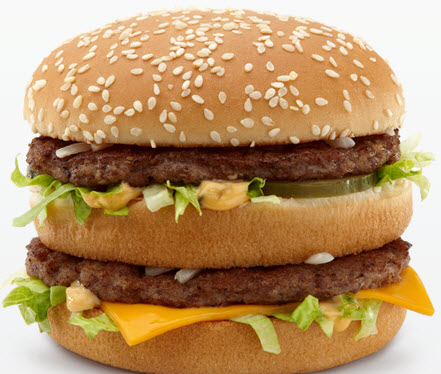
Those who reported the highest carbohydrate intake at the beginning of the study were 1.9 times likelier to develop mild cognitive impairment than those with the lowest intake of carbohydrates. Participants with the highest sugar intake were 1.5 times likelier to experience mild cognitive impairment than those with the lowest levels.
But those whose diets were highest in fat — compared to the lowest — were 42 percent less likely to face cognitive impairment, and those who had the highest intake of protein had a reduced risk of 21 percent.
When total fat and protein intake were taken into account, people with the highest carbohydrate intake were 3.6 times likelier to develop mild cognitive impairment.
“A high carbohydrate intake could be bad for you because carbohydrates impact your glucose and insulin metabolism,” says lead author Rosebud Roberts, M.B., Ch.B., a Mayo Clinic epidemiologist.. “Sugar [glucose] fuels the brain — so moderate intake [of carbs] is good. However, high levels of sugar may actually prevent the brain from using the sugar — similar to what we see with type 2 diabetes.”
The study was funded by the NIH’s National Institute on Aging.


Comments (31)
by Mr.X
Well, my rather low-carb could be the reason for my relative genius?Or was it madness?Anyway, I’m informed the majority of me is for calling it genius.Right now, I’m a democracy.
by JC
Great article! Hoping you will show pictures of nuts and seeds next time this kind of result emerges from a study. They are wayyyy better to eat than meat.
http://nutritiondata.self.com/facts/nut-and-seed-products/3085/2
by deadalus
correct me if im wrong, but isint mayo a high source of carbs too? (teehee)
by Editor
Yes, hold the mayo
by carole293@gmail.com
mayo has no carbs unless it’s the low fat kind
by Editor
Hold the hold!
by Sarah
I find it extremely difficult to take ANY study seriously, who uses pictures of bacon and steaks for their protein sources, and pictures of french fries and ice cream for their carbohydrate sources. Submit a study with something other than ‘fast food’, and then I’ll read it! By the way, I didn’t see anything about the participants eating fresh produce items, nuts, seeds, legumes, lean animal proteins or the like. I don’t think anyone can subsist on a diet of burgers, fries and ice cream, with, or without, the bun on the Big Mac!
by Editor
The news items on our website are original content written by me, not by outside organizations (the Mayo Clinic, in this case), although I use statements from outside organizations as source materials. I selected the pictures in this case (they were not provided by the Mayo Clinic) to dramatize the story for non-scientists. As noted in the study abstract (see http://dx.doi.org/10.3233/JAD-2012-120862), “Participants … completed a 128-item food-frequency questionnaire at baseline; total daily caloric and macronutrient intakes were calculated using an established database. The percent of total daily energy from protein (% protein), carbohydrate (% carbohydrate), and total fat (%fat) was computed.” I would recommend reading the actual study if you would like a fuller explanation of the methods and findings.
by Danica
Is there a way to read the abstract without paying $27.50? I created an “individual” account with IOS Press, hoping to read it as you suggested, but I surely cannot afford the $27.50. My husband and his family have Huntington’s Disease, and I am very interested in the technical details. Thank you.
by Editor
Danica, I suggest you request a copy of the paper from the Mayo Clinic. Their contact information is shown in their press release: http://www.mayoclinic.org/news2012-rst/7128.html (the abstract portion of the paper is available free here: http://dx.doi.org/10.3233/JAD-2012-120862).
by high carbfoods
Interesting article. It is prudent, in my opinion, to balance benefit versus risks and there should be a govt. mechanism in place to assure safety of foods newly introduced or routinely consumed. This is an important duty of govt. I think blocking all regulations is nationally unhealthy, for who is going to be the watchdog. Secondly, the illness cost have to be borne by the public and or the govt.
by Stew Meats
Oh, you…
by Afflicted
I will be the watchdog of my diet thank you very much. Gov’t telling free people what to eat is oxymoronic. We cannot be free if we do not control the most simple part of our human existence. The illness cost should be borne to the person who is responsible for their health, themselves.
by harrybrowne
Amen to that.
by Chrispium
You do understand the purpose of advertising is to take away your free choice right?
by Laura C.
‘course it’s the gov’t that been telling us, not coincidentally since the onset of the obesity epidemic, that we should eat 6-11 servings of carbs a day and cut way back on fat. That’s worked out well. (Hint — gov’t, that is, bureaucrats, have a huge incentive to protect even bad science since it keeps their funding stream going and they aren’t — unlike people in the private sector — held accountable if they are wrong.)
by Dee3141
What obesity epidemic. Isn’t an epidemic something to do with a medical condition? Not just a bunch of people who eat too much and don’t exercise enough. Yeah, yeah, I know, maybe as many as 5% of the the fatties do have a medical condition.
by Jos Smit
So when we eat ‘a lot of carbon hydrates relative to proteine and fat’ we become “cognitively impaired” (whatever that means, my native language is not english). Everybody who reads Ray Kurzweil’s writings knows eating ‘a lot of proteine and fat relative to carbon hydrates’ gives you a heart desease. So eating is bad. That’s not exactly new. Since my childhood I was told one dies from living.
by Derek
Actually, I think it’s exposure to dihydrogen monoxide that is the main culprit. Over 98% of Americans ingest measurably high quantities of dihydrogen monoxide, which is a chemical found in nuclear power plants, natural gas fracking operations, ebola victims, pesticides and raw sewage…and which can be found in most of our food supply, especially beverages. The worst part is that the mortality rate from consuming dihydrogen monoxide is close to 100% within our lifetimes. Its criminal how the FDA does virtually nothing to regulate the chemical!
by Editor
Quick, someone alert mayor Bloomberg!
by Bri
There are around 30,000 new chemicals invented each year. I heard of this on NPR. They have a regular guest that’s a chemist, and she talks about the poor regulations in place. They have tested a few hundred at best. The FDA is being under funded by congress( republicans mainly, who complain there are too many regulations, and it’s hampering American businesses being able to compete.). It really took a hit in the last round of budget negotiations, being labeled as big government.
by Carl
I agree that more funding for the FDA could help us finally get some regulation or even a ban on dihydrogen monoxide. I’m always relieved when I see that smart people like you are staying informed of these issues.
by DwightJohnson
I love this joke! Thanks for a good laugh.
by Peter
Um……you mean water? Nice attempt at being clever.
by Jos Smit
:-)
by Editor
“cognitively impaired” means “less able to think effectively” and yes, excessive amounts or proportions can also be unheathy
by Brian Wwalker
Yea, no. Oxidation of cholesterol and production of small sized LDL cholesterol is what gives you heart disease. The cholesterol itself does not give you heart disease. What causes oxidation of cholesterol? Inflammation. What causes systemic inflammation? Excess intake of sugar, wheat and other grains, transfats and hydrogenated vegetable oils. What causes production of small sized LDL cholesterol? Excess sugar in the liver is converted into fat, specifically small sized LDL cholesterol. A diet high in healthy fats and eliminating wheat and other foods that cause inflammation in your body will reduce your risk for heart disease.
http://www.jbc.org/content/272/34/20963.full
http://www.atherosclerosis-journal.com/article/S0021-9150(02)00189-2/abstract
http://jem.rupress.org/content/203/4/813.full.pdf
http://www.ncbi.nlm.nih.gov/pubmed/7748483
http://www.vrp.com/heart-health/ldl-oxidation-the-smoking-gun-behind-heart-disease
by Blake Hall
Ahh, same as their short term effects. That’s why a McDonald’s hamburger is healthier for you than a plate of ‘organic’ potatoes.
by Vin
Interesting coincidence that fat reduces risk twice as much as protein and also happens to have twice the energy.
by Vin
Interesting. Chimes with Robert Lustig warnings and Paleo diet?
by Editor
Yes, survival value.