IBM announces 20-petaflops supercomputer
November 18, 2011
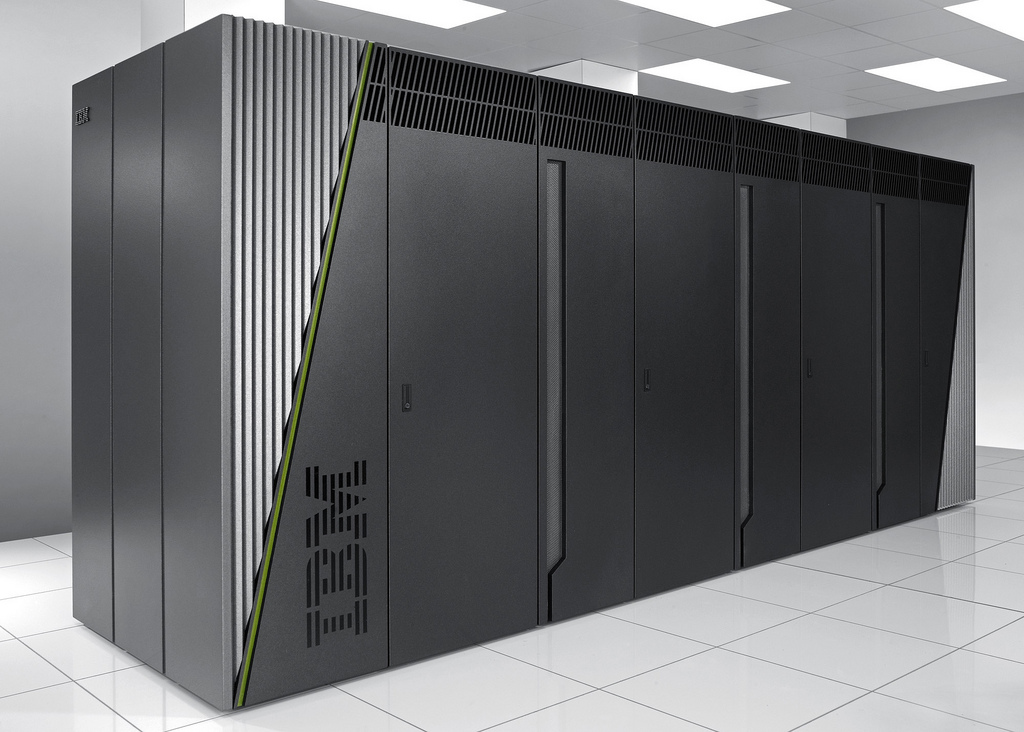
Blue Gene/Q (credit: IBM)
IBM has announced the Blue Gene/Q supercomputer, with peak performance of 20 petaflops and 16 multi-processing core technology, marking it as one of the fastest supercomputers in the world and intended to solve the most challenging problems facing engineers and scientists.
Nicknamed “Sequoia,” Blue Gene/Q will be fully deployed in 2012 at Lawrence Livermore National Laboratory (LLNL), with a scalable peak performance up to 100 petaflops. It is expected to predict the path of hurricanes, analyze the ocean floor to discover oil, simulate nuclear weapons performance, and decode gene sequences.
Blue Gene/Q is also expected to become the world’s most power-efficient computer, churning out 2 gigaflops per watt.
Announced earlier in 2011, Argonne National Laboratory (ANL) will also implement Blue Gene/Q to stoke economic growth and improve U.S. competitiveness for such challenges as designing electric car batteries, understanding climate change and exploring the evolution of the universe.