Immortal worms defy aging
February 29, 2012
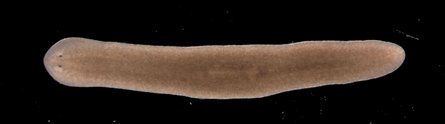
Researchers from The University of Nottingham have discovered how planarian flatworms overcome the aging process to be potentially immortal: they can rejuvenate their telomeres.
The discovery, funded by the Biotechnology and Biological Sciences Research Council (BBSRC) and Medical Research Council (MRC), may eventually lead to alleviating aging and age-related characteristics in human cells.
Planarian worms have amazed scientists with their apparently limitless ability to regenerate. Researchers have been studying their ability to replace aged or damaged tissues and cells in a bid to understand the mechanisms underlying their longevity.
“We’ve been studying two types of planarian worms; those that reproduce sexually, like us, and those that reproduce asexually, simply dividing in two,” said Dr. Aziz Aboobaker from the University’s School of Biology.
“Both appear to regenerate indefinitely by growing new muscles, skin, guts and even entire brains over and over again.
“Usually when stem cells divide — to heal wounds, or during reproduction or for growth — they start to show signs of aging. This means that the stem cells are no longer able to divide and so become less able to replace exhausted specialized cells in the tissues of our bodies.
“Our aging skin is perhaps the most visible example of this effect. Planarian worms and their stem cells are somehow able to avoid the aging process and to keep their cells dividing.”
Each time an animal cell divides, the protective telomere “cap” gets shorter. When they get too short, the cell loses its ability to renew and divide. In an immortal animal, we would therefore expect cells to be able to maintain telomere length indefinitely so that they can continue to replicate. Aboobaker predicted that planarian worms actively maintain the ends of their chromosomes in adult stem cells, leading to theoretical immortality.
Previous work, leading to the award of the 2009 Nobel Prize for Physiology or Medicine, had shown that telomeres could be maintained by the activity of an enzyme called telomerase. In most sexually reproducing organisms, the enzyme is most active only during early development. So as we age, telomeres start to reduce in length.
This project identified a possible planarian version of the gene coding for this enzyme and turned down its activity. This resulted in reduced telomere length and proved it was the right gene. They were then able to confidently measure its activity and resulting telomere length and found that asexual worms dramatically increase the activity of this gene when they regenerate, allowing stem cells to maintain their telomeres as they divide to replace missing tissues.
“The next goals for us are to understand the mechanisms in more detail and to understand more about how you evolve an immortal animal,” said Aboobaker.
“The worms are a model system in which we can ask questions, like is it possible for a multicellular animals to be immortal and avoid the effects of aging?,” he told KurzweilAI.
“If so, how does this animal do this in comparison to animals that don’t? Of course we hope that this impacts humans, that’s why we do it. But we aren’t planning on making any drugs or medicines… other people are, I’m sure.”
Ref.: Thomas C. J. Tan et al., , Telomere maintenance and telomerase activity are differentially regulated in asexual and sexual worms, Proceedings of the National Academy of Sciences, 2012 [DOI: 10.1073/pnas.1118885109] (open access)

Comments (16)
by Prime
As far as evolution goes, I would have to wonder would an immortal species even need to evolve? No disease would be able to harm you, so what need would there be for evolving?
by Harley Davidson Borgais
See my comment explaining how to cure all disease on the article about protein misfolding…
We Humans, and all animals I presume, also have the mechanism for this, called Telemerase…which is nearly identical to the HIV virus by the way…which I think (but have not checked yet) came from a primate being used in age extension experiments.
If not for Telemerase Enzymes repairing our Telemeres (corrosion resisting caps on the ends of our chromosomes – folded DNA molecules) our cells would not live nearly as long.
The problem in Humans with regeneration is the complexity of our bodies, i.e., the specialization of our cells, which makes it too difficult for them to regress to stem cells and change to regenerate.
The telemerase and other mechanisms in our bodies degrade because of the accumulated toxins and lack of needed nutrients (molecules and atoms).
This is why some cultures have devised strenuous ceremonies to revitalize the body.
Cells change and adapt to the chemical and physical effects put upon them, like cells that are lactose intolerant, placed in 100% lactose, and they always change their own DNA to start using lactose. By this adaptive ability we evolve, and it is by straining our weakened and degraded cells that we cause the weak ones to die, and be replaced by fresh cells.
by Brett Rogers
This would probably help ensurances in long space travel where the current life span does not suffice. Even if in a sleep state, one would gave to come out of it from time to time to do general ship and self maintenance.
by Lord Penguin
Although if the space travel is fast enough, time would be relatively slower (not going at a significant fraction of the speed of light would just take too long), so they wouldn’t have to live as long. At 3/4 the speed of light, a 400 light-year journey would seem to take a century (Which would be livable). That said, everyone could could benefit from longevity technology in one way or another, and traveling thousands or millions of light-years would probably still require some way to stay alive extra-long.
by Ryan
This is not related to this writing but i want to say it. We need more people to know how real the possibilities are. None of the articles on this site have more then a few owen comments, thats sad. The number of unproductive Facebook users rises every day and the fact that the same number of people researching and striving for singularity it would be here sooner than anyone could imagine. Singularity is now my lives goal, I plan on spending the rest of my life researching and gaining the knowledge needed to develop the technologies. We need more people like Ray Kurzweil and we could solve every one of lives problems one at a time. We could strive for knowledge forever, slowly understanding everything.
by steve
I understand your point but would respectfully disagree, all civilizations great advances are done via the efforts of brilliant individuals or small groups of. Collectivism achieves nothing, well nothing substantial anyway.
by Dan Robinson
Why would anyone think that physical immortality is a good thing, at least in our present state of enjoying the process of making more of us in an already over-populated world? And from a broader view, I like the idea of continued evolution, which is somewhat dependent on some of us being replaced by new models. I like the idea that we’re all immortal in the sense of the continuing effects of our having lived.
by Ryan
Why live on this over populated world? So many hope for an after life, it probably does not exist. It could however, a Virtual Afterlife, living for eternity on software in a completely customizable world, designed by everyone individually.
by Giulio Prisco
@Ryan, yes, I think living as pure software is the long term future of our species.
by steve
Oh great someones just read iain M Banks new book
by Micahel Bull
No worries Dan, you can take the option to die if you want as can all the religious and other people out there who disparage life extension or immortality. Having seen a lot of old age and death, im not in a hurry to go there personally.
by Giulio Prisco
Exactly, those who want to age and die should feel free and be free to do so if that is what they want. I prefer to try not to die.
by Matt
One day soon, we will all talk about how it used to be “Death AND Taxes”…but now it’s just “Taxes”
by mental
That’s the problem. We are getting more and more good against illness, the main drawback of hygiene is that the body becomes dependent. All the previous “body reactions” get lost, the more medicine will improve, the more we will need them even for issues that today but mostly yesterday were not dangerous at all. We are losing our natural immunity.
Another issue of this is the fact that since thanks to drugs we are getting “stronger”, the other species and mostly bacteria have to do the same in order survive. They have to become immune to our drugs. So they become more violent. This is the paradox of health. The more you improve, the more it gets violent against you.
by holly
different fields but same minds pondering—let’s see; if telomerase was hypothesized in 1973 and discovered in 1984 that’s a difference of 11 yrs. now the tau particle was hypothesized, I believe, in 1971 and discovered at Cern in 2001 & that’s a difference of 30 yrs. Why do I get the sense that there are those who want longevity asap….exponential growth in aging and cancer fields. Of course acceleration is the answer to both :)
by Beatriz Valdes
Yes, yes, yes, one step at a time, in different scientific institutions, scientists with diverse interests, all are contributing to humanity´s progress in completing the big puzzle that is Life! Wiht healthy longevity being the prize.