IPv6 Internet Protocol to launch in June — finally
January 20, 2012
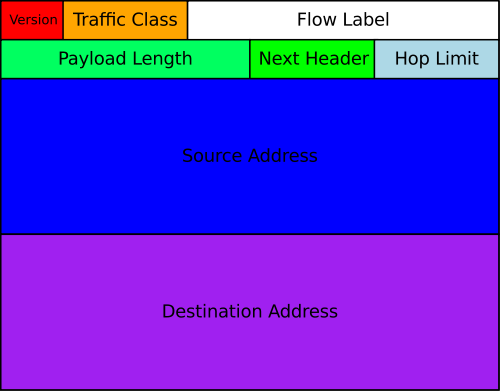
We’ve run out of Internet Protocol (IP) addresses, so major Internet service providers (ISPs), home networking equipment manufacturers, and web companies around the world are participating in World IPv6 Launch to permanently enable IPv6 for their products and services by June 6, 2012.
“As IPv4 addresses become increasingly scarce, every segment of the industry must act quickly to accelerate full IPv6 adoption or risk increased costs and limited functionality online for Internet users everywhere,” the Internet Society said in a statement.
IPv4 only allows 32 bits for an IP address, so it has only 232 (4,294,967,296) possible addresses (which have now run out). IPv6 uses 128-bit addresses, for an address space of 2128 (340,282,366,920,938,463,463,374,607,431,768,211,456) addresses. This expansion allows for virtually unlimited devices and users on the Internet, extra flexibility in allocating addresses, and efficiency for routing traffic.
World IPv6 Launch represents a major milestone in the global deployment of IPv6. As the successor to the current Internet Protocol, IPv4, IPv6 is critical to the Internet’s continued growth as a platform for innovation and economic development.
ISPs participating in World IPv6 Launch plan to enable IPv6 for enough users so that at least 1% of their wireline residential subscribers who visit participating websites will do so using IPv6 by June 6, 2012. These ISPs have committed that IPv6 will be available automatically as the normal course of business for a significant portion of their subscribers. Committed ISPs are AT&T, Comcast, Free Telecom, Internode, KDDI, Time Warner Cable, XS4ALL.
Participating home networking equipment manufacturers will enable IPv6 by default through the range of their home router products by 6 June 2012. Committed equipment manufacturers are: Cisco, D-Link.
Web companies participating in World IPv6 Launch will enable IPv6 on their main websites permanently beginning June 6, 2012. Inaugural participants are: Facebook, Google, Microsoft Bing, Yahoo.
Content delivery network providers Akamai and Limelight will be enabling their customers to join this list of participating websites by enabling IPv6 throughout their infrastructure.
Related Site Content:
- A big test for new Internet addresses | June 8, 2011
- The Internet’s perilous New year’s resolution | December 27, 2011
- The Chinese solar machine | December 20, 2011
- Smart TVs: the next tech war is in the living room | January 13, 2012
- Top 1% of mobile users consume half of world’s bandwidth, and gap is growing | January 9, 2012

Comments (5)
by josh
i think this will change the way of the web world, i was waiting so long (like 5 years) a new way of ip protocols on the web and according to this new http://www.antoniomugica.info/the-new-ipv6-a-universal-internet-protocol/ finally we will have an univeral way to writte lines for internet
by Dave Webb
Seriously? Dont tease me.
They have been levying that threat for years now (to implement IPv6). And the sky has been falling (running out of IPv4 Addresses) for at least the last three years. It is funny that there is a related site at the end of this story: “The Internet just ran out of numbers” that is dated Feb 7, 2011, and a year later IPv4-ageddon has not occurred.
There are two parts to this story that need to be considered:
Regarding IPV6-
A. I know that the major ISP’s are working on it, but in the United States there are still a huge number of holes in coverage. ISP’s are still not even close to fully supporting IPV6.
B. A very large number of devices, from commercial firewalls, down to home routers, still lack robust IPV6 support, if they support it at all.
C. NAT / Security Issues
C-1. The IPv6 crowd is Anti-NAT. In fact they are vehement that NAT is bad, and entirely unneeded in the new “IPv6 World Order”.
C-2 Most network security professionals (and discriminating network admins) are anti-”lets give everyone a public address”
C-2. Again most firewalls/edge devices lack any kind of NAT like provision for IPV6. And as it is difficult right now to get real IPv6 address, must network admins resort to using a ULA block of addresses (The IPV6 equivelant of IPv4 Private Addresses, also unroutable on the “new” internet). I have not found hardly any support for “translating” ULA addresses to a public IPv6 Address.
C-3 Everything I have read indicates that once IPv6 Addresses become available from your ISP, that your ISP will “assign” you a block that you can use. You are then supposed to dutifully re-ip your corporate network infrastructure with this block of IP addresses. (And if you were a early ULA adopter, you have to re-ip your network). But wait… I want to fire my ISP. Now my new ISP has given me a new IPv6 Block. Now I have to again re-ip my entire network. This sounds like a recipe for disaster.
D. IPv6 Corporate LAN Support – All new operating systems appear to have some form of IPv6 support. It is now rolled into Windows 2008/Window 7 environment (the largest percentage of corporate environments), MACs, and modern UNIX platforms. Our legacy platforms (Older unix, IBM, etc) are less supported. Oh and wait… I surveyed my network and more than 70% of the print servers, access points, network switches, inventory scanners, and other specialty network gear lack any support for IPv6. Er…. So that means that I have to keep my “private” IPv4 infrastructure around for quite a while. Maintaining two IP stacks seems like a lot of work (anyone remember the IPX/IP Netware days…).
E. Software support. The argument is that if the operating system supports IPv6, then we don’t have to worry about software…right? That’s funny because I have a TON of corporate ERP/MRP applications that currently only support IPv4. What about them?
Regarding IPv4: (Or better stated: Reports of my death have been greatly exaggerated)
A. It is funny to me that despite being out of addresses, ISP’s keep finding addresses to hand out. This could be because in the heady old days, ISP’s would regularily hand out much larger blocks than were actually needed. (PSINet once gave me a entire class C block, when I only needed a single address, and recently a ISP gave me both a /30 block for the serial side of a router and a /28 for the inside interface. When I told them that I only needed the /30 because the customer had a edge firewall and no need of a /28 I was told to keep the /28 anyway in case I needed it in the future)
B. If you look at the IP map, why is it that IBM, HP, Apple, GE, Xerox, DEC, MIT, Ford, Halliburton, and a host of other companies own Class A IP blocks. Each Class A IP block is 65536 Class C Blocks, or could service up to 4 million new statically assigned customers (assuming a /30 per customer)
In summary, sure we might eventually end up on IPv6, or some variant of it… but there are still many hurdles to overcome. My best advice at this point is to stay informed, participate in testing, and include IPv6 in your considerations when implementing new technology. But at this point I wouldn’t anticipate a overnight switch from IPv4 to IPv6.
Reference:
http://www.networkworld.com/community/blog/ipv6-addressing-subnets-private-addresses
http://en.wikipedia.org/wiki/List_of_assigned_/8_IPv4_address_blocks
by Ralph Dratman
I’m not sure 10^38 addresses is going to do the trick. You see, I have these 10^15 grams of hydrogen, and each proton needs its own IP address. Please expand the address space before we try this thing out!
by Ralph Dratman
Only 10^38 addresses available?
by Ralph Dratman
Uh-oh. And we thought Wikipedia blackout day was bad.
Just kidding, I mean, sure, that will work out fine!… (thinking about the routers)… but I will be out of town that month.