Nanoparticles against cellular aging
October 9, 2012
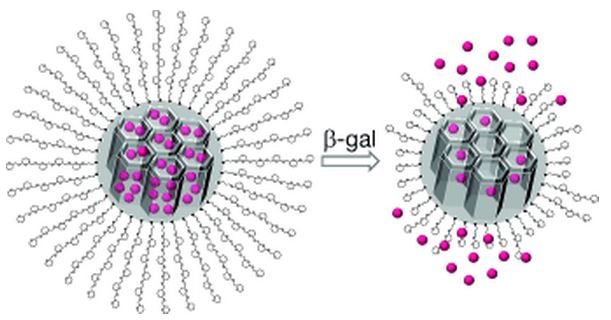
Intracellular controlled release of molecules within senescent cells was achieved using mesoporous silica nanoparticles (MSNs) capped with a galacto-oligosaccharide (GOS) to contain the cargo molecules (magenta spheres; see scheme). The GOS is a substrate of the senescent biomarker senescence-associated β-galactosidase (SA-β-gal) and releases the cargo upon entry into SA-β-gal expressing cells. (Credit: Alessandro Agostini et al./Angewandte Chemie)
A team of Spanish scientists has developed nanoparticles to selectively release therapeutic substances in aged human cells.
They are intended to treat diseases involving cellular degeneration of tissue, such as cancer, Alzheimer’s or Parkinson’s, among other accelerated aging pathologies.
The mesoporous nanoparticles contain galactooligosaccharide (a chemical normally used in probiotics, which are pills to stimulate growth of healthy bacteria).
The next step of this research is to test it with therapeutic agents and validate it in animal models.
“As far as we are aware, this is the first time a nanotherapy for aging cells has been designed. Though the road from these results to the possible elimination of aging cells and to aging therapies is still long, we believe our research can open new paths for the development of therapies for aging-related diseases,” says researcher Ramón Martínez Máñez of the Technical University of Valencia
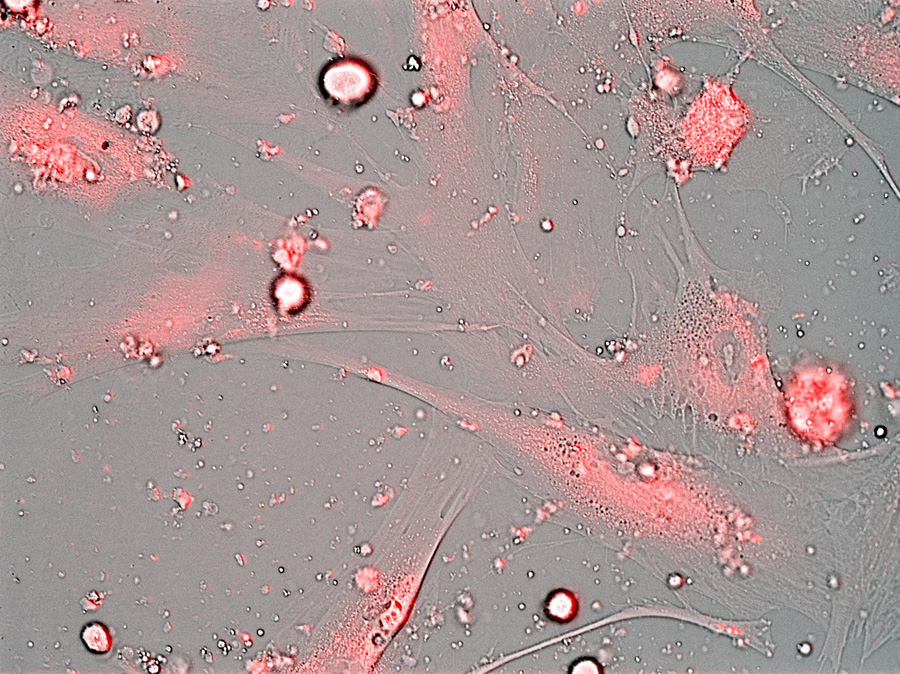
Controlled release of the fluorescent molecule rhodamine in senescent fibroblasts of patients with dyskeratosis congenita, by nanodevice (credit: RUVID)
The researchers evaluated the utility of the nanoparticles in primary cell cultures derived from patients with accelerated aging syndrome dyskeratosis congenita (DC). Such cultures show a high percentage of senescence characterized by elevated levels of beta-galactosidase activity, an enzyme. “The nanoparticles open, releasing their contents to remove senescent cells, or even prevent deterioration and reactivate the cells for rejuvenation,” said Jose Ramon Murguia, a researcher at the Institute of Molecular and Cell Biology of Plants.
“There are a number of diseases associated with premature aging of some tissues, many of which affect very young patients and for which there is no therapeutic alternative, as in the case of DC or aplastic anemia. They affect adults more, as is the case with idiopathic pulmonary fibrosis or liver cirrhosis. These nanoparticles represent a unique opportunity to deliver therapeutic compounds to selectively target tissues and rescue their functionality,”explains Rosario Perona, researcher at the Institute for Biomedical Research.
According to the researchers, the nanoparticles can also be useful for developing anti-wrinkle and anti-aging skin treatment, and radiation shielding for UV.