Neural stem cells part of experimental treatment for ALS patients
August 23, 2012
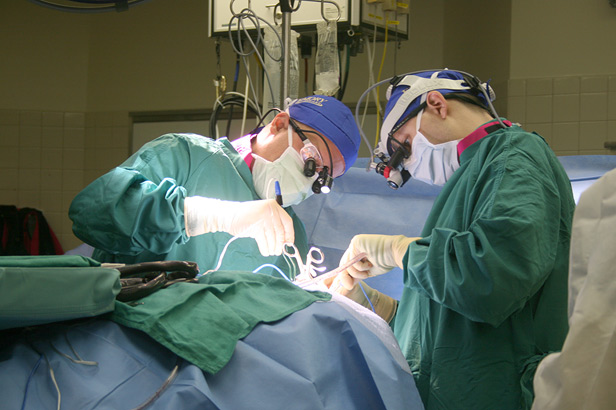
Neurosurgeons at Emory University deliver a second dose of neural cells into the spinal cord of an ALS patient (credit: Kerry Ludlam, Emory University)
This week, surgeons at Emory University in Atlanta implanted a second dose of neural cells into a patient’s spinal cord, part of an experimental treatment aimed at slowing the progression of ALS, or Lou Gehrig’s disease, Technology Review reports.
The cells are produced by a Rockland, Maryland-based company called Neuralstem that isolates stem cells from the brain and spinal cord of aborted fetuses.
The company is also targeting other major central nervous system conditions with its cell therapy platform, including spinal cord injury, ischemic spastic paraplegia, chronic stroke, and brain cancer.
The hope is that the cells injected into the spinal cord will provide support, perhaps by releasing growth factors, and prevent motor neurons from dying.
Able to move his limbs with strength and dexterity
In his first surgery, Harada received 10 injections, each containing about 100,000 cells, on the sides of his lower spinal cord. After the procedure, he was able to move his limbs with strength and dexterity that surpassed his abilities before the treatment. While some ALS patients may see brief periods of small improvements or stabilization, this degree of recovery is unheard of. In the last few months, Harada says his abilities have slowly been regressing, although at a slower pace than before the treatment.
Another ALS trial, under way at the Mayo Clinic, is testing a treatment that injects a patient’s own stem cells, isolated from fat tissue, into his or her spinal fluid. So far, two patients have undergone the procedure.
If the procedure proves safe, one of the next steps for the field would be to genetically modify the cells to produce specific growth factors likely to prevent motor neuron death.
Hopefully, the treatment will become available for Stephen Hawking. — Ed.