Paging Dr. Watson: artificial intelligence as a prescription for health care
October 18, 2012
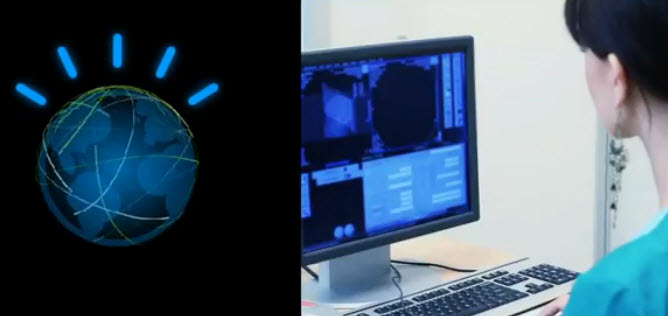
“It’s not humanly possible to practice the best possible medicine. We need machines,” said Herbert Chase, a professor of clinical medicine at Columbia University and member of IBM’s Watson Healthcare Advisory Board, Wired Science reports.
“A machine like [IBM's Watson], with massively parallel processing, is like 500,000 of me sitting at Google and Pubmed, trying to find the right information.”
Yet though Watson is clearly a powerful tool, doctors like physician Mark Graber, a former chief of the Veterans Administration hospital in Northport, New York, wonder if it’s the right tool. “Watson may solve the small fraction of cases where inadequate knowledge is the issue,” he said. “But medical school works. Doctors have enough knowledge. They struggle because they don’t have enough time, because they didn’t get a second opinion.”
According to Chase, doesn’t fully appreciate Watson’s value in bias-free second opinions. “The machine says, you thought of 10 things. Here are the other five,” he said. “You’ve probably seen Jerome Groopman’s book, How Doctors Think, about the mistakes doctors make. A simple one is anchoring: You get stuck to some diagnosis. We’ve all had that experience. A machine can change its diagnostic profile on a dime based on new information. One of the things a machine is not is biased.”
Graber warned that doctors will need to guard against a new source of bias: over-reliance on Watson. “When I use my GPS too much, I never really learn the layout of a new city,” Graber said. “Same story.”
He and Chase also disagree on the implications for health costs. Chase sees Watson helping doctors and patients reduce eliminate unnecessary tests and treatments, whichnow cost $750 billion per year. Graber fears that Watson’s ability to identify many possible diagnoses will encourage patients to ask for even more tests and procedures, setting off a cost-inflating “diagnostic cascade.” …
(more)

Comments (21)
by Cybernettr
Graber warned that doctors will need to guard against a new source of bias: over-reliance on Watson. “When I use my GPS too much, I never really learn the layout of a new city,” Graber said. “Same story.”
However, sometimes my GPS will suggest a route that I would never have thought of.
by Joseph
There are of course many exceptions but the majority of the doctors practicing are dinosaurs. Similar to in aviation where pilots come up with outdated reasons why there will ALWAYS be two pilots in the cockpit, the majority of MD’s see themselves as completely irreplaceable.
by de Broglie
Indeed. I do see most MD’s being replaced, but they will be in the profession a decade past their due.
by Bennie Beaver
Here we go again, as I’ve predicted, too many individuals in a for-profit health care system, as doctors, hospitals, and clinic will resist new advanced technologies as they decry how technology just can’t replace a good doctor.
I remember when digital timepieces were first marketed and Luddites were saying that mankind would lose track of time because they just wouldn’t have those watch hands to relate to a time-of-day.
I say to doctors, hospitals, clinics, medical specialist: Give it up. The times are a changing. Within the next twenty or so years we’ll need less and less of them as science creates more 24/7 on, and in body monitoring at home, wired and wireless. We will be able to talk to Watson like AI personally for instant information and self health care. Doctors will soon need to look for other ways to make a living….One way or the other it shall come to pass, or America and the world will go broke!
by JC
“One of the things a machine is not is biased.” This should continue with …or not biased in the same way as a human doctor. The original wording has an anti-anthro spin which may not heed the rational rules of data handling. We can imagine lots of ways a machine diagnostician can be biased: weighing newer data as better than older data, ignoring data from studies that do not meet a certain criteria, ignoring doctor ‘opinion’ which are themselves an intuitive summary of a doctor’s personal experience, etc.Then there are all the biases we do not imagine but show up later. I am counting the days till a Watson diagnostic is available, but I will still want several human doctor opinions too.
by DeBee Corley
I also want “unlimited” doctors opinions. Hell, I want Walter Reed and the Mayo Clinic at my command.
You have way better health insurance than I do.
by de Broglie
Hopefully the Healthcare Mandate will not discourage these huge initial expenditures.
by Bri
Insurance companies should love it. It could potentially save them billions. It also spells the end for general practitioners. At first it will be lauded as a time saver and diagnostics assistance. Once tricorder like devices are available, any domestic robot will be able to access all medical information. Particularly case histories, that a doctor could never lavish the time combing through.
by Ron Abate
I fully support the use of sophisticated software programs for medical diagnosis – at least as a back-up to a physician’s diagnosis. I was a victim of mis-diagnosis where time was lost resulting in a heart infection (endocarditis) that destroyed my aortic valve. Doctor’s thought I had Lyme Disease. I needed open-heart surgery to save my life.
by Elvis Nkwentin
More like the machine says ” you thought of ten things. Here are the five you should really be thinking of.”
by Elvis Nkwentin
I smell fear of job loss to machines. Very soon being a surgeon will be a matter of a 4 years crash program, where people just learn anatomy, biology , and mostly and how to operate technology such as advanced robotic arms used in highly advanced hospitals today, and also how to use Watson. Watson through the cloud will be so cheap as well as more advanced robotic equipment built in any grad students basement.
Just like in jeopardy when Watson arrived and defeated the best Ken Jennings, so will it defeat the best doctors in doing diagnoses, especially because it has access to diagnoses not even known by the best of the best in the medical field.
Forget about what Dr. Herbert Chase thinks. It’s just a matter of time before doctors don’t even rely on their own diagnoses.
by Bri
Because my parents are elderly, I see a lot of doctors. I tell them of this web site and some of the developments in medicine. They are almost invariably stuck with the knowledge they learn in school. They don’t have the time to keep abreast of new knowledge.
by Camaxtli
Not only are they stuck mainly with the knowledge from school, a lot of that is forgotten. There’s such a massive amount of information to memorize and understand that whatever they aren’t actively using in their field will fade, at least to the point where it is not easily retrievable from memory.
There is such a thing as regulation as well as professional associations though, and such things do not move at the pace of technology. These changes in healthcare will move quite a bit slower then many predict.
What I think will be the biggest upheaval in healthcare is just less people getting sick in the first place and catching things early before they turn into big problems. Healthcare demand will eventually be more centered around enhancement, life extension and augmentation instead on damage control and slowing decay.
by Gabriel
As well as it should be Camaxtii…you are absolutely right — the day will come when healthcare in generally becomes essentially non-existent due to augmentation. I love your description “damage control and slowing decay”…..
that’s arguably what the whole field of medicine is, the damage being pathogens and the decay being death itself….through mortality, we are already sick – the rest, which is what medicine is right now, is just trying to maintain ourselves as long as possible (i.e. damage control)….there is already something wrong with us.
by Mike
I think you are getting ahead of yourself a little there. Surgery will not become a 4 year crash program. Just ask yourself: one hospital has your 4-year guys and another hospital has traditional surgeons, and your child now needs surgery. Which one will you go to? For the foreseeable future, we will still need expert surgeons and expert non-surgical medical doctors.
I do think that computer decision support will become more prominent as the article suggests. But it is not so simple as you state. Dr. Graber’s comments in the article are legitimate and not just stemming from fear.
How do I know? Because I work in this field. I am a computer scientist and also a medical doctor. Most patients that a doctor sees in a day do not present diagnostic difficulty.
by Camaxtli
As a doctor, what do you think a non-surgeon, non-research MD does in general, that say, a nurse practitioner could not do either right now or in the near future, especially with the aid of a diagnostic device such as that which IBM is trying to provide?
by Mike
My answer: assume liability. (that is, take on all the liability) Nurse practitioners (by definition, if you will) can work within a certain domain of problems. This is not to say that they aren’t just as smart as doctors. Rather, the training they receive is not set up so that they can then go out and practice medicine with full autonomy. My malpractice insurance company will back me for $5 million dollars only because I went through extremely rigorous education/training. They won’t be so willing to offer this to someone with less training despite having an intelligent AI assistant. For the near future the problem is that the information that the AI gets is inputted by the clinician. Therefore, the ability of the AI is dependent on inputting quality information, which is a step that depends on a fairly high level of clinical expertise.
For limited domains, like what a CVS MinuteClinic would see: colds, urinary tract infections, etc., a nurse practitioner can do well. They understand that if a patient has symptoms outside the domain of symptoms that they work within, that the patient has to be seen somewhere else.
by Ralph Dratman
I believe Mike is correct: diagnosis is not the big problem at this time. The problem is mainly on the care-delivery side, getting all the details right. There are far too many errors and oversights. The easiest and best job computers can do in medicine now is tracking what has happened with a particular patient, and what is planned. Can anyone imagine a modern repair facility that did not track the status its items submitted for repair? Yet most hospital systems track little more than payment status.
by Bri
I’m sorry to say, I have to disagree. Diagnostics is a big problem. My father spent three weeks in the hospital, running up over $100,000 in bills, payed by Medicare. Their final diagnosis was for a very risky operation, that we had discussed with our private physician, in relation to something else. We opted to not do the operation, because the quality of life wouldn’t improve that much. It would have had no effect whatsoever on the reason he was in the hospital.. My mother had a cerebral shunt put in, and immediately after she had sever headaches. I had noticed bad vertebral alignments in her x- rays, and said it was probably due to muscle tension, from sleeping with her head on a weird angle. It took two years till the doctors figured that out. If you want I could go on. Doctors are over worked. They make numerous mistakes, sometimes costing lives, but most of the time just lots of money. I wish I could charge as much and give such poor quality work.
by Mike
I don’t know that I can follow exactly what happened with the examples you gave, or how an AI agent could have improved the situation. I can relate however, to how chaotic those situations can be.
Here is why Watson is not going to put doctors out of business for quite a number of years. The main problems are data aquisition and liability.
How does Watson acquire data? For 90% of the patients that a doctor sees, there is no diagnostic difficulty. The doctor is not going to type in symptoms to a decision support AI system for these cases because it takes extra time. Walk in the shoes of a busy clinician and you will see that this is just absurd to ask them to do this. For maybe 5 or 10% of the patients, there is some diagnostic difficulty and so there could be value with an AI system. But still, the task of opening up that program and entering symptoms is a big hurdle.
Some day, Watson will be able to listen to the conversation in the exam room and acquire data on its own. This will be a big step. Still, after recognizing words, it still has to derive clinical meaning from these utterances. Then it has to be able acquire data through the physical exam and not depend on the doctor to type in the details about the exam. So there are major hurdles in getting data into the AI system so as not to burden the doctor’s workflow.
Secondly is liability. Malpractice companies are not going to provide coverage to AI agents unless it is proven that the agents practice medicine better than MD’s. In transitioning to that, perhaps in 5-10 years, there will be research studies done that show that doctors who practice medicine with the assistance of AI agents provide better care and improve morbidity/mortality compared to doctors not using the AI. At that point, hospitals would probably advertise that their doctors use AI agents (and thus provider better care). Likewise, insurance companies would offer malpractice policies at lower rates for doctors that use AI. But, again this step would come after the data acquisition problem is greatly improved.
by Mike
As a clinician, I have to document all relevant details of any patient encounter in the electronic medical record. If it were just payment status, I would be out a lot earlier each day.
There are audits and so if a visit isn’t documented, it can not be billed for.
It very much depends on what hospital or clinic you work in. A rural hospital might have very little computerization and might use paper charts mostly. A big academic hospital is likely to have a very sophisticated electronic medical record system.
Definitely healthcare is not as computerized as other businesses like banking, and it has a long way to go.