Planetary Resources ‘now hiring asteroid miners’
October 1, 2012
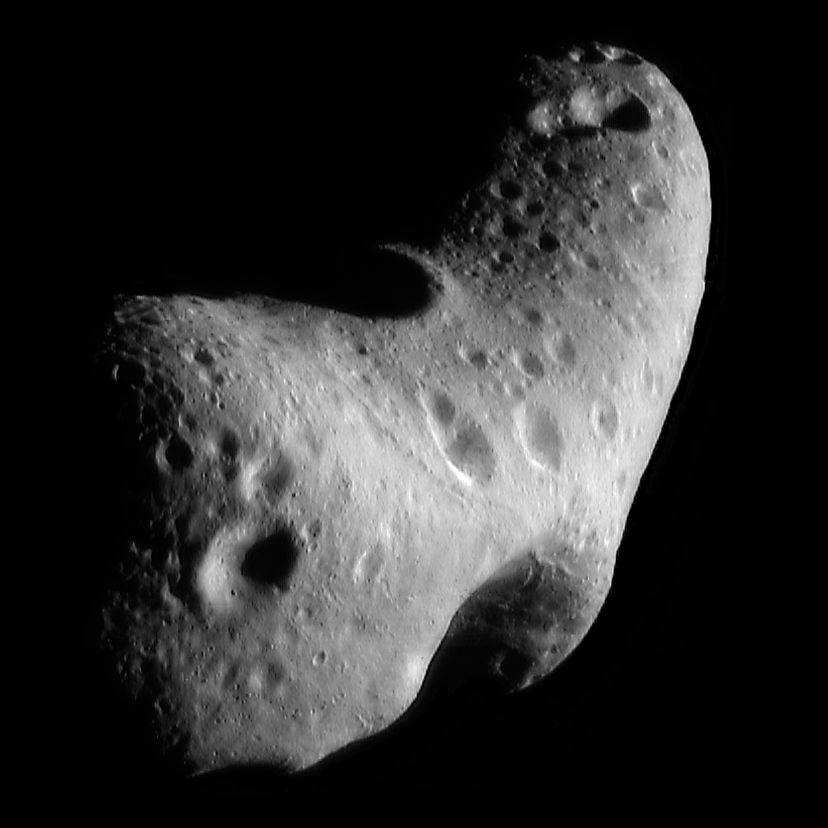
“Do you want to be an Asteroid Miner? Well, here’s your chance!” — an email we just received.
“We’re looking for passionate college students for paid coop positions to help us mine asteroids this spring and summer,” it reads. “If you love space and want to contribute directly to the development of the next generation of space exploration technologies, we want to hear from you (or from anyone you know that you think would be interested). Click here to apply today!
— Chris Lewicki, President & Chief Asteroid Miner, Planetary Resources, Inc.
Planetary Resources’ Asteroid Miners Wanted page reads:
If you are a college student passionate about space and want to be a part of history by helping us develop the technologies that we’ll use to mine asteroids, we want to hear from you today.
This your chance to join our team onsite in Bellevue, Washington for a paid cooperative education position and get hands on experience working with our team.
PRI provides a unique and intimate work environment where you can make an immediate impact on product development and the fulfillment of primary company objectives. Join us in changing the way we explore the solar system!
Click here to apply now and be a part of history in the making!
Comments (50)
by William A Wheaton
Please notice, of course, that Pt and other rare materials will not remain rare, and highly valuable on Earth, if huge amounts become available. A pure rare substance w/ no industrial uses, would simply decrease in price (and lose value) by a factor of 2x if an amount equal to the current Earthly inventory were suddenly to appear on Earth by some miracle. So you can’t just multiply the current price of gold, say, by a million tons, if we were to find that conveniently at hand in space, and bring it down to Earth. For a material with important uses (like Pt, a catalyst) the price vs supply relationship gets more complicated to estimate.
We need to reduce the cost of materials in space first, as everything there is now worth $10,000 /Kgm (anything, even dirt for cosmic-ray shielding), and then we can think about delivering an economic bonanza in materials for surface use.
by Mark
Very true. However, that’s part of the business as I understand it. The idea is to keep the asteroid being harvested in low Earth orbit (LEO). In LEO the object is easier to get to and can be harvested on demand.
There are numerous technologies, many of which would create substantial demand increases, waiting for a relative increase in abundance. The cost of the materials -will- go down as the supply increases, yes, and that’s what will drive demand and new uses in technologies as they become competitive. However, it will likely be done in a controlled fashion to avoid destroying the market.
I love your point about reducing cost of materials in space as well. That is definitely a good idea and something they apparently plan to do. Hey, the I.S.S. needs water? No problem!
by William A Wheaton
I have been thinking a lot lately about Phobos as a good site for extra-terrestrial use. I believe one can get there from High Earth Orbit (eg, Earth-Moon L2, lately bandied about) with <1km/s departure Delta-V using lunar gravity assist,and another ? 0.8 km/s to match orbits with Phobos. Using solar-electric propulsion, this sounds viable to my naive mind. I am hoping we might find carbon and hydrated minerals there, which we might eventually use for O2-CH4 propellant for Mars Ascent Vehicles to link Phobos with the surface. We could also obtain silicon for solar cells, eventually useful for SSPSs, etc. Phobos has the advantage over many NEOs that is is pretty large, in a reasonably circular, low inclination orbit, and accessible regularly every 26 months. Thus we don't have to wait 20 years for a favorable opportunity to bring the boys home, etc, etc.
But I am ignorant about the geology and chemistry of mining, especially under low g (< 0.1% Earth) circumstances. We will need to burrow down a few meters to shield the habitat from galactic cosmic rays, and how can we dig w/ no gravity? And how can we get a centrifuge, which we will likely need for habitation, down under the surface?
It seems to me that with the administration's Beyond Earth Orbit ideas, we could combine the asteroidal objectives with big steps towards Mars exploration if these problems can be solved, as I am sure they can, if the carbon, H2, etc are there to make it all worthwhile. NB at $10K/Kgm to get stuff off Earth, we do not need to mine Pt or rare earths to be competitive for materials to be used in space — propellants and silicon, in particular. A Base Camp on Phobos could also address many of the purely scientific objectives driving interest, as well as the technology and economic issues that interest those most interested in space exploration.
Thanks –
by Nancy
I only see three problems with Cameron’s plan:
1. Physics
2. Chemistry
3. Economics
Once they figure out how to get around those minor details, its clear sailing!! Significant research and development indeed … Not in my lifetime, not in my grandchildren’s lifetime.
by Gorden Russell
Here it is, Nancy, straight from Scientific American:
Internet Billionaire Ponies Up More Cash for Physics Prizes
By John Matson | October 1, 2012 |
Tech investor Yuri Milner, who shook the physics world two months ago by dishing out $27 million to the nine inaugural awardees of his Fundamental Physics Prize Foundation’s namesake award, has just sweetened the pot.
Milner’s organization today announced the addition of a new award, the Physics Frontiers Prize, which will place three individuals in the running for the $3-million Fundamental Physics Prize and bestow $300,000 on those who do not win it. This latest program, plus the $100,000 New Horizons in Physics Prize for young researchers, makes three big-money awards that the Milner Foundation promises to bestow.
The prizes are meant to recognize major achievements in fundamental physics—primarily theoretical physics, if the first batch of Fundamental Physics Prize laureates is any indication—with a preference for recent advances.
#
So there it is, Nancy. If we don’t like your old laws of Physics, we’ll go out and discover all new laws of Physics.
I just can’t live by your laws, man…
by Mark
Would you care to elaborate? Those bold claims are particularly vulnerable when sitting alone in the open like that.
by Spikosauropod
It’s not April 1. What gives?
by A4i
Gold rush… in space.
by wearetheproblem.
fuck it. lets just hop on the astroids, attach some booster jets, steer that fat bastard over here and bring the whole mining operation to us here on the surfuce of the earth. problem solved. alot of problems solved actually.
by melajara
I prefer by FAAAAR to have asteroids mined than the Earth’s crust under the oceans, another very concerning suicidal project many nations and oil companies already have.
Now is time for prospection with very small probes whose unique mission will be to fetch the data about the asteroids to mine.
Maybe some target candidates can be found from Earth. I’m assuming good candidates would be the most dense asteroids (i.e. those with the highest kg/m^3 ratio). This could be inferred from their orbits, provided we already have access to this kind of data with enough resolution.
The main objective is to cut a despairing dependency on Earth alone, leaving us no choice except “degrowth” with overwhelming pollution in between (one example among many others: rare earth elements extraction is among the most polluting industry, inasmuch as U.S.A. left it to China with the military dependency it incurs).
It is time to make Earth an open system, so yes, let’s mine the asteroids and the moon!
Nobody should laugh but everybody should donate, and if a majority don’t understand why, every nation should tax the (dumb) citizens to have them participating, nolens volens!
by Bri
Ride em cowboy!! Totally impractical. That’s a heck of a large booster rocket, that would cost far more than the material brought back. A solar sail is far more cost effective. Want to sign up sailor?
by melajara
Did I speak of rockets? I don’t think so.
The minerals have to be mined and preprocessed in situ.
The critical part is to move back the cargo into the atmosphere.
For the final miles of the flight a solution like what has been used to land the Curiosity rover is quite possible but not economical.
This is yet another reason to have the space elevator.
This is the kind of projects for which we really need U.N.S. (United Nations of Science) as this is a gigaproject with several huge milestones to be achieved before it becomes economically profitable and only global public funding can achieve that.
But what other choices do we have? Degrowth? Mining Earth’s crust under the pressure of 4000m of water? This would be suicidal IMHO.
The (political) world is lacking of ambitious and useful common projects, this is one.
by Gorden Russell
Yes, melajara and Bri, solar sails and in situ mining are the way to go. Pay close attention to all the young people who are excited about 3D printing. Also watch closely all the research into carbon nanotubes and graphene. A cube sat could unfold arms and legs from slits in its tubular frame and scuttle all over an asteroid to extract carbon and then print it into robots and rocket engines. There is water in those carbonaceous asteroids, and H20 can be split into pure hydrogen and oxygen for rocket fuel. Then a carbonaceous asteroid can be steered to rendezvous with a nickel-iron asteroid, bringing them both back to a Lagrangian Point.
by Bri
Most of the copper deposits that we mine today, were fummeral vents on the bottoms of early oceans. The among of metals deposited on the ocean bottoms of the world is staggering. Robotic processes will make them economical. The work has already started to be developed. Most space mining will only be economical for space use. I’d start with the moon, but it is mainly basaults. Very few “rare earth elements” are on the periodic chart. They formed on earth, from tectonic forces, refining and mixing periodic elements. We will need to fabricate the more exotic compounds. That right now is more costly than mining and refining on earth. The moon is relatively devoid of carbon. That is one element that we will need to mine in space for space use.
by Bruce Wright
I’m not sure how practical it is to use a solar sail to move to a lower orbit – my guess is that an ion drive or something similar would be more likely.
The biggest problem is getting any materials from a near-Earth orbit onto the ground – you don’t want to just drop it in the atmosphere, it’s either going to burn up if it’s a small amount of material, or make a dangerous impact if it’s too large. Ideally you’d need the cost of getting from LEO to the ground via some controlled descent to be very low – a space elevator, perhaps? At any rate, current technologies are just simply too expensive for this to be able to make a significant contribution to Earth-based mining, at least for materials that were destined for use on Earth. Hopefully at some point this will become practical, but not in the immediate future.
But for materials destined for use in space – in LEO, for example, or perhaps even more likely the Lagrange points or in deep space (which are energetically more expensive destinations than LEO for missions originating on Earth). It might well be possible to produce raw materials for such uses at a competitive cost to sending them up from Earth, at least until technologies like the space elevator are perfected. In fact, in the long run if we’re going to do very much in space we’ll need to mine most of the raw materials there in any event; there just won’t be enough on Earth.
by Gorden Russell
Yes Bruce, sometime after 2046 we will know enough about spinning up carbon nanotubes to make the cables out of carbonaceous asteroids and lower the cables from geosynchronous orbit for the space elevator (years ago people would call this a “skyhook.”) There is water in the carbonaceous asteroids to fuel missions that are energetically expensive.
by Bruce Wright
It may not even be as late as 2046 before we’re able to do that, given the progress so far with making carbon nanotubes. It’s still a ways off though.
I’m not at all sure that it’s worthwhile to make traditional rocket fuels like LH2 and LOX from carbonaceous asteroids just for transporting bulk materials to LEO or the Earth’s surface. They would probably be more useful for last-minute course maneuvers and takeoffs and landings on planets, where you need the short bursts of large amounts of power. (Though not for takeoffs on the Moon, since it doesn’t have any gravity – a railgun or something similar ought to work better. Not sure it would work as well for landings though, because of the need for precise alignment during the approach, although it’s certainly not out of the question – it’s obviously possible, but the question is whether it’s energetically practical to attain the proper alignment if you’re coming from various points in space like the asteroids rather than common origin points like Earth). Additionally their relatively large mass would mean that they’d be an expensive commodity in the early stages of space development (Expensive because you have to transport them somehow from where you refine them to where you need them – which takes a lot of energy in and of itself).
I think for bulk transport, solar sails and ion drives are clearly the ways to go.
by Gorden Russell
Yes Bruce, rail guns, solar sails, and ion drives are all very good ideas.
by Bri
Even if it’s done remotely, it isn’t readable now. First problem. You have to make money. What asteroid are you going to mine? For what material? How are you going to get it back? How are you going to retrieve it and bring it to earth? How long is a done trip? Who’s paying the bills till theaterial gets back? What do you do if something goes wrong?
by Camaxtli
From what I’ve seen and read, it seems that they intend on making money selling their Arkyd series space telescopes that can be used for all sorts of purposes aside from prospecting asteroids.
I’m skeptical of Planetary Resources doing any actual mining for quite a while, if ever, but those private space telescopes they’re selling will be a great thing all by themselves regardless of how the space mining pans out for them.
by Visitor
Planetary Resources’ website is surprisingly detailed on a lot of these points.
by Gorden Russell
Fuel from a carbonaceous asteroid can haul back a nickel-iron asteroid. A 3D printer can throw up a giant curved mirror to melt the metals and cast them into the shape of a lander. High-temperature alloys are already being printed out by 3D printers. We’ve known how to land space capsules since the days of the Mercury Project. Fueled by hydrogen and lowered by parachutes that can be spun up out of carbonaceous asteroids by robots. This is do-able. The heat shield of the landing capsule can be made of nickel-chrome alloy and the rest of the capsule can have structural members made up of the platinum group metals and rare earth metals. The neodymium doesn’t need to be magnetized until after it has landed (we need that for the super-magnets in air-conditioners and wind turbines).
by Bruce Wright
Yes, it’s obviously do-able to make it into capsules, but you’re just not going to get large amounts of material down to the Earth’s surface that way. Even massive capsules that are 10 or 20 times the size of the Mercury-style capsules are still a drop in the bucket compared to Earth-bound transportation like an ore freighter. This mode of transportation will probably be limited to extremely high-value materials. At the present time there’s probably nothing that’s expensive enough and extractable enough from the asteroids to justify the expense of doing it this way, but perhaps in 20 years the economics will look different as some of the rare earths may become relatively more expensive due to depletion of deposits on Earth, and as space technology becomes less expensive.
The real enabling technology for all this will clearly be a space elevator, if we can ever get the kinks worked out of that.
by Gorden Russell
When all the work is done by robots that were built by other robots, the costs will plummet. If the capsule is made of platinum group metals, it will pay all its costs. As the robots continue to double their numbers, the capsules will come down like rain.
by Bruce Wright
…. And finding all that platinum in the asteroid belt won’t be a trivial undertaking. It’s unlikely to be the first mineral mined there – far more likely, more common elements like iron, oxygen, and hydrogen will be first, if for no other reason than that they’re far more available. It’s impractical to drop those through the atmosphere in capsules, but they’d be of huge economic importance in constructing objects in space (no need for expensive lifting through the Earth’s atmosphere).
I suspect that by the time we’ve explored the asteroid belt enough to be mining extremely rare elements like platinum, the space elevator will be a reality. If I’m wrong, then possibly something like what you propose would become feasible.
by Gorden Russell
That’s it Bri, they can go mine the asteroid named Xanadu. The visionary billionaires of Planetary Resources will all be glad they paid for it when the first landing capsules made of platinum group metals parachute into the deserts of Nevada, Arizona, New Mexico — you name it.
by someday69
I build all my short stories,,From,,a man,Who ,,is living,out in the Orrt’cloud,,,,
He signed ah’contract,,with ah’Re’juvination clinic,,,good’new’s,,He will now live for nine’hundred years’,,,bad news..He is shang’high’ed….and must live out the twenty-year’s,,”"”MINEing the Orrt cloud’,,,,isolated,,all’alone”except for V.R.–and a’comunicaton’s Link with….ah”super’hyper’inteligence….that is trying to lift his spirits…bye telling him…Jane’goodall…is ah’close personal frined..and will…try to convince one of her’great apes…to take his case….(they are now sentiant..and make awesome Judge’es..and if you get ah’gorrillah”for an”atterney…well…You’er..sure to get in’front of ah”Whale for ah’judge….And they make the most Awesome judgements….
SO that’s the story behind…Stories..from the orrt cloud…..
it’s ah’work in progress….an”it’ll get into print…someday.
by Timothy
You may have some interesting or valuable ideas. But until you present them in something approaching English we’ll never know.
by Tom
Are you sure this isn’t a nascent AGI testing out it’s language skills, rather than a non-native-English-speaking human?
I wonder.
by William A Wheaton
Shucks, ah like it! It’s nice out there, no crabby neighbors, lotsa good water, the skies ain’t cloudy all day….
by Frank horrigan
Does that include EVE online players? I’m already and accomplished asteroid miner.
by Camaxtli
@Jon
There’s nothing wrong with GAUSS’s truthful observation. How is it bad to make an observation that there is no actual mining going on? There isn’t any mining going on. They could just have easily stated “now hiring asteroid prospectors”.
by Jon
1) @ GAUSS. Negative nancy. Negative nancy. Negative nancy. Stop being such a “Negative Nancy.”
2) This looks sort of awesome. I’m glad to see they’re already hiring. I’d have guessed that to take another 2 years.
Editor; could you please, please, ask Ray if he feels that his timeframes might not have been optimistic enough? Both me and Singularity Utopia feel Mr. Kurzweil might have been a bit… conservative, in his estimates, if you can believe such a thing. xD
by Editor
OK
by Bruce Wright
I think he might have been referring to the rather confusing grammar used in the ad: “We’re looking for passionate college students for paid coop positions to help us mine asteroids this spring and summer …” Are they mining asteroids this spring and summer (not likely), or are they looking for coop students to work this spring and summer on ideas for mining asteroids at some point down the road (far more likely). On a first read, it’s easy to think that they’re saying the former even though they almost certainly mean the latter.
by GAUSS
Rather misleading, considering nobody is doing any asteroid mining at present.
by Guy
And when they achieve their objectives and launch their probes, who do you think will be operating them? The, uh, people hired now.
(Or didn’t you read before knocking it down? You think asteroid miners will be guys with hard hats with a light on them, right? Uh, no. These will be remote robotic missions. The miners will remain here on Earth.)
by Camaxtli
sarcasm/ Mildly critical observations will not be tolerated. Please restrict your comments to uncritical observations and enthusiasm for any and all futuristic projects. /end sarcasm
by Bri
End sarchasm? That’l be the day.
by Camaxtli
End it!
by Gorden Russell
Glad to see you have the highest confidence for this mission, Camaxtli, (what does your name mean?).
by Bri
I did end sarcasm. I put punctuation in.
by Nancy
Anything worth mining (eg gold, platinum, rare earths) will exist inside a nickel/iron astroid. What they are proposing is not the movies (though Cameron may not know the difference).
1. There is no appreciable gravity out there and any ore processing operation depends on gravity. How do you break the ore up so that it can be processed? Blast? NO. Cut it with a phaser, just call in the enterprise.
2. Will you process using some sort of liquid extraction? NO. With no gravity, none of the efficient processes used on earth will work.
Cameron is good at getting publicity, but publicity does not process ore.
by Bruce Wright
Nancy: One word: Centrifuges
by Bri
Bruce, two words. Cost efficiency.
by Gorden Russell
You make some very good points, Nancy, but these are all engineering problems. The world has a lot of very bright people. Somebody will figure out a way…and centrifuges could be bolted onto an asteroid, or the mining ship could be spun up. Somebody at Planetary Resources must be thinking about this right now.
by Gorden Russell
Just took a look at their website and Planetary Resources says:
“Initial space resource development will focus on water-rich asteroids. Water is the essence of life and exists in plentiful supply on asteroids. Access to water and other life-supporting volatiles in space provides hydration, breathable air, radiation shielding and even manufacturing capabilities. Water’s elements, hydrogen and oxygen, can also be used to formulate rocket fuel. Using the resources of space – to explore space – will enable the large-scale exploration of the Solar System.
Recovery and processing of materials in a microgravity environment will occur through significant research and development. Planetary Resources will lead the creation of critical in-situ extraction and processing technologies to provide access to both asteroidal water and metals. When combined with our low-cost deep space explorers, this represents an enabling capability for the sustainable development of space.”
So they are working on all the problems we have discussed here, Nancy.
by Gorden Russell
It can be done, Nancy. The same 3D printers that will print out large antenna arrays and parabolic mirrors will be able to make the supports and skin of a pressure dome.
They can call it the Coleridge Mission. The robotic ship will voyage to the asteroid Xanadu where it will grapple itself to the surface and drill out the matter to print the first Kubla Khan robot. Then the robot can assemble a mini-plant named Alph to extract water from the deepest, darkest, hidden recesses of the living rock, then:
In Xanadu did Kubla Khan
A stately pressure-dome decree :
Where Alph, the sacred river, ran
Through caverns measureless to man
Down to a sunless sea.
(The sunless sea will be the comets of the Oort Cloud which will one day be shipped back to Mars.)
by Gorden Russell
One more thing, Nancy. Inside the pressure dome, robots could jackhammer ore loose. In time the dome will grow to enclose the entire asteroid. Then small charges could blast ore loose, just as long as the charges are too weak to blow ejecta through the dome.
With a port to launch the platinum capsules through iris shutters, the enclosed asteroid would look like the Death Star.
by Tom
processess requires gravity + no gravity ¬=> no gravityless processes
Just like we don’t use process on Earth that require gravityless conditions , we will not use process in gravityless conditions that require gravity.
Or, to put it another way.
On Earth we have invented some processes which require&use gravity, and other process that do not require or use gravity. Likewise, we will. and already have in some cases, invented other processes that work in space, that also do not require or use gravity.