Raspberry Pi computer: can it get kids into code?
March 1, 2012 | Source: BBC News
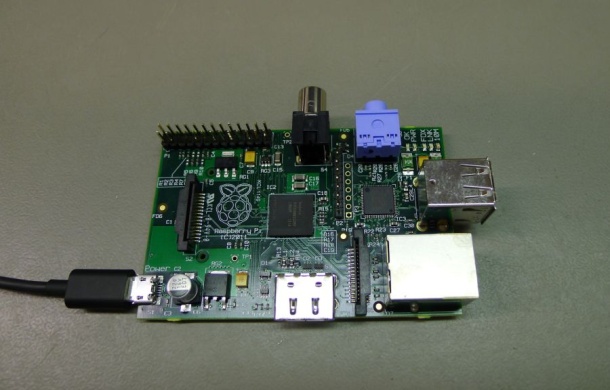
The Raspberry Pi computer is now available for order for just £22 (about $35). A cheaper £16 ($25) version will go on sale later in the year.
About the size of a credit card, t has a processor, memory chip, Ethernet port to connect to the Internet, and a couple of USB ports to plug a keyboard and mouse.
The Raspberry Pi Foundation is talking to exam boards and educational publishers about incorporating the Pi into British lesson plans.
“This is about getting kids to engage creatively with computers: doing interesting things,” says the Foundation’s Eben Upton. “And to be fair that doesn’t even have to be programming: it can be art, it can be design, using computers in a creative way.”

Comments (7)
by Dan Sutera
This is much more likely to get kids into code:
http://vimeo.com/m/36579366
by Mostly Foobar
I don’t really think this machine is going to get kids into programming.
Look, kids get into and stay with things when they are young if (and pretty much only if) they are able to use the thing to get admiration from their friends/ parents by doing it.
When I was a kid i had a TRS-80 Model 1 with Basic. Later I bought an assembler. By the end of Junior high school, I could do EVERYTHING that a TRS-80 was capable of. Low level device drivers, goofy games, animation, everything. By the end of high school, I was teaching BASIC and assembly programming to my peers and to the faculty for extra credit. The machine had a small enough scope that I could actually master it. And this actual mastery brought me genuine admiration from friends and family. Kids need that admiration. That’s what they are after. They will do and stick with the things that allow them to get it.
I think that today we face two primary barriers to getting kids into programming.
1) System Complexity: The systems and languages are so complex that a person cannot master them in a reasonable number of years. three years of avid, active study gets you almost nowhere with, for instance the .NET framework or XNA, unless you already have 3 or 4 years into another programming language(s). Other frameworks are similarly complex and un masterable. Who wants to begin study of a subject knowing that it will take 5 to 7 years to become commercially competent? (read: bring me admiration for my mastery. (Note: money in this sense is a form of admiration))
2) Burden of Expectation: When I was a kid the games (Which we had to type in ourselves in BASIC) were things like a text version of lunar lander. If we wanted better games we had to code them ourselves – and it was possible! I actually did write some games that I ended up playing for a while. My parents were wowed and my friends played them too! Much fun was had – much admiration was gleaned.
Today a kid thinks of a game and thinks Halo, or Skyrim, or Civilization. He has no chance in hell of EVER creating something of that quality unless he a) gets professionally competent and b) finds twenty others just as competent to collaborate with. This burden of expectation makes programming seem so daunting that kids give up before they begin.
A kid who manages after a few months of study to write a text version of lunar lander is not going to get genuinely admired for it because the viewer is comparing it in his mind to games like Halo.
The platform is really irrelevant, because Halo and Civilization exist and set the expectation – they set the admiration threshold impossibly high.
A kid will get into and stay in programming if he is lucky enough to have adults around that can insure he gets the encouragement and admiration he needs to stay interested. Linux/ Windows/ whatever – almost completely irrelevant. The low cost is almost irrelevant too since after you add a mouse and a keyboard and a monitor this machine costs as much as a low end netbook.
It has some chance of getting kids interested in the hardware side of things because they can build a competent little machine for a very low price (the Raspberry pi + old/ obsolete (read: free) peripherals that happen to be laying around. Which they can then load up with games like Halo, Civ, etc….
Anyway, that’s my $0.02
by Charles H
I agree 100% with Mostly Foobar about the effect of positive feedback from others and the feeling of mastery. When I was young and doing computers and electronics, it was really “cool” to be able to do something that others could not do because of my geek skills. That gave me a lot of positive reinforcement. I also thought it was really cool to be able to do the same thing others did but a lot cheaper. Example, I built a digital clock for less than $10 when they were $40 – $50 in the store. The other element was that there was not a lot to do back then with your free time. It was mainly listen to the radio, watch broadcast TV, read magazines or talk on the phone till someone else needed to use it. Now the kids have almost an infinite set of choices that consume far more time than they have. Facebook, texting, game consoles, online games, hundreds of TV channels to watch now and DVRs to play back other programs later. For Raspberry Pi to successfully get the kids to develop programming skills, there needs to be some way to wrest their attention away from the addictive reinforcement of all the activities they do now and keep it there until they develop the mastery they are looking for.
by Ed
Don’t kids have access to laptops and desktop computers? They all work for programming and the laptops and desktops include a monitor and keyboard.
by Dan Robinson
Wouldn’t it be a whole lot better if it also plugged into a view screen? What does in have for output?
by Francisco Cordoba
This device has HDMI output (because they thing VGA its old), so yes it could be connected. Also it has space for USB 2.0 (shame not 3.0) and SD card slot
by Mark Harrison
Alas, the BBC article was out of date by the time it was written.
Raspberry Pis were available for about 45 minutes from 0600 UK time, following the ‘official launch.’
Then both distributors’ sites crashed due to lack of load (which annoyed the RP foundation, who had warned them how much interest there was going to be.)
And by the time the sites came back, the initial shipments were sold out.
I’m pleased, however, to see that my lobbying back in September was successful (though I’m sure I’m not the only one), and MIT Scratch is to be included in the default build.
My 9-year old girl and 7-year old boy are already programming in it on my Mac, but it would be great to let them have their own development box each.