Self-braking cars will save thousands of lives
October 8, 2012
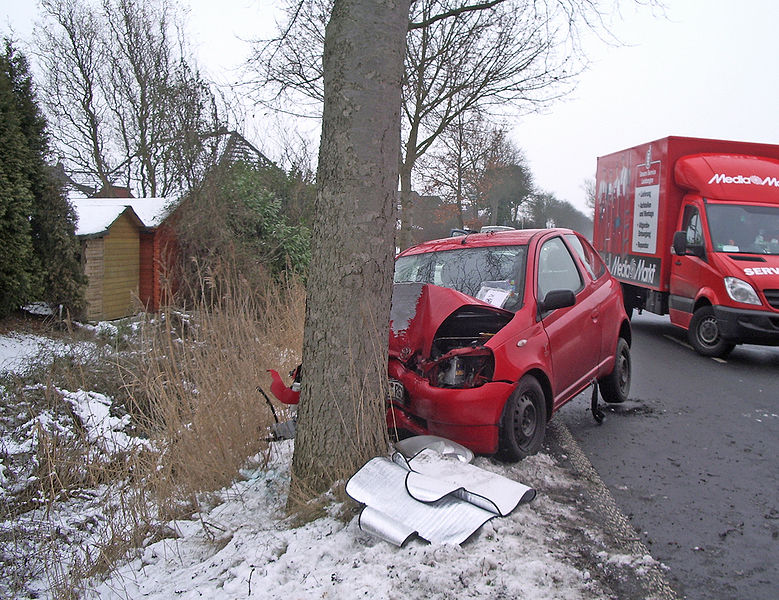
How effective are systems that warn a driver about an impending front collision, then slam on the brakes if the driver doesn’t act quickly enough?
A lot, says a paper recently published in IEEE Transactions on Intelligent Transportation Systems, IEEE Spectrum Tech Talk reports.
Researchers at Virginia Tech’s Center for Injury Biomechanics studied systems that rely on radar to tell the car when it is coming dangerously close to another vehicle’s rear bumper. Some of these systems deliver an audible warning when the distance between the car and the one ahead of it gets too narrow.
Others offer braking assistance if the driver responds to the warning by applying the brakes. Still another type attempts to bring the car to a halt with a huge braking force if the driver has not hit the brake pedal 0.45 seconds before the sensors predict that there will be contact.
Based on a U.S. Department of Transportation crash data, they concluded that in most cases, the electronic safety systems would slow cars down by about 35 percent — enough to cut the number of serious injuries in half. Better still, they say, 7.7 percent of rear-end collisions would be avoided altogether.
According to the U.S. National Highway Traffic Safety Administration, there were 5.4 million automobile crashes on U.S. roads in 2010, killing 33 000 people and injuring more than 2.2 million.

Comments (15)
by NakedApe
As a trucker, I can testify that driving in fog is a real pain in the butt. Such a system would be genuinely practical in foggy conditions as opposed to just saving the drivers’ ass because of inattention.
by E. Carlson
I wonder how many radar detector users / manufactures will cry “FOUL” over the use of that many close proximity radars giving false positives on the road…
by Editor
This system would require dedicated frequencies and coded signals, not be on the same frequencies as radar detectors.
by GatorALLin
Can they put the breaks on distracted driving first (stop texting!!)
I think this breaking idea is good, but will take a while to catch on. I was NOT a fan of the Traction Control System at first, but it works very well in the rain and if oil is on the road (especially in a curve). It took years to get TCS right, but it is quite good now from Ford.
They are still tweaking the side airbags for the better…. I am still curious about the Google self driving cars… maybe this self braking option is just one step closer to the self driving cars?
by Paul in Vancouver
This type of technology would make more sense if it’s accompanied by a commications systems which allows vehicles to relay their intentions to each other; otherwise these sudden abrupt stops may actually increase your chances of getting rear-ended by some other vehicle behind you.
by Bri
Vehicle to vehicle communication will come first. All the major car manufacturers and governments have been in talks about the protocols, for some time now. Even lights and stop signs will be able to communicate to vehicles. The braking systems work off ABS technology, so they’ll skier the amount of braking to the circumstances. It will only be an abrupt stop if a collision was imenant, and that would have been an abrupt stop anyway.
by tim the realist
would you rather hit the car in front of you at full speed with no brake light warning to the car behind you? That’s a much more abrupt stop!
by Michael
Self-braking cars will spill thousands of coffees
by Bri
They only brake if you were going to spill it the other way!
by Marcos Marin
My car self-breaks quickly too, if I don
by Marcos Marin
‘t act.
by Michael
maybe next time you will use some ‘t act in your comments
by Bri
Let me guess, that was a pole and you have two cars now.
by snake0
Looks like your Enter key could use a self-braking system.
by Cybernettr
No more texting while driving!