Studying ethical questions as the brain’s black box Is unlocked
December 18, 2012
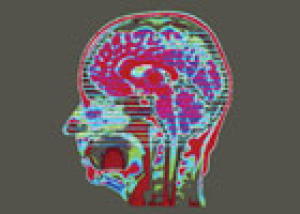
Machines that read thoughts (credit: Wellcome Images)
S. Matthew Liao, director of the bioethics program at New York University, has a singular title: neuroethicist.
Some researchers claim to be near to using fMRIs to read thoughts. Is this really happening?
The technology, though still crude, appears to be getting closer. For instance, there’s one research group that asks subjects to watch movies. When they look at the subject’s visual cortex while the subject is watching, they can sort of recreate what they are seeing — or a semblance of it.
Similarly, there’s another experiment where they can tell in advance whether you’re going to push the right or the left button. On the basis of these experiments some people claim they’ll soon be able to read minds. Before we go further with this, I’d like to think more about what it could mean. The technology has the potential to destroy any concept of inner privacy.
Lately, you’ve been writing about this question: Do people own their memories? Most of us think, “Of course we do.” Why are you bringing this up?
Because there are some new technologies coming where we may be able to enhance cognition and memory with implanted chips. Right now, if you work for a company, when you quit, your boss can take away your computer, your phone, but not your memory. Now, when we come to a point when an employee gets computer chip enhancements of their memory, who will own it? Will the chip manufacturer own it as Facebook owns the data you upload on their products at present?
Even today, some people claim that our iPhones are really just extensions of our minds. If that’s true, we already lack ownership of that data. Will a corporate employer own the chip and everything on it? Can employers selectively take those memories away? Could they force you to take propranolol as a condition of employment so that you don’t give away what they define as corporate secrets?
(More)
Comments (15)
by justin Dubin
This is when we stop giving two weeks notice… On the other hand, it won’t be long now till Dragon Think: Naturally Thinking…
by TFCSD
I knew sooner or later “Great idea boss” would no longer work
by Ian Clarke
Deletion of memory is tantamount to theft, in my books (rather than murder, as suggested below). It not only denies the use of life experience as a resource, but also robs the individual of life itself. Subjectively, an unremembered life is no life at all.
by Ron Batts
Ok so we get a Memory implant.
Looking for work. Well this would never be the same as you could get any skill uploaded.(Matrix)
All the company policies and procedures. And this irresistible urge to work as hard and as long for least pay.
Oh Did I mention the Bloody adverts.
Seriously the more one thinks on the subject the scarier it becomes
by someday69
What’d,dew’yu’think’Thise ufo’s do to Your memory? Just kidding..Were So alone out here’on the spiral arm’of this.What’ch Out’!!!,oh’my’god’zilla’,,,,,
Once the Macine has map’d all human’emotions’..an’every kind’ah’thought pattern’s….it can find’…Even those on DMT……then…it will be able to understand’us better’..When i get my up’grade’ for my Wet’Ware…memory will bee ah’big part of What I’ll carry around in ah’fanny belt’….Now picture some street person of the future..Pushing ah’shopping cart around”With his..Up’grande’sz…an’batteries….lets see ”portable bath’room?..tent/?/home,,,Yu’got’ah’home??……
by Bri
Particularly in relation to top secret government work, they will be able to force the issue for control of that information. It is conceivable that they could upload and download information daily. In light of the recent shootings it is also conceivable that an empowered agency might screen people for abnormal psychopathic thoughts. The movie A Clockwork Orange delved into some of these ideas, and even foresaw some of the current social problems. If these issues are examined from a legal point of view we are not as free as we think. The issues stem from the impact on others. In terms of an employer it’s intellectual property that stems from thier employment. The law already recognizes the employers ownership. In terms of gun ownership, it may come to pass that there are mind screening requirements. There are already legal presidencies for many of these issues.
by klaatu
Can you really cure any mental disorder by treating the brain?
Are fMRI’s the most efficient way to get at thoughts?
Why not read thoughts through the vocal cords or brain stem?
by Robert Lombardo
To no small extent we are products of our environment. Does the environment own us? If this were a question of ethics that would be one thing but it is a question for lawers so I can say we are owned.
by Ralph Dratman
All this will happen. But (I am interested) would it somehow help my employer — and maybe somehow harm me — if I were to take propranolol?
by GatorALLin
sounds like old movie plots…. http://www.imdb.com/title/tt0338337/
by Knot
A worthy point of discussion!
As for my (humble) opinion;
My memories shape my thoughts, and my decisions and actions, which in turn again shape my memories. It is part of who am I am, and who I’ll be.
As such, taking away memories or knowledge (ANY memories or knowledge) is almost like a form of murder, as you won’t be who you would have been, or lose part of who you have been.
I imagine that, as with any current modern technology, such chips would be hacked and modified massively, and such hacking and modding would be made easily available to the general public, just as hackers and modders are glad to share their knowledge now.
by Mr.X
@Knot:
“My memories shape my thoughts, and my decisions and actions, which in turn again shape my memories. It is part of who am I am, and who I’ll be.”
+
“As such, taking away memories or knowledge (ANY memories or knowledge) is almost like a form of murder, as you won’t be who you would have been,
or lose part of who you have been.”
Do you notice the inconsistency between these paragraphs?Taken literally, your statement assumes change and static entities at once.
If your memories shape your thoughts, memories, and actions (deciding is an action too) and these in turn shape your memories,
then your “new” memories will shape these things again, they will create new memories, etc going on indefinitely.
Shaping is an action, an action is change.Shaping memories includes loss of information, too, btw.
Adding memory, not only losing, would change “who you have been”, too.
Therfore you’re constantly changing, and dying at least according to one condition of your definition of this:”lose part of who you have been”.
Now, you wouldn’t be who you are without your environment anyway.Much of you is more or less arbritarly,
not self-chosen in the end, if your search for “final causes”.
Just try to see yourself as an open system, living within other systems, if you like to see an alternative to the traditional western (aristotelian) way to see things.
This being a true(er) view of reality would imply you’re much more like a process than a static entity.
I would even go as far as to say there are no static entities.A viewpoint many east Asian philosophies hold.
If that’s true, you’re at any given moment who you’d have been, since all the other possibilites existed only in your head and are only real in so far as
they “are” what you have been, coming into existence because of insufficient information (you can’t hold all the information in all systems affecting you, to calculate
the “true future”).
Of course, all this implies an absence of free will, because it is a deterministic point of view, and therefore makes changes brought about by the agency of other “systems”/people as “natural” (—> no murder to change you!?) as anything else.
Thus: I conclude there is no static me that can be killed anyway.There is only matter and emerging, bounded consciousness.
Which contradicts one of your central premises (static entities).
Anyway: I’m almost certainly wrong, because my information is incomplete and I just conjured this up^
But still, it could be worth thinking about, imho.
Have a nice day;)
by Joel C.
Taking away memories or knowledge may be a form of murder as you say, but what about just merely copying them? It is not “murder” if you still possess the information.
by H.K. Fauskanger
Taking away memories maybe would not be murder, but we could very well speak of mental mutilation, every bit as unethical as physical dismemberment.
I even felt uneasy when watching the first Men In Black movie and these oh-so-heroic agents brought out their “neuralyzer” to delete the memories of people who had seen something they weren’t supposed to know. A memory-deleting device would be the most sinister technololgy imaginable, should it ever be invented in real life. To me, it spoiled even what was supposed to be a light-hearted comedy.
People ARE, among other things, the sum of their memories. Deleting memories against a person’s own will would be a grotesque violation of personal integrity. Also, the first to master some kind of memory-deleting technolgy could potentially get away with anything: Removing evidence of their crimes — even “evidence” stored in other people’s minds — would become feasible.
This is not where we want to go.
by tedhowardnz
Acknowledging all the truth in what Mr X says (and there is lots of it, multidimensional, perhaps infinitely recursive), then it seems that neither free will or determinism are absolute, instead there are degrees of each at play at what seems to be potentially infinite levels of paradigm and action.
Thus, certainly, it seems that having control of our own information and memories (in so far as that is possible, and acknowledging the ever evolving nature of awareness), is a fundamental human right.
The notion that anyone can own an idea is rapidly reaching the end of its social utility, as are the concepts of money and markets.
In the rapidly approaching age of abundance, money will be a historical oddity, something we will have to work hard at conceiving of, and ideas will be freely shared.
The really interesting evolution will be occurring within the individual minds of each and every one of us, as we all choose our paths (or have them chosen for us by circumstance, or the reality of some mix of the two) through the infinite possibility space available to us.
Interesting times indeed.
And I agree with others, that the next 20 to 30 years will be the most critical to the future of human life in this universe.
As always technologies are morally neutral.
As always, it is what we choose to do with them that matters.