The Cambridge Project for Existential Risk
June 29, 2012
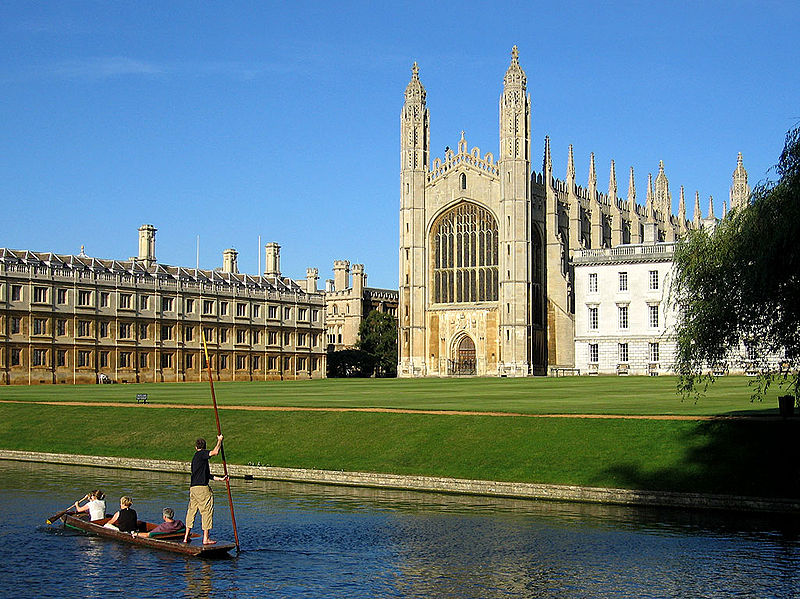
Concerned that developments in human technology may soon pose new, extinction-level risks to our species as a whole, Astronomer Royal Martin Rees, Cambridge University philosopher Huw Price, and Skype co-founder Jaan Tallinn have formed The Cambridge Project for Existential Risk.
“These dangers have been suggested from progress in AI, from developments in biotechnology and artificial life, from nanotechnology, and from possible extreme effects of anthropogenic climate change,” the founders state. “The seriousness of these risks is difficult to assess, but that in itself seems a cause for concern, given how much is at stake.
“These issues require a great deal more scientific investigation than they presently receive.Our aim is to establish within the University of Cambridge a multidisciplinary research centre dedicated to the study and mitigation of risks of this kind.
“We are convinced that there is nowhere on the planet better suited to house such a centre. Our goal is to steer a small fraction of Cambridge’s great intellectual resources, and of the reputation built on its past and present scientific pre-eminence, to the task of ensuring that our own species has a long-term future.”
The team is developing a prospectus for a Cambridge-based Centre for the Study of Existential Risk in coming months, and it welcomes inquiries and offers of support.
Co-founders
Huw Price
Bertrand Russell Professor of Philosophy, Cambridge
Martin Rees
Master of Trinity College and Emeritus Professor of Cosmology & Astrophysics, Cambridge
Jaan Tallinn
Co-founder of Skype
Cambridge advisors
David Cleevely
Founding Director, Centre for Science and Policy
Tim Crane
Knightbridge Professor of Philosophy
David Spiegelhalter
Winton Professor of the Public Understanding of Risk
External advisors
Nick Bostrom
Professor of Philosophy, Future of Humanity Institute, Oxford
David Chalmers
Professor of Philosophy, NYU & ANU
George M Church
Professor of Genetics, Harvard Medical School
Max Tegmark
Professor of Physics, MIT
Jonathan B Wiener
Professor of Law, Environmental Policy & Public Policy, Duke University

Comments (22)
by GatorALLin
I have to agree that the Human 1.0 is up for some future changes… and that Human 2.0 could easily render Human 1.0 on a path for extinction. If Ray Kurzweil is right and the singularity is near then change will be increasing at an increasing rate. My gut says the best way to test this stuff is to actually do some if not all of it otherwise you won’t be able to even keep up with the upgrades to human intelligence, lifespan, health applications, etc.
I am a fan of Ray Kurzweil’s older book, the age of spiritual machines, where he does a good job of showing how in small steps, humans opt for ways to improve themselves. Most developments at first are funded from military or health increasing things and each option is so small almost no one realizes the cumulative impact (Lasik eye surgery starts as a way to get back to normal, but then advances to give options beyond “normal” in the future.). Maybe we start to merge with technology (ways to have artificial hearts, limbs, etc), then it advances to go beyond normal as we decode the DNA to offer non mechanical options. Many of our students are already taking adderall to improve focus for studying and as we understand how the brain works and there are likely to be many more tricks to get better REM sleep, or improving memory or info retention. RedBull or Gatoraid is socially accepted to improve sporting events, or everyday activities…this is just the beginning as there are drinks like http://www.nawgan.com/ claiming to increase focus, etc. The list of products to extend long/healthy life go way beyond just red wine pills http://www.longevinexadvantage.com/ and you can already for only $299 get a great list of info for your own DNA testing from https://www.23andme.com to start taking control of what your genes say about you.
I don’t see any harm from Cambridge setting up a place to study this, but with the advancements of how fast info spreads thanks to the internet, cell phone aps and social media and power of crowd-sourcing, the idea that older institutions will be needed for their viewpoints could prove irrelevant. My hope is that the old ivy tower mentality avoids the temptation to separate themselves as they have so often done in the past. Tools like kickstarter.com or petridish.org may prove better ways to get things done and figure out complicated puzzles at the highest level.
by Louis Parsons
Bri is exactly correct!
People – very respectable people – have tried to explain …
Limits to Growth – 1970′s
President Carter commits the truth about domestic peak oil – 1970′s
Al Gore tries to explain AGW – 1990′s
I have a library of similar studies and presentations!
Now, there are two books updating us on the accuracy of the predictions made by the club of Rome, but still our friend Daniel thinks that all will be well. Obviously he thinks that God or some other magic will save us.
The facts – no matter how well explained to Daniel and people like him – will not make us take the proper actions. Somehow, Daniel and friends will have to be silenced, and controlled by a totalitarian world government (sorry). Otherwise we are toast.
Our friends at Cambridge may get some attention, but how will they make everyone in the world play ball??
by Bri
Finally, some meat and potatoes on the table, I love something to stew over. Keep up the posts! Look at the movie V for Vendetta. Written long before George Bush stole from it’s script. The secret to combating this is by empowering the people. Ray said it best. It wasn’t Yeltsin standing on a tank, it was fax machines! The Arab spring didn’t even have a Yeltsin. Just a whole bunch of people, wearing Guy forks masks! Ok, so it was turbans. The face they wore, was steely resolve, and naked idealism. They all felt the need and they did something about it. Soon the cell phone will be inside you. You will be able to talk to someone in any language, and hear them in your own. What should we talk about? People everywhere are going to be in the same boat! Hopefully we will talk about important stuff. The Singularity is near!
by Marcus Barber
Great initiative. They should be able to accelerate their progress by having a look at the Lifeboat Foundation’s work on existential risks and taking those ideas to fruition using the leverage of the University
by eldras
Formidable team. If we build post-human A.I. safely it will necessarily be able to solve the other problems better than human beings.
by marty weiss
Have they resolved the lethal effects of nanotechnology on fish yet?
by Marcos Marin
what about bored academics?
by Gorden Russell
I do beleive that ” the extreme effects of anthropogenic climate change” can be reversed by nanotechnology. When self-assembling photovoltaic carbon nanocells can take carbon out the atmosphere to grow into carbon nanotubes, graphene, buckminsterfullerene, fiberdiamond and any other number of useful carbon compounds, then all those extreme effects will be reversed.
by Jonathan Cole
Right on. But the problem is scale.
by Jonathan Cole
Panic and the irrational actions that follow could be the greatest cause of destruction in any global emergency. How will that be addressed? Perhaps a jar of ‘anti-panic’ pills in every medicine cabinet? In the US this is sort of happening with practically free booze ( 2buck Chuck) and ubiquitous pot. Opiates for the people? Already part of the plan?
by kingland
Genetically modified humans are we all, if we admit it. So which “Dr. Moreau” dares to begin modifying us to escape this gravity well, and the troglodytic militarists who run it? Don’t fear the grey goo, for life will find a way…
by Bri
Don’t fear the gray goo? Sounds like you’d be great at Russian roulette!
by Gorden Russell
No, not at all. Let’s not fear the grey goo. The nanocells will just stop running if anything goes wrong. They won’t go wild and consume everything. You will be controling and monitoring your nanocells with the nanocomputers in your own hippocampus. As long as they’re not designed by Microsoft, they won’t be hacked. Just make sure you buy your nanocells from Apple, where they are protected from viruses.
by Daniel
More pin heads jumping onto the ‘The sky is falling’ bandwagon. How do we know this is serious business? Because we don’t know how serious it is. Great start.
What are the underlying assumptions in this task of ensuring that our ‘species’ survives? As we are today? Will change be blocked if it doesn’t meet with their approval? How is this effort being funded? Are these public funds going to ‘make work’ for a bunch of intellectuals who have nothing better to do?
Humanity is going backwards led by its intellectuals who think they are bright enough to ‘Understand Everything.’ Every time these folks end up in charge instead of being made to sit at the back of the bus humanity has been slaughtered in the name of humanity. How about a little humility here and how about they do this on their own dime. The ‘hubris’ of the intelligentsia knows no bounds.
by Editor
A good place to start is Martin Rees’ brilliant book, Our Final Hour, http://en.wikipedia.org/wiki/Our_Final_Hour. I have a lot of respect for the people involved in this project, but they may not be well known to the general public. The project is being funded by Skype co-founder Jaan Tallinn. I don’t know of any plans for public funding.
by ChrisF
I don’t quite understand your point Daniel – do you believe that it’s not worth studying these risks at all, or are you unhappy about the specific people who are involved ? Given the potential risks, it seems sensible to me to spend a little money on getting a deeper understanding of these issues, even if we can’t arrive at clear answers immediately. And personally I’d rather have informed, educated people (“pinheads”) asking these questions than ask the average man in the street.
Regarding your point that humanity is led by intellectuals, I genuinely wish that this were the case – ie, that our global leaders were people who made decisions based on reason and evidence rather than political concerns and special interests etc. Sadly I see very few signs of that here in the UK. What examples were you thinking of ?
by Bri
The sky is falling is a good choice of words. They have found seafloor debris in large chevron patterns on Madagascar. They dated and traced back and found, a meteor struck the Indian ocean about 5000 years ago. The wave deposites were several hundred feet deep and as large as manhattan! The latest theory for the dieoff of megafauna in north America is from an object either disintegrating in air, or hitting ice so thick it didn’t leave a crater. Around ten thousand years ago. Tunguska at the turn of the century, what’s to worry about? We’ve got nothing better to do than stick our heads in the sand. Slope failure happens in the canary islands and the Hawaian chain. The other islands use to be round. The rock is of poor quality with a lot of vent tubes through it. When they fail, the tsunami is about one hundred feet tall. Why should I trust your indifference? I think real information, evaluated by many brilliant experts is far more sensible.
by Gorden Russell
There is a good news article elsewhere on this newsletter about the b612 Foundation. They plan to place a telescope in orbit to chart the courses of the dangerous Near Earth Objects. This is an existential threat we can do something about…just contribute a couple of bucks. Here is the URL:
http://b612foundation.org/donate/
by Phil
The anti-intelligence, anti-science, anti- government, anti-everything have spoken. Nothing in the scientific world would ever happen if we didn’t question our world. Space exploration would never have occurred simply because we didn’t know if it was serious business. Your circular “reasoning,” if you could call it that, leaves me wondering how you manage to survive in a world where nothing is certain. How do you know whether to get up in the morning if you can’t be certain if it is going to be worth it? The underlying reasons for any scientific endeavor is the pursuit of knowledge. Since you don’t want knowledge don’t complain, just tune out. We intelligentsia will understand and it will help reduce climate change from the hot air you spew out. Change will likely be blocked by the likes of you and your ilk who understands nothing and has no interest in the world. The enemy isn’t intelligence, its ignorance.
by Editor
Please avoid personal attacks on this site. Thanks.
by Chrispium
I second Phil on this issue completely.
by Bri
It’s about time! Then comes the hard part. Getting people to believe, and do something about it!