Why China makes our electronic products (it’s not just cheaper labor)
January 22, 2012 by Amara D. Angelica
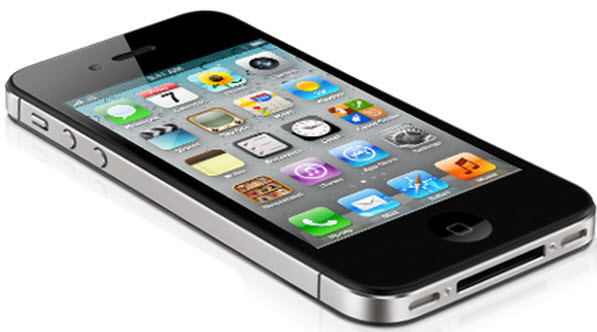
iPhone 4S (credit: Apple Inc.)
It’s not just that workers are cheaper abroad, according to an important article in The New York Times Saturday. Most of the components of cellphones, computers, and other electronic products are now manufactured in China (and European and other East-Asia countries), so assembling the device half-a-world away would create huge logistical challenges, the article points out.
China now has a far larger supply of qualified engineers than the U.S. And China’s factories are far bigger and can react faster than those in the U.S. “Made in the USA.” is no longer a viable option for most electronics products. So, many companies have closed major facilities in the United States to reopen in China, and middle-class jobs are disappearing as the nation has stopped training enough people in the mid-level skills that factories need.
“Economists debate the usefulness of those and other efforts, and note that a struggling economy is sometimes transformed by unexpected developments,” say the Times writers. “The last time analysts wrung their hands about prolonged American unemployment, for instance, in the early 1980s, the Internet hardly existed. Few at the time would have guessed that a degree in graphic design was rapidly becoming a smart bet, while studying telephone repair a dead end.
“What remains unknown, however, is whether the United States will be able to leverage tomorrow’s innovations into millions of jobs.”
So it seems to get down to this: what exactly are tomorrow’s innovations — what’s the next “Internet,” what skills will be required, and how can the U.S. (and elsewhere) compete?
Comments (10)
by Bastiat's Ghost
Humans do 2 things in this universe: gather and process matter and energy, and design the geometric conformation of matter and energy.
Developing economies tend to focus on gathering and processing matter and energy.
Developed economies tend to focus on designing the geometric conformation of matter and energy.
The only relevant issue is where in space-time it is most efficient to carry out these activities. See: Frederic Bastiat, “The Petition of Candlestick-Makers”, 1845.
by matthew
Well, wherever they are made I wish there was both a higher standard for quality (long-lasting/durable products) and human rights in the factories.
by HollyTree
Add to the downfall of America the increase in mysogyny and sexist attitudes of idiot men (as exemplified in by Nyk above) who think that only men can be engineers. Your attitude will be the death of you.
by Nyk
The US and its vassals cannot hope to compete with China as long as they don’t have self-sustaining economic and social systems. High levels of socialism and corporatism (crony capitalism) are putting the brakes on economic growth, while low birth rates among high-IQ STEM workers coupled with high birth rates among the less intelligent poor are putting a halt to scientific progress, by reducing the overall number of minds capable of doing science and increasing the number of minds engaged in crime and other activities detrimental to society. Our future is either the Singularity or the Idiocracy. There is no middle choice.
In China, hard-working smart men are rewarded with good jobs, good wives and high social status. In the US, they are rewarded with middle-class, highly-taxed jobs, the most beautiful women are not interested in them, while the have to cope with the crime of the underclass as well as the bailouts of the rich.
It’s not hard to see which country has the better incentives for creating prosperity.
by Cybernettr
Add to that the fact that China has a very cautious immigration policy, as opposed to that of the US, and you have a recipe for disaster!
by Thomas Jensen
I am not sure what tomorrows internet is going to be, but one thing I think will be here soon is virtual worlds with 100% immersion, IE, so advanced that it’s impossible to tell them apart from the real world, when you’re inside them. This will be huge in gaming and other sorts of entertainment. The total immersion will be made by direct connection to the nervous system and during immersion signals from the artificial world will replace real signals from your body. The brain will be fooled with 100% efficiency, just like when we are dreaming. Effectively, it will be on-demand dreaming without sleeping and remaining conscious.
I think a big part of it for many people trapped in a modern world that they find too complex is going to be escapism into a simpler world. They essentially want to live in the medieval times or similar low-tech simplicity, but still want the option of modern healthcare and such. Total immersion can give them that. This opens up business opportunities in numbers we have scarcely allowed ourselves to dream about.
Timeline for this? I’d say about ten years to the first working systems and in twenty it’s going to be a major business.
by Giulio Prisco
Khannea, the Chinese are following, to the letter, the teachings of your ancestor Sun Tzu in The Art of War. That ancient (and surprisingly modern) book is their master road-map. We should read it again, too, or else.
by Khannea Suntzu
It’s the reality of the world – always been – but that word “compete” disgusts me.
by Martin Putters
What exactly are tomorrow’s innovations: I don’t know, but most likely it has something to do with robotics, nano technology, gen technology, information technology and/or energy technology.
by Mike
I would be more concerned about energy conservation and gas conservation. Since solar power are being used everyday, I think more people are aware about this energy problem.