2 billion jobs to disappear by 2030
February 6, 2012
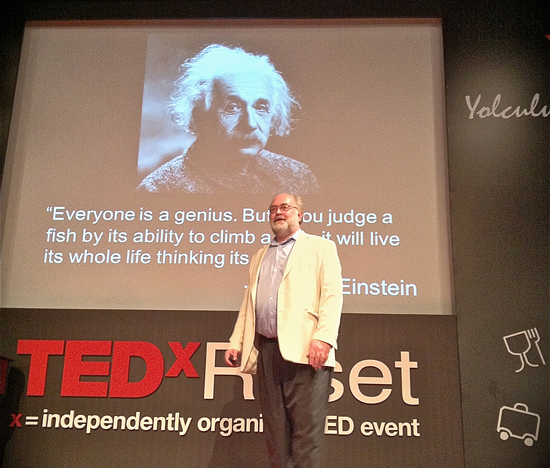
Futurist Thomas Frey predicts that over 2 billion jobs will disappear by 2030, roughly 50% of all the jobs on the planet.
Industries that will go away (with some news jobs created):
- The power industry (micro grids)
- Automobile transportation (going driverless)
- Education (OpenCourseware replacing teachers)
- Manufacturing (3D printers and bots taking over).

Comments (17)
by Caeliean
I like Ian M. Banks’ “Culture” model of the employment option. If scarcity can be eliminated, being ‘rich’ will be really just about feeling rich and doing interesting, meaningful stuff. Everyone can contribute value even if it’s just friendship, a different perspective or other currently undervalued ‘soft-skills’ that no-one outside of Tokyo is currently paying for and provided we do manage to begin the process of developing those benevolent Minds that Banks writes into his stories as supporting characters and scenery, we should be alright. Machine intelligence ends up running the overall show, but somehow, they’ve managed to model themselves with a nature that is, at it’s core, humanitarian, even if they’re sometimes impish or grumpy. I definitely like that route better than the Accelerando route where parasitism ends up making entire star systems unfriendly to meat-based life or even friendly non-biological minds.
As an art teacher, I feel like I already have felt the sting of shifting economic values… “where is the ‘real value’ in art education?” everyone always asks… and beyond the difficult to support statement about aesthetic expression mattering, and cultivating ‘culture’ in our students, we’re really only left with hand-eye, observation skills and methods for critical and creative thinking… not so different from most teaching, as it turns out. The difficulty comes when you begin to talk ages and social development. I’m all for using technology in the classroom, but until we have decent AI like you see in Spock’s teaching pit in the new run of Star Trek, you’re going to need minds in the mix to shape new minds, especially younger than 12ish… that is, if we decide that new humans are even worthwhile. Either way, people are unlikely to withhold food etc. from people who ‘aren’t producing and pulling their weight’ when production becomes so cheap as to be inconsequential and at the end of the day, optimism makes it a lot easier to sleep here and now.
by Steve Withers
The problem we face is that the people currently defining the economic policies make no allowance for a world where machines do most things and people don’t need to work. They see such a system as being from each according to his ability and to each according to his need. That was Karl Marx industrial version of the older Christian “Golden Rule” of Do unto others as you would have others do unto you. It’s where the world needs to head…..but for 2000 years the greedy have blocked it every step of the way and they still do.
by TorK
Thomas Frey, like other futurist are compelled to fire a warning flare from time to time to draw some attention to a problem in our relative society.
One cannot easily escape feeling there is need for change in our society, as there is an ever widening gap between the fortunate and those of us struggling to hold on to what we have.
All of the above comments seem to be from folks that are better educated on these matters than the average person. I fall into the average folk category, so please keep that in mind.
The loss of 2 billion jobs and creation of a new leaner technological society cannot come into being without much suffering and stress. At present time it appears that economic survival of the fittest is the lay of the land with the weight of large corporations actively crushing the middle class of our american social structure.
This is not a political statement, but rather, just pointing out the natural progression that humans being human constantly strive toward. Like the moth called to the light, we are called to self-preservation.
Quite a long while ago the small voice inside of us that urged us to take no more than we need was extinguished. The people that worked within such a sustaining society were decimated by that stronger urge to survive at all cost.
Hording is evidence this is true. While hording once was a key tool for survival, somewhere along the line it morphed into a cancer which is devouring our spaceship named Earth. Please forgive the drama.
I fear it will probably be further out than 2030 to unlearn and reprogram the human nature that got us here, but I sincerely hope Frey and those that made optimistic comments are right.
The only thing I can do to help, is change my own habits that contribute to the problem. I am glad to have found this article and website.
Good luck.
by Zyx
I’m glad a better system is on the horizon. It’s long overdue. To hell with wage slavery and this primitive economy.
by renae
amen!
by alliwant
Given how poorly we are now dealing with 10-20% unemployed (depending on who gets counted), I dread the thought of vastly more in that spot. Shoving the unemployed off a cliff is no more difficult in practice than metaphorically for some. I’d like to see our society change gracefully, but I’m not optimistic.
I think the US would likely emerge as prospering greatly in an ever-more technological economy, but our sectarian divisions could sow the seeds of disaster, as some of our factions see the chance to eliminate others.
by Logic
What the pessimists and worriers fail to realize is that all of our conflicts arise out of survival needs. Consider that wars are fought over land. Thieves steal property. Destruction follows envy. The very idea of a social safety net or an economic structure implies a need for either, which I would argue is soon to be an obsolete mental framework. While all these jobs will certainly disappear, they only disappear as they’re no longer needed. As the technology begins to provide our basic survival needs at effectively no cost, there will be no need to earn as much, if anything. Abundance itself becomes the social safety net.
The most important line in the linked article is this: “We are not well-equipped culturally and emotionally to have this much technology entering into our lives.” It’s a profound statement that underpins the only real obstacles we face. Anything 2.0 is hard for That-thing 1.0 to accept culturally and emotionally. This is what we need to focus on.
by DownshiftDX
This article is directly in-line with the thinking of The Venus Project and The Zeitgeist Movement. Technology is going to permanently displace jobs, which it is currently doing and accelerating at, even as some new job sectors are created. The acceleration of this process will become harder and harder for society to cope with. TVP and TZM recognize that is trend flies in the face of our current economic system’s fundamental structure and that a serious change needs to occur. There simply won’t be as much work to go around and a system that forces people to have “gainful employment” in the face of production and access abundance to all human needs for life thanks to these enabling technologies will continue to face increasing social and economic problems. I recently started reading Jeremy Rifkin’s “The End of Work” and along with many other thinkers of the past such as R. Buckminster Fuller, the direction seems to be clear and more people are recognizing it.
I advocate a Resource Based Economy as defined by The Venus Project to incorporate technology and social engineering for the expressed purpose of freeing humanity from the bonds of labor as much as possible while producing an abundance of goods and services.
http://www.TheVenusProject.com
by Spikosauropod
I am a math teacher at a technical college in Washington State.
We made the transition to computer based classes several years ago. It turns out that the job of teaching has not gone away, but changed in nature. We no longer give extensive lectures, but we must constantly run around the classroom clarifying what the computer is teaching. Machines still can’t anticipate the kinds of confusion students run into and work creatively to get them past it. When the machines rise to that level of interaction, they will put everyone out of work, not just teachers.
At the end of the article, Frey says, “Our challenge will be to upgrade our workforce to match the labor demand of the coming era.” That challenge will fall, of course, to teachers; especially math and science teachers. Can our workforce be upgraded in this manner? Anyone who has tried to teach math or science to the recently unemployed who aren’t interested in these subjects and have little or no aptitude for them will find themselves in a quandary.
So, what economic system will work best in the world we are rapidly entering? Will it be a welfare state where most of the population is living on the dole? Will it be a form of capitalism where everyone is an entrepreneur? It will NOT be a two continent system where Joe owns one continent, Siegfried owns another continent, and everyone else is ground into fertilizer or biofuel. The newly unemployed will not have money, but they will have influence. In the United States, they will have a vote. Long before they are transformed into the newly impoverished, they will rise up and force change. We are already seeing the first signs of this in the occupy movement and the rapid turnover of political power. We had better have a good plan worked out before the number of unemployed reaches critical mass. The clock is ticking. We had better think a plan up in a hurry!
by Jim Rice
Completely agree with Mr. Frey.
There is a book called “The Lights In The Tunnel” which may help illuminate this subject. It discusses what happens during the transition from Jobs to No Jobs. If you’ve been wondering why people are getting poorer as productivity explodes, this book provides clear answers. Most important, it outlines a solution to the coming joblessness crisis. Factories, warehouses, and stores operated only by computers and robots are a GOOD thing, IF income is distributed to people on a basis other than work, thus allowing them to buy the stuff those factories produce.
I believe this book is the first to deal comprehensively with the most important trend of the decade, the automation of most work.
by Renzo Canepari
In 1972, Society gave me the right to vote for the fist time. For President, I voted for an honest man who ran against a crook. The honest man proposed a guaranteed annual income for all. the crook won the election.
by John Doe
We will simply have an expanding welfare state, much like now, where a historically unprecedented proportion of society are not employed, and there is sufficient production efficiency to provide food, shelter and the means for an actual lifestyle for everybody.
I think we will see a singularity event before this pattern becomes too socially destabilising.
by henrik yde
The solution is obvious: abundance eliminates scarcity –
Ergo everyone gets everything for free.
by Mats Svensson
Also:
Journalism (Link-bait generating software, replacing Article writers)
And food manufacturing will be replaced by a pipe from your asshole to your mouth.
by Guilherme
The Power Industry section impact must be related to the LENR / Cold Fusion emerging technologies. Check out the work being developed by Andrea Rossi (E-cats) and Defkalion (Hyperion).
by Thomas Jensen
If this turns out to be true, we will need to completely rethink economy and wealth redistribution. Otherwise we will see massive civil unrest from the hundreds of millions of people pushed over the edge into the abyss of poverty.
I have no clever solutions to this problem.
by AZryan
Hearing about a MASSIVE loss of jobs sounds like a disaster, because historically it always has been, but this is defining a technological revolution than in many, if not most, or all ways, obviates the need for people to have jobs. You don’t need to work if you own slaves. ‘Slavery’ in this sense is robotics rather than actual slavery or similar 3rd world oppression (which has already shifted so many jobs out of the 1st world nations).