$5 million grant to study immortality
August 3, 2012

The John Templeton Foundation has awarded a three-year, $5 million grant to John Martin Fischer, distinguished professor of philosophy at the University of California, Riverside, to undertake a rigorous examination of a wide range of issues related to immortality.
“People have been thinking about immortality throughout history. We have a deep human need to figure out what happens to us after death,” said Fischer, the principal investigator of The Immortality Project.
“Part of it is motivated by the fact that there are advances now in longevity that naturally raise the question of whether immortality is possible and whether it would be desirable,” Mr. Fischer says.
Fischer points to a fresh impetus for studying it now: the increasing interest in possibilities for extending human life through science, says The Chronicle of Higher Education. “He notes the work of thinkers like Ray Kurzweil, who predicts that humans and computers will merge, and Kenneth Hayworth, who studies ‘mind uploading.’”
“We’re not going to spend money to study alien-abduction reports.”
Anecdotal reports of near-death experiences, out-of-body experiences and past lives are plentiful, but it is important to subject these reports to careful analysis, Fischer said. The Immortality Project will solicit research proposals from eminent scientists, philosophers and theologians whose work will be reviewed by respected leaders in their fields and published in academic and popular journals.
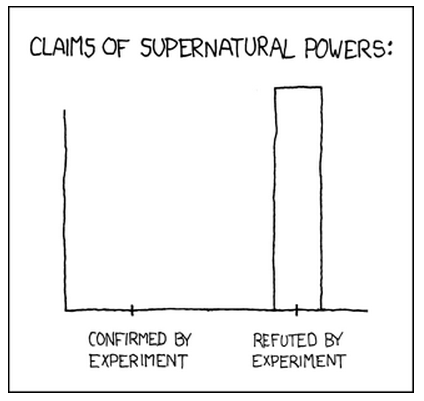
“We will be very careful in documenting near-death experiences and other phenomena, trying to figure out if these offer plausible glimpses of an afterlife or are biologically induced illusions,” Fischer said. “Our approach will be uncompromisingly scientifically rigorous.
We’re not going to spend money to study alien-abduction reports. We will look at near-death experiences and try to find out what’s going on there — what is promising, what is nonsense, and what is scientifically debunked. We may find something important about our lives and our values, even if not glimpses into an afterlife.”
Why do Americans see tunnels but Japanese see gardens?
One of the questions he hopes researchers will address is cultural variations in reports of near-death experiences. For example, the millions of Americans who have experienced the phenomenon consistently report a tunnel with a bright light at the end. In Japan, reports often find the individual tending a garden.
“Is there something in our culture that leads people to see tunnels while the Japanese see gardens?” he asked. “Are there variations in other cultures?” What can we learn about our own values and the meanings of our finite lives by studying near-death experiences cross-culturally (as well as within our own culture)?
Is immortality worthwhile?
Other questions philosophers may consider are: Is immortality potentially worthwhile or not? Would existence in an afterlife be repetitive or boring? Does death give meaning to life? Could we still have virtues like courage if we knew we couldn’t die? What can we learn about the meaning of our lives by thinking about immortality?
“We hope to bring to the general public a greater awareness of some of the complexities involved in simple beliefs about heaven, hell and reincarnation, and encourage people to better understand and evaluate their own beliefs about an afterlife and the role of those beliefs in their lives.”
For example, “We think that free will is very important to us theologically and philosophically. And heaven in the Judeo-Christian tradition is supposed to be the best place. Yet we arguably wouldn’t have free will in heaven. How do you fit these ideas together?”
At the end of the project Fischer will analyze findings from the Immortality Project and write a book with the working title “Immortality and the Meaning of Death,” slated for publication by Oxford University Press.
Unfortunately, the project does not include studies of immortality before death.

Comments (36)
by HyperD
It is a colossal waste of money.
“One of the questions he hopes researchers will address is cultural variations in reports of near-death experiences.”
Dr. Stephen Thaler figured that out years ago.
See for instance: »http://www.initsimage.org/TCAIS%20Flash/Thalamocortical%20Algorithms%20in%20Space!.html«.
Generally, people experience what they expect to experience (what has been programmed into them culturally).
by Editor
“people experience what they expect to experience (what has been programmed into them culturally)”
Right. I would like to suggest that part of the research be focused on how the (postmortem) immortality myth (in the sense of lacking in verification), aided by what some see as deathist religious beliefs that may interfere with funding and public support of research in “real” immortality (by marginalizing its value), and what actions would be most effective in countering such putative programmed beliefs. Such research might also help counter reasonable claims that the research is inherently biased, given the funding source and possibly Prof. Fischer’s own beliefs (I don’t know what they are, to be fair) and those of his institution, thereby calling into question the validity of any findings. I would like to suggest that the study would be enriched by funded participation by thoughtful philosophers, writers, and scientists with counterbalancing viewpoints, such as Richard Dawkins, Daniel Dennett, and Sam Harris, and fully open discussion. I am also sending this comment to Prof. Fischer, should he wish to comment.
Amara D. Angelica, Editor, KurzweilAI
by Glenda Miller
The Templeton Foundation is wasting $5M. Stephen Thaler has already done this for free!!! (see http://initsimage.org/)
by eldras
:) I wouldn’t ditch philosophy just yet. It aims to think the unthkable. Immortality will create some opportunities that need solving! Paradise Engineering has many issues.
Allanx heat death of the universe was answered by M Theory.
by Editor
… and countered by the cyclic model
by Eray Ozkural
I protest this pompous stupidity and waste of money.
What ignorance is this? One needs no “philosophical understanding” of immortality, one needs to discover the means to attain immortality. These fools are merely seeking “philosophical objections” to immortality. We do not require any more animalistic philosophy. This is a silly propaganda by religionist fools. I condemn this major failure of intellect, one day we will get rid of these folks wholesale, since we’ll outlive them.
by Bri
I post this message in plain site, in this village square. I am accepting The Great Randi’s challenge. I have many reservations to your application, but I am not backing down. It is my wish that this post reaches your eyes personally. I can easily give you proof. If that is what you desire, an accord can be reached. I will submit my application to the Kurzweil camp, with instruction to implement it. I won’t do this personally, for I am in objection to you requirements. This in no way shall be construed as a decline in your challenge. I leave it in Rays hand, because I sense in him an honesty that I don’t sense in you. I want this to be scientific. This is in relation to the Templeton grant to John Martin Fischer, to acertain the validity of the spirit world. As since no one has passed your initial screening, I’m sure you must be anxious to have a real subject. I can easily satisfy your tests. You can contact the Kurzweil organization to get further information. The personal information I have given them, I grant you free access to. This being duly post in a public space.
by Allanx
Whenever people talk about longevity research, mind uploading and hypothetical immortality/indefinite lifespans, the opposition always drums up the same tired arguments about overpopulation, resource consumption, Malthusian Catastrophe and ethics issues. I argue the opposite; things like substrate-independent mind technology have the potential to save our world. Just think of the possibilities:
1. No more disease and aging-related maladies, meaning no more hospitals and no more health insurance. No more spending two trillion dollars annually on health care in the US.
2. No more agriculture. Substrate-independent minds living in a simulated world do not need to eat. Say goodbye to topsoil depletion and drained aquifers.
3. No more wasteful, landfill-destined consumables like safety razors, plastic bags, plastic beverage containers, etc. Substrate-independent minds living in a simulated world do not need clothes or consumer goods made from actual matter, since their belongings exist only as information within the simulation. Since information is not scarce like real goods, every virtual avatar inside the simulation could theoretically live on an actual private island with their own yacht, if they so chose.
4. In fact, substrate-independent minds do not need to breathe, so they could theoretically colonize and safely inhabit extremely hazardous environments with no ill effects, such as gas giants and hothouse planets. All you need to live on Mars as a SIM mind is to have your core hooked up to a good fusion reactor, and you’re all set.
5. Instantaneous teleconferencing over great distances without wasting even a drop of petroleum to actually commute. Just a few joules of electricity, and you’re across the globe in a second. In a simulated world, distance is illusory, governed only by the limitations of the communications network (you can’t send information faster than light, obviously, so the only real delays are found in interplanetary communication).
6. No more wars, crime or physical injury. In a simulated world, avatars attempting to assault one another while in a “safe” zone would automatically have a literal barrier placed in their path, and theft of virtual “goods” would be utterly pointless, since copies of everything are freely accessible. Leap off a tall virtual structure, and your fall will be cushioned, and so forth.
7. More experts living longer. Imagine the kind of world we’d be living in if you could get all of history’s greatest scientists in the same room for an hour. Or a year. Or several thousand years. Though, by that point, the differences in intellect between people would probably be negligible, because their SIM minds – being bereft of physical flaw or neurological deformity – would quickly absorb and retain information far better than their organic counterparts. Also, even the brightest SIM minds would likely be greatly outstripped in power by AI, which would use the same substrate on a larger scale and in different configurations optimized for specific roles.
8. Information would be shared freely and infinitely elaborated upon. Free college-level educations for everybody, and that’s just to start. Imagine having a mind that could remember every little detail with photographic accuracy. You’d be able to correlate so much information in ways that mortals today can’t even dream of. That, in itself, could allow for a number of scientific and cultural breakthroughs. An eidetic memory is as useful to a researcher as it is to a painter or writer.
9. Sick of being human? Program your avatar to be a jet aircraft for a day, or a dolphin, or whatever the heck inspires you. The simulation allows for infinite possibilities, and provides for stunning, lifelike detail indistinguishable from reality.
10. Did I mention the entertainment? Reenact the battles of the Napoleonic era, or fly a helicopter gunship, or build the great pyramids by using telekinesis to manipulate each stone block by hand. Or, you can have a super-intelligent AI do the work of an entire game development studio and port a hundred-year-old vintage video game to the virtual-reality simulation in scant seconds, when it would have taken 300 people working round-the-clock about twenty years. Yay for productivity! Then, of course, there’s the porn. Do you have a fetish about being an amorphous blob of Strawberry Jell-O covered in genitalia? There’s an app for that. It’s sold for 99 joule-credits by Kraft, who now specialize exclusively in servicing such clientele now that nobody has to eat, drink, sleep or breathe.
Admittedly, such a system raises a bunch of questions:
1. What do you do if the power goes out?
2. How secure is it from hacking?
3. Isn’t living in a simulation with the rules set from the outside fundamentally totalitarian in nature?
4. How is it maintained? Where do the spare parts come from?
5. What do you do when the universe suffers its inevitable heat death? Oh yeah, that’s right. Here’s what you do: you reach your head down between your virtual avatar’s legs and kiss your own ass goodbye.
I really am looking for an answer to that last question, though.
by Allanx
All joking aside, I guess I should explain in greater detail.
Human beings are part of a very complex industrial society that spans the globe, like a sort of meta-organism. This system has innumerable components that contribute to the whole. Agriculture, medicine and consumer goods are three of those components, and they take up a considerable amount of our industrial output to maintain. They also take a toll on the planet itself, robbing it of non-renewable resources. These products and services do not come from the ether; they are often shipped across vast distances and produced with the aid of complex machinery that also consumes natural resources to power and maintain. If human beings were made to no longer require such things – say, by giving up our wasteful bodies in exchange for substrate-independent minds living in a computer simulation practically indistinguishable from reality – the logistics involved in maintaining human society would be greatly simplified, allowing for increased growth without a commensurate toll on the environment. With the surplus power and industrial output, humanity would flourish.
In a world of complete automation, manual labor on the part of flesh-and-blood human beings would inevitably become entirely pointless – even counterproductive. If a machine can do the same job faster while consuming fewer joules over its productive lifespan, then it is a waste to employ people to do that work. Therefore, the only kind of work available will involve using one’s mind, and even that may become redundant with the rise of super-intelligent AI. There would be a renaissance of cultural achievement. Minds which would have been tied up in back-breaking labor would now have a lot of free time to ponder the nature of the universe and elaborate upon it at length in art, music, writing, poetry and so forth.
One of the accusations leveled against the singularity is that its very nature would lead to cultural stagnation; since death and risk of personal harm would no longer exist (save for destruction of the system in whole or in part by a natural disaster), those themes would no longer inspire authors of fiction. I argue the opposite. The depth of the simulation itself, and the opportunity to imprint one’s own thoughts upon it, would be a wonderful source of inspiration! You could experience things that would have been impossible for a flesh-and-blood human being to live to talk about. Basically, you could do anything. You could be Luke Skywalker for a day, or Hamlet. Or any figure from history, from the very best to the very worst. You could even write a book, feed it to a super-intelligent AI, and have it simulate your world and your characters for you, as per your specifications. I can imagine no better source of inspiration than a system able to manipulate data in so many ways.
The scientific and engineering applications of such a simulation are too great in number to list. Computer-aided design, architecture, stress analysis, modeling of neuromorphic systems, protein folding, the list goes on and on. Oh, but we wouldn’t need that, you say? Nonsense. Even substrate-independent minds living in a simulation need sturdy bunkers and capable drone servants, or perhaps places to house genetically-engineered experimental species constructed with the aid of synthetic biology. Yeesh, I make it sound so sinister. By the time we’re done, we won’t have any alien overlords to worry about, since we will BE the overlords. We will become utterly alien to our past selves.
Human beings will occupy a vastly smaller energy footprint per individual, thanks to hypothetical technologies like SIM. Even a small, airless moon could theoretically sustain billions of simulated human minds. That is, assuming the replacement substrate is made from sufficiently abundant forms of matter and is energy and space-efficient enough to be operated in large clusters. Asteroid mining could help sustain the process, at least until paradigm shifts in materials science allow for every component of the system to be made from even the basest of matter.
Whole industries will become obsolete because of disruptive technology. In fact, entire volumes of scientific research based around computer modeling of real-world physics will become redundant, as AI-driven supercomputers even thirty years from now will be powerful enough to complete demanding simulations which once took months of processor time in mere milliseconds.
Our society will produce more information in an instant than you’d find in a million copies of the library of congress, much of it useful, though most of it redundant. Such a world has the potential to be both highly alien and highly decadent in nature, but our industrial and scientific potential would be unmatched by anything save for an as-yet undiscovered extraterrestrial species that accomplished the same feats at an earlier date.
In other words, the philosophy isn’t important. The science behind the singularity is. Once we get there, we’ll have all the time in the world for philosophy, for philosophy is merely the art of hindsight. Beyond a shadow of a doubt, there will indeed be ungodly huge reams of philosophical banter everywhere. Speaking of everywhere, if you’re living in a simulated world, you don’t have to bring yourself to the information. You can bring it right to yourself. Filing cabinets? Bookshelves? Libraries? What for? No matter “where” you are in a simulated world, you can always reach up and pull a book out of thin air. Imagine that. A world where you can take the sum total of mankind’s knowledge with you wherever you go, and then give something back to it at your leisure. Incredible, isn’t it?
by NakedApe
Geez, people, it’s quite clear to me. When you die, you go six feet under and rot in the ground. We were all dead once, before we were born, and that’s how it feels like — nothing. Why do we look back to the bronze age and rise of agriculture to give us the answers to life. People back then weren’t stupid but they were profoundly ignorant of the world around them and the vast majority had no inkling of how to read and write. Did they figure out the truth by talking to a burning bush, maybe? What utter nonsense! Take a course in Anthropology and you will know who humans are from a real, scientific perspective, not informed by superstitious nonsense and wishful thinking. Methinks that philosophy is largely a waste of time and good human brains. Apply them to science instead.
The Universe is unimaginably huge, with unlimited resources, and will exist for billions if not trillions of years. We could spread throughout it and live very, very long and wonderful, but not eternal, lives. I say we should go for it but I doubt very much it will happen anytime soon.
by eldras
Death is a process of biology, chemistry & physics. We call it decay but it is really change.
Because we dramatize it as death and decay, we forget it’s the same as any other change you can do in a chemistry lab.
The universe may be reversible – in the sense you can retrodict by laws to previous description re time. Ettinger was searching for a Law of Conservation of Information before his suspension. Death per se is logically impossible if information could be recovered/reconstructed.
The computing power needed to reconfigure all dead people has been calculated by Bostrom @ Oxford at 10^40th.
Immortality looks certain, since resurrection looks certain (& you can keep doing it). Both should occur within 40 years based on computer trends and what it takes. Super recursive algorithms are said to be more powerful than quantum computers and a quantum computer with 200 qbits could effect total resurrection of all beings ever on earth…including their thoughts & memories!
It’s an engineering problem. There are philosophical ramifications….
https://sites.google.com/site/quantumarchaeology/
by melajara
Aargh! I should have applied for the grant, I have so much to say!
More seriously, it should have been awarded IMHO to Brian Stableford, who already has done quite a remarkable work with his “Emmortality” SF series, especially for this very subject, volume V, “The Fountains of Youth”, see http://www.amazon.com/The-Fountains-of-Youth-ebook/dp/B004SPL1I8/ref=sr_1_2?ie=UTF8&qid=1344027602&sr=8-2&keywords=fountains+of+youth+stableford
Nevertheless, I’m eagerly looking forward to Mr. Fisher’s contribution.
by eldras
If we can find immortality we can find cures for all illnesses and achieve true libido. Many people – not usually transhumanists – are stuck in THANATOS (orginally a greek demon god of death, sleep, night and the underworld).
Somewhere about the age of seven people accept they will die and dont question it again.
The paradigm shift Bob Ettinger had to effect in cryonics was massive, and not everyone is ato die is a futurist. Wanting to die is an imbalance of Thanatos over libido but it can be treated psychoanalytically.
NB we ARE aiming at immortality NOT extended lifespans.
What a ripplingly good project John Martin Fischer has been comissioned to do!
I wish him the best of luck.
Some of us also think resurrection is likely and I’ve set these ideas down under ‘quantum archaeology’ (google).
We are moving into a brave new world!
by DrDubious
You will be just as dead at the end of a billion years as you would have been at one hundred.
by Jon
And yet I’d go for the billion. This world has too much to offer for a single lifetime. Too many people to speak to, places to see, books to read and things to do. And as I’m growing older, the world keeps getting more and more interesting with every passing year… A billion years sounds about right.
by izumi3682
yeah but a billion years…
by LeFinisdeMorte
That makes no sense. You might as well say life is not worth living at all, if you will simply be as dead after any amount of time. We value life for its own sake, not based on it’s eventual end. It’s the only time when our values actually matter, when we have the ability to value anything at all.
by GatorALLin
The article ends with …..”Unfortunately, the project does not include studies of immortality before death.”. I want to check the box next to immortality before death…. Thanks! I plan to live forever….so far, so good. (grin)
by GatorALLin
….are there any 1/2 Japanese and 1/2 Americans that see a bright light tunnel in a garden?
by Saberjim
What a waste of $5 million that could go to real medical research and not angels dancing on the head of pins.
by Giulio Prisco
It is Templeton Foundation money, they spend their money as they choose.
by wess
If we weren’t allowed to think outside the box, Saberjim, we would still be in it!
by melajara
The box?
From an immortalist point of view, I presume you mean the coffin ;-)
by John Goodrich
All knowledge has value.
Failures have value.
I worked at a university research facility in which there were grants for studying some of the most minute aspects of say kidney functions that may or may not have future applications, that may lead absolutely nowhere but even that path to nowhere permits us to know what works and what doesn’t .
It could lead to a cure for kidney disease.
Immortality, heaven, God, UFO studies all have their place in humanity’s desire to know everything.
Capitalism is the biggest waste of humanity’s talents . Half the world that lives in capitalist- induced poverty cannot add their brainpower to the solutions we seek to our collective problems because they are too busy trying to get enough to eat .
The very wealthy sit on trillions of dollars that also could be used to find cures for cancer. It is only a small part of that wealth that finds its way into foundation spending to assuage the guilt of the oligarchy and to mitigate the inherent faults of capitalism.
by Carl Borrowman
A waste of money that could have helped save millions of lives. Unfortunately some people think that just because they are already bored with their own lives, and or would be bored if they lived longer, that everyone should feel the same.
Ray could have saved these people $5 million dollars:
“A lot of people will disagree and say death gives meaning to life, and life wouldn’t have meaning and time wouldn’t have meaning if it wasn’t for the limitation of it because of death, but in my mind it’s life that gives meaning to life, and what we do with life, which is actually to create knowledge, and by knowledge I mean music and art and science.” (excerpt from a Raymond Kurzweil interview)
I’m going to go out on a limb by agreeing with what the bottom line of this article implies, and say there can be no truly scientific study of immortality until there actually IS observed immortality (which would be what? The end of time?). More accurately, it would be a study of extreme longevity in humans (perhaps 200 years or longer) once we gain that capability of longevity, which psychologists worldwide would already be all over.
“Near-death/out of body experiences” are the mind/brain acting on a different level of consciousness while it is still alive. There has already been plenty of research on brain wave activity during these episodes.
This just seems like a desperate attempt by people to “prove” an afterlife does exist so we can all just keep on being good little Christians(/insert whatever religion here) instead of preparing ourselves for the implications that the choice of living forever (or at least until the end of the universe) will bring, including some heavy editing or even elimination of many religions.
This is another failure with anti-immortalists/longevists, they always assume immortality/extreme longevity will be forced upon them and that no one will ever have a choice, and likely only assume that to weakly bolster an already weak argument.
Yes, it is Templeton Foundation money and they can spend their money any way they choose, even if it is a relative waste of money that could have been put to much better use for advances in regenerative medicine . Instead we get para-psychological research that proves nothing while millions continue to die every day. If you want to advance science, advance real science, not pseudoscience. Billions of lives could potentially be saved by making the distinction and focusing action and resources in the former, not the latter. It is a matter of life and death, not “near-death”.
by Carl Borrowman
The good news is people are at least taking the notion of “immortality” (/extreme longevity) seriously seriously enough to fund such things now. Hopefully Methuselah/SENS/etc. will see similar or even increased funding on a regular basis as well.
by Jon
I’ve been following Aubrey de Grey (and later, Ray Kurzweil) for years now, and it’s really going quite well!
Very tangible progress is being made, and most of the people I know now think it’s -possible- to at least seriously extend lifespans and cure most diseases. This was definitely not the case a couple of years ago.
Mind uploading and molecular assemblers remain science fiction in their eyes for now, though. We’ll see how they feel in another decade or two.
by Matthew Fuller
Forgive Giulio, he usually is pretty snarky.
I think what Giulio means to say is that constructive criticism would be very helpful, but whining doesn’t add anything to the discussion.
by SpottedMarley
Yes, immortality implies that one cannot be killed. Even in the best case scenario where you can live indefinitely, you are not immortal.
by John Goodrich
Depends on your definition of immortal.
If ,as suspected, hoped, presumed, future technologies will enable the uploading of individual consciousness that may be considered a form of immortality if non-corporeal.
Even if humans can’t figure out how to do this or cannot now envision the possibility, the super-human AI that eventuates from what we are now developing will have capabilities way beyond mere Einstein genius levels.
Virtual can be made to be as real as real.
by Bri
I wish they would call it indefinite life extention. There is no mention in the article about “the amazing Randi”. He runs the skeptic web site that someone refered me to. It’s spelled with a t on the main page, but when I went to register to claim his million dollar prize, that page was spelled skepdic. It wouldn’t accept a registration from me. I’d love a million dollars, but I’d rather do what I wrote to ray about. It’s real, I’m here.
by Jon
http://www.randi.org/site/index.php/1m-challenge/challenge-application.html
by Bri
Jon I appreciate your post. I will engage the aplication. There are many issues that have with the conditions of the application. Number one, I have to give full information as to who I am. Me personally if I could remain anonymous, I would prefer that. I don’t need everybody and thier grandmother asking things of me. In time I would have subjected myself to that, so I’ll suffer the consequinces. He retains all rights to do what he wants with the material. This is strongly against my principals. It’s mine not his. I’ve had this since I was small, many hours of thought have gone into it. When I wrote to Ray, one of my conditions was that he would not speak of it to anyone without discussing it with me. You have no idea how much of a pandoras box it is. You think gray goo is scary? Gordon, you speak of trying to lucid dream and it turning out bad? You don’t know what I’m playing with. I wish that Ray just stepped up. It’s real magic, and I agree with Tom Swift. I want independent verification on my side, so I will forward the information to Amara Angelica. I will state that I have done so on this site so you. it’s up to the land of Kurzweilia, what they do, I’m sure they will verify receiving my material. I have no iinterest in Randi and what he does, I feel Ray is a far better choice. As long as the test results go to the research stated in this article, I feel it won’t have been a waste. You have know idea how much I am in opposition to this, but I will follow where this leads to. Maybe now is the right time. This could still happen in the Randi context, if he would alter his demands. I don’t see why he has full rights to do with it what he pleases. We will see who has better character. The neuralanatamist that had the near death experience talks of all the energy she was seeing. From what I can see, anything can be pulled from that energy, good or bad. It’s up to the skill level and Karma of the individual. I greatly fear a world of witches and warlocks. You all can be so nasty. I will walk this road and see where it leads
by Jon
If it is real, I would want to study it, not fear it. I think any true scientist would feel the same.
I did not post the link as a challenge to you of any sort, though I admit am anxious to see proof of your claims.
I understand the many issues with Randi’s set-up; it’s basically luring hacks out with a million dollar prize, for one. Whilst it would be hilarious to see him hand out that million, it would definitely be better if you could find a more ‘classy’ medium.
Ms. Angelica and Mr. Kurzweil would obviously be that. I wish you the best of luck, and I hope they will respond.
by Bri
As it stands now, I have submitted to Ray@the singulariy. Com my personal information, and a brief description of how I acquired , what I will demondsttate. It involves affecting an inanimate object. Since I am not physically connected to this object, it illustrates that your spirit can affect matter, independent to the physical body. As I do this, I can describe what I see, and what I’m doing. In this manner it is more than apparent, that what I’m describing, it is actually doing. It feels like having a ghost hand. If I miss the right focus, it passes right through. When I hit, it is unmistakable. I can feel it caressing the actual molecules. At this point I am skilled enough to achieve this at will, in the beginning, it was extremely hard to do. I can only pray, my example won’t inspire other to learn, but I know that it will. I can only take comfort that it is not easy, and many other steps lead up to my first attempts. What the nueroanatamist described, in relation to feeling connected to the atoms is right. I can actually ” feel” them, like a magnetic field. I will fill out the rest of the form, but I have decided to resist the parts that I disagree with. I’m calling on an open court of public opinion. If I am to do this, I want my concerns addressed. As I know the concept of The seven degrees of Kevin Baken, I know that with a few connections, anyone can connect to anyone else. This is Rays web site. I’ve seen the trailer to his movie. I ask for legal council, to try this case in the open court of public opinion. I ask for Alan Dirshawitz to represent my position. I am not delusional. My concerns are real. I accept the challenge, but I want the rules of engagent changed. Anyone can follow the link to Randi’s application. I stand by the truth of my claims, but I don’t want him to use it in what ever manner he see’s fit, without my consent. I retain the rights to what is rightly mine! Please Mr Dershawitz, consider my request. This is not a game!!!!!!
by Marcos Marin
hehe Bri, bri, bri.. my dear.. do you really believe you are so special? You should read Ken Wilber. Read The Brief History of Everything, in particular. Drop all those childish conditions or you will shall regret arriving late at the party. The best you can do is opposition, drop the fear.