A bandwidth breakthrough
October 23, 2012
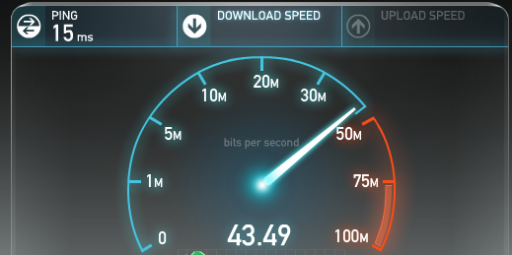
Academic researchers have improved wireless bandwidth by ten times — not by adding base stations, tapping more spectrum, or cranking up transmitter wattage, but by using algebra to banish the network-clogging task of resending dropped packets, Technology Review reports.
By providing new ways for mobile devices to solve for missing data, the technology not only eliminates this wasteful process but also can seamlessly weave data streams from Wi-Fi and LTE — a leap forward from other approaches that toggle back and forth. “Any IP network will benefit from this technology,” says Sheau Ng, vice president for research and development at NBC Universal.
More rigorous lab studies have shown large benefits. Testing the system on Wi-Fi networks at MIT, where 2 percent of packets are typically lost, Medard’s group found that a normal bandwidth of one megabit per second was boosted to 16 megabits per second.
The technology transforms the way packets of data are sent. Instead of sending packets, it sends algebraic equations that describe series of packets. So if a packet goes missing, instead of asking the network to resend it, the receiving device can solve for the missing one itself. Since the equations involved are simple and linear, the processing load on a phone, router, or base station is negligible, Medard says.
If the technology works in large-scale deployments as expected, it could help forestall a spectrum crunch. Cisco Systems says that by 2016, mobile data traffic will grow 18-fold — and Bell Labs goes farther, predicting growth by a factor of 25. The U.S. Federal Communications Commission has said spectrum could run out within a couple of years.

Comments (12)
by Jim Mooney
Gee, maybe this means that someday our average internet speed may approach half that of Korea. But it will still cost an arm and a leg compared to most of the civilized world. It’s so sad that we invented the net but are now lagging way back in speed, yet paying much, much more for the rotten service. And even though a better internet is known to boost the economy when we sure could use that.
There is something seriously wrong with out whole system. The truth about its massive flaws is there, but it’s just not getting out.
by Bri
We are a nation of sheep, and we are getting fleeced. Right now we have mostly scabby skin.
by Andrew
Sounds nice, as long as the information sent can easily be described by some linear equations. That kind of compression probably doesn’t work for all data types, though. Encrypted information might be especially difficult to model.
by Chris P. Kareem
This is a good improvement over current technology, but I don’t see why TCP doesn’t just use asynchronous packet transmission. As far as I understand the problem is that packets are sent consecutively, and when one gets lost there is a delay in the flow of bits because the router has to re-request the packet before anything else is sent. But why not just send the rest of the packets out of order, and while the rest of the information is being sent, the router can just re-request the lost packet in the meantime? That would be more effective without the overhead of the methods in this post, unless I’m mistaken as to what the problem is.
by asiwel
This looks like a reasonable method of “compression” if it works out well under a wide variety of conditions. I more or less take for granted that the researchers are competent, that MIT would not waste time testing something that had obvious flaws and weaknesses, that peer review would have detected reinventing the wheel, etc.
by GAUSS
Look up the proposed “IPComp” standard from 2001.
by SamCrawford
Ian, I’m guessing that the method used is similar to the Parity Files method of rebuilding rar files.
http://en.wikipedia.org/wiki/Parity_file
by SamCrawford
This has potentially huge implications. I for one am very excited by this prospect. And 2016 is an extremely short timescale for these changes to take effect. A 25 fold increase without increasing spectrum is huge.
This is a huge leap forward. I’m sure we’ll be hearing a great deal more about this in the very near future.
by Ian Clarke
“The technology transforms the way packets of data are sent. Instead of sending packets, it sends algebraic equations that describe series of packets. So if a packet goes missing, instead of asking the network to resend it, the receiving device can solve for the missing one itself. ”
How can packets go missing if it’s sending algebraic equations instead of the packets? Are they referring to missing packets of equations that describe the original packets?
Good news for our overloaded networks tho’!
by Marcos Marin
They are probably referring to techniques such as used by software akin to “quickpar”, which are so old one has to wonder why network engineers only now come up with this.
If you allow me a simplification, it’s just like we did in school when solving for x. If x+3=5, then x is 2, now each packet will have its own equation and variable, x, y, etc…
Maybe someone can follow the link there and confirm this is the way they are doing it, if not, well they should =)
by MarkOates
If I understand correctly, basically they’re compressing the datastream. In this case, the packets themselves are being ‘compressed’ by representing a packet with an algorithm that describes it.
Makes sense to me. Instead of sending assembled code, send a smaller program that assembles it.
It seems like the downside is that more information is being delivered. If no packets are lost in the transfer, wouldn’t the extra algorithm just mean more data?
by Marcos Marin
- No, because you are not solving the problem. What happens if the packets describing your “smaller” program get lost?
- Not necessarily. This is the realm of Information Theory (though they misinterpret their results and can’t see the whole picture). In this case, however, yes! But this is not the point, the point is, does this “extra data” is significantly less than the extra data you are already sending when packets do get lost?