Electronic sensor rivals sensitivity of human skin
July 30, 2012
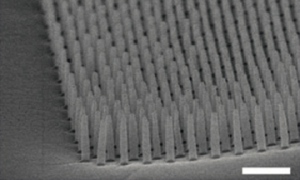
When sandwiched together, two layers of tiny hairs can sense pressure, shear and torsion (scale bar, 1 micron) (credit: Changhyun Pang et al./Nature Materials)
A flexible electronic sensor made from interlocking hairs can detect the gentle steps of a ladybird and distinguish between shear and twisting forces, just as human skin can, Nature News reports.
It can also be strapped to the wrist and used as a heart-rate monitor.
The sensor’s design was inspired by beetle wing-locking structures. When the sensor sheet is pressed, twisted or brushed, the squishy, metal-coated hairs change position, generating changes in the sensor’s electrical resistance.
Unique features include:
- Sensitive to pressures of just five pascals — gentler than the lightest of touches — very useful for robots designed to interact with people.
- Can be made in very large sheets.
- High spatial resolution to pinpoint where on the surface the pressure is being applied.