How to launch your own homemade satellite
September 6, 2012
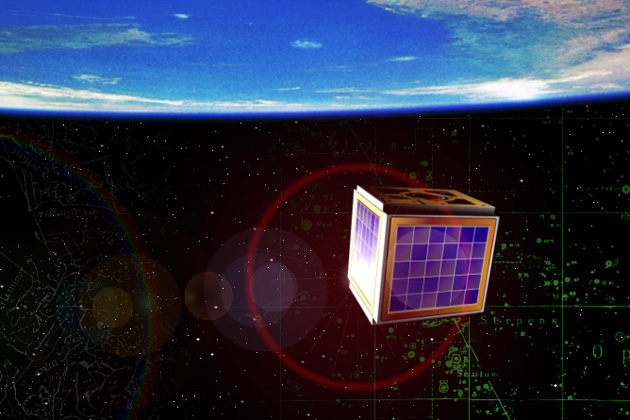
Over the next year a dozen or so tiny, homemade satellites will be launched into low Earth orbit — 140 to 600 miles up, roughly as high as the International Space Station — conducting a variety of experiments, Bloomberg Businessweek reports.
Sandy Antunes, a former NASA employee-turned professor, has documented the rise of these “pico satellites” in a pair of books: DIY Satellite Platforms and Surviving Orbit the DIY Way.
Project Calliope follows his quest to build a satellite. Antunes has paid $10,000 for a spot on a rocket that will carry his homemade satellite to space next year.
The rise of private space companies such as SpaceX and Interorbital Systems has made satellites affordable for the DIY set. Interorbital Systems, for example, sells an $8,000 TubeSat kit, which comes with enough hardware to capture videos, send e-mail from space, and conduct experiments around temperature, pressure, and radiation.
There are now a handful of Kickstarter projects tied to pico satellites. KickSat plans to send an army of postage stamp-sized satellites into space. “It’s a growing movement,” says Antunes. “Three years from now, any small college or technical school could do one. Students that want to be engineers will build small test rigs that go into space.”

Comments (12)
by Bri
These satellites are small and are sent to low orbits. Most will fall back and burn up quickly. What possible use? How about developing a space junk cleaning satellite.
by DrDubious
Just what we need: more space junk.
by Jay
I wholehartedly agree with DrDubious “more space junk!”. This is a ridiculous exercise, smaking of an egoistic need to claim some kind of immortality! Is just another extension of graffiti or advertising. Both useless forms of communication which are increasingly filling up the worlds visual spaces with inane, ‘look at me’ information!
by Lloyd
Our societies destroy every kind of environment we come up against. The space faring countries need to get together and make laws regulating this sort of thing before it becomes a problem.
by George
This is great news, but we should be giving serious thought to keeping all the stuff we send up there organized in space highways and secondary roads. Colliding with space junk will become a common occurrence if organizational protocols are not implemented.
by Lucidry
I commend you for making at least a well thought out statement.
There’s too much whining and moaning about space junk because they can’t look past their own noses to see potential in DIY things, as if everyone who’s looking at spending their money to get a satellite out there is only egotistical or some kinda spammer.. that’s naive.
At least your comment makes a valid point about organization being necessary.
by BME
The R&D potentials are incredible. I can’t imagine many people spending $20,000 to get something into space. However, if I had space tech that passed testing in the vomit comet and a test could be miniaturized and run for a $10,000 seat on the rocket. That would be a nice cost savings. Anyone who only sees this type of thing as space junk is greatly mistaken. They probably call a transistor radio that a kid built from a kit a piece of junk as well…
Some of these projects will not be of scientific importance. However, the societal and scientific impact of these projects will be profound.
by Kai
Reasons being whatever you can imagine! I look forward to when I can virtually plug into one and zip around in space, but I’ll probably be a really old dude by then.
by GatorALLin
here is another Kickstarter one.
http://www.kickstarter.com/projects/880837561/skycube-the-first-satellite-launched-by-you?ref=live
and take a ping pong ball way up… great for students to learn about space, etc. http://www.kickstarter.com/projects/1569698176/1000-student-projects-to-the-edge-of-space?ref=live
by Eric
So, what reasons would people have to launch satellites? Custom satellite internet?
by omran al-kandari
if that’s true i would love to pay for that :)
by Vin
Increased potential to develop mining of Van Allen belt antimatter? (current cost to produce antimatter = $Billions/gram).