How to watch everything in 3D
August 3, 2012
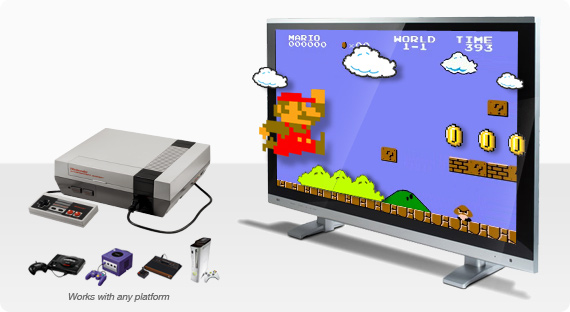
Gene Dolgoff has developed a converter called 3-D Vision that he claims will instantly transform any 2-D video content — from TV to video games — into 3-D, using algorithms that present stereoscopic image pairs and give the illusion of depth, PandoDaily reports.
His crowdsourced Fundable 3-D Vision project (for design of the box) has reached more than half of its $10,000 goal in only four days.
The first generation of 3-D Vision will require glasses, but Dolgoff says he has a prototype in development that works without glasses.
Dolgoff invented digital projection and the world’s first LCD projector in 1984, according to Wikipedia and has more than 65 patents granted worldwide. In an interview on the 74th episode of the netcast “Home Theater Geeks,” Dolgoff said was the one who suggested the Holodeck idea to Gene Roddenberry.
Note: KurzweilAI was unable to confirm any independent testing of this product.

Comments (10)
by Mac
Most every I’ve talked to about any type of 3D has had some interest. There seems to be alot of buzz going around. I can’t find anything else out there that will convert everything to 3D. Maybe I’m missing it…
by SpottedMarley
Want to see everything in 3D? Use both of your eyeballs at once.
And its free too.
by Ted
Yes this gadget can convert BS to Bologne
by Jay
The Fundable profile links to a couple reviews – they’ve all been positive.
by David S. Bunin
I have no comment to make about this, as I know nothing about it. But I would like to make a general comment about the misleading way many 3D systems are advertised.
Most ads showing 3D, will show People, animals or objects protruding from the TV screen and EXTENDING BEYOND THE BOUNDARIES OF THE TV SCREEN. I believe it’s important to point out that images produced by any existing imaging system CANNOT appear to extend beyond the borders of the imaging device. This is why 3D on TV was not even a practical concept until large screen formats became available. If an object is intended to appear close to your face, for example, it must take up a large portion of your field of view. Imagine, for example, holding a coffee cup 6″ from your face. A very large portion of your field of view will be taken up by the image of that cup. Now imagine that that image were really 6 to10 feet away from you (about the distance that your TV might be from your face. The image of the coffee cup would have to be several feet across and several feet high in order to look as large as it does when it is only 6″ from your face. You would need a very large TV indeed, to produce that large an image.
by Rob B
You’re correct. But its always been a challenging problem for marketers to demonstrate what stereoscopic images would look like *without* depicting it overlapping the boundaries of the display device.
by Crowdfunding
@GatorAllIn – Are you in NYC? He is providing demos at his NY Lab. @Bob – They own their trademark which is viewable on the USPTO website.
by Jay
I doubt he’ll be sued – might have to change the name, if that. The name of his company is 3-D Vision, not the product.
by GatorALLin
….a had not heard of http://www.fundable.com, so thanks for that link. I was surprised he did not put his project up on http://www.kickstarter.com instead…..?? I wish it was easier to see samples of his 3d vs. other 3d and had not heard of the rachel ray tv guide that must have been done last Halloween.
by Bob
I wonder when he will be sued for infringing upon nVidia’s 3D Vision trademark.