Human cycles: history as science
August 7, 2012
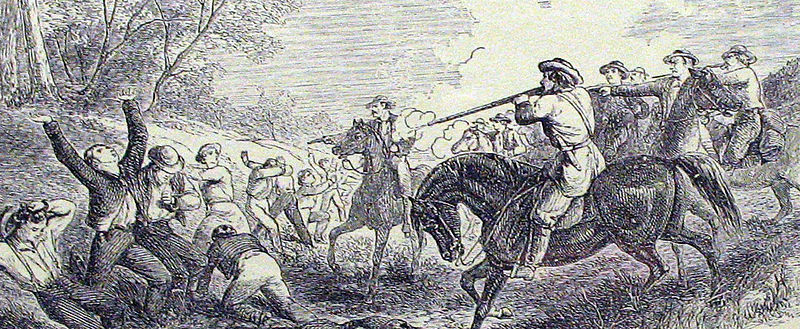
Advocates of “cliodynamics” say that they can use scientific methods to illuminate the past. But historians are not so sure, Nature News reports.
To Peter Turchin, who studies population dynamics at the University of Connecticut in Storrs, the appearance of three peaks of political instability at roughly 50-year intervals starting with the U.S. Civil War is not a coincidence. For the past 15 years, Turchin has been taking the mathematical techniques that once allowed him to track predator-prey cycles in forest ecosystems, and applying them to human history.
He has analyzed historical records on economic activity, demographic trends and outbursts of violence in the United States, and has come to the conclusion that a new wave of internal strife is already on its way. The peak should occur in about 2020, he says, and will probably be at least as high as the one in around 1970. “I hope it won’t be as bad as 1870,” he adds.
Turchin’s approach — which he calls cliodynamics after Clio, the ancient Greek muse of history — is part of a groundswell of efforts to apply scientific methods to history by identifying and modelling the broad social forces that Turchin and his colleagues say shape all human societies.
Cliodynamics is viewed with deep scepticism by most academic historians, who tend to see history as a complex stew of chance, individual foibles and one-of-a-kind situations that no broad-brush ‘science of history’ will ever capture. “After a century of grand theory, from Marxism and social Darwinism to structuralism and postmodernism, most historians have abandoned the belief in general laws,” said Robert Darnton, a cultural historian at Harvard University in Cambridge, Massachusetts, in a column written in 1999.
Most think that phenomena such as political instability should be understood by constructing detailed narratives of what actually happened — always looking for patterns and regularities, but never forgetting that each outbreak emerged from a particular time and place. “We’re doing what can be done, as opposed to aspiring after what can’t,” says Daniel Szechi, who studies early-modern history at the University of Manchester, UK. “We’re just too ignorant” to identify meaningful cycles, he adds.
But Turchin and his allies contend that the time is ripe to revisit general laws, thanks to tools such as nonlinear mathematics, simulations that can model the interactions of thousands or millions of individuals at once, and informatics technologies for gathering and analysing huge databases of historical information. And for some academics, at least, cliodynamics can’t come a moment too soon. “Historians need to abandon the habit of thinking that it’s enough to informally point to a sample of cases and to claim that observations generalize,” says Joseph Bulbulia, who studies the evolution of religion at Victoria University of Wellington in New Zealand.
In their analysis of long-term social trends, advocates of cliodynamics focus on four main variables: population numbers, social structure, state strength and political instability. Each variable is measured in several ways. Social structure, for example, relies on factors such as health inequality — measured using proxies including quantitative data on life expectancies — and wealth inequality, measured by the ratio of the largest fortune to the median wage. Choosing appropriate proxies can be a challenge, because relevant data are often hard to find. No proxy is perfect, the researchers concede. But they try to minimize the problem by choosing at least two proxies for each variable.
Then, drawing on all the sources they can find — historical databases, newspaper archives, ethnographic studies — Turchin and his colleagues plot these proxies over time and look for trends, hoping to identify historical patterns and markers of future events. For example, it seems that indicators of corruption increase and political cooperation unravels when a period of instability or violence is imminent. Such analysis also allows the researchers to track the order in which the changes occur, so that they can tease out useful correlations that might lead to cause–effect explanations.
Global trends
Cliodynamics has another ally in Jack Goldstone, director of the Center for Global Policy at George Mason University and a member of the Political Instability Task Force, which is funded by the US Central Intelligence Agency to forecast events outside the United States. Goldstone has searched for cliodynamic patterns in past revolutions, and predicts that Egypt will face a few more years of struggle between radicals and moderates and 5–10 years of institution-building before it can regain stability. “It is possible but rare for revolutions to resolve rapidly,” he says. “Average time to build a new state is around a dozen years, and many take longer.”
If Turchin’s prediction of unrest in the United States around 2020 is correct, the next few years should see an increase in tightly knit US groups whose rituals have a threatening quality but promise great rewards.
Turchin can’t say who those groups might be, what cause they will be fighting for or what form the violence will take. Previous bouts of turbulence were not dominated by any one issue, he says. But he already sees the warning signs of social strife, including a surplus of graduates and increasing inequality. “Inequality is almost always a bad thing for societies,” he says.

Comments (66)
by Shropshire
Sometimes I like to lay on the ground and pretend I’m a potato.
by Luis
For god’s sake you people, it is not ‘lay’ on the ground but ‘lie’ on the ground. People should learn simple English!
by pete Q
people dont rebel until their absolutely desperate which means no civil war until 2030
by Tom Mazanec
It is interesting that Molecular Nanotechnology is widely expected to be developed around 2020 or shortly therafter. This could soon lead to such things as the equivalent of a matter replicator, upending our economic system, or the ability to make atomic changes in viruse and create DIY pandemics.
by Jo
This is straight out of Isaac Asimov’s Foundation series….
by worton
Interestingly the year 2020 is also mentioned in a well known essay called The Misandry Bubble with predictions of social and economic upheaval..
To be honest it’s probably not that hard to predict. By 2020 large numbers of baby boomers will have entered retirement, Gen X and Y will be placed under a heavy tax burden, forced to support people who are substantially wealthier than themselves. The government will be force to either cut spending, go even further into debt, or tax the reduced number of working age adults even harder.. Either way the economy is going to be a mess, and lots of people are going to be angry.
by CJ
Hari Seldon
by JFH
Hari Seldon indeed…first thing that came to my mind as well. Asimov wrote about this 40 years ago. And for all the naysayers keep in mind that automated data mining has now greatly surpassed human pattern recognition. You can just feed these things raw data and if there is a pattern… it will find it.
by field
nice
by Ethan
Good god….this article is self fulfilling prophecy….I can see the seeds of unrest being sown right here!
Very Interesting read, I’ve definitely noticed throughout my life a battle of opposing forces (lets call them prosperity and chaos), and recently it seems both are escalating as are evidenced with the current political rhetoric in America, (the chaos) and the Curiosity landing on Mars (prosperity).
Obviously these are just anecdotal, and based on my own world view and how I perceive, but it seems both sides have ramped up throughout my life (i’m almost 22) and there will become a point where one must be destroyed for the other to survive…..with lots of collateral.
by jbone
Don’t believe the hype. The purpose of this existence is to grow. Their will be plenty of room for everyone. Very few get it all the first time around. I wouldn’t want to make the choice but if one hadd to be destroyed for the other to survive, would you pick the smart ones or the dumb ones. Surely were all mortal and if not, I hardely believe that the immortals are all the smartest. Plenty of things survive by strength and position. In the case of imortals having nothing to gain from mortality may be the same as having nothing to lose and could be in their interests to kill off all the smart ones. So I play dumb and sing to myself.
by Gen Y opinion
2020 is reasonable for many reasons and I’m not a scholar, but I pride myself on my ability to predict the future based on patterns. Why 2020? Simple really… The growth of the internet. The age of the generation born immersed in technology and finally the fact that elections can only take place every 4 years. I came by the estimate of 2020, by first assuming that the problems I have with this country politically and culturally wont disappear in this next election. So there’s 4 years already. Our current politions do not have the proper mentality for the kind of change that certain groups of the younger generation are envisioning because they simple did not grow up with the same level of compression of life’s experience’s. Now we’re at 2016. After attempting to fix the nations issues with the methodology prescribed by the previous generation (baby boomer/Gen X) fails it will take begin the implementation of generation y’s Ideals. I am a gen Y and let me tell you. If I had my way things would be very different, but there’s no a politician out there who’s advocating for the kind of government I stand for. Anyway regardless of what my generation stands for and believes it wants. It begins in 2016. Leading up to revolution somewhere around 2020 if the previous generation doesn’t make way and allow us to begin constructing the future in our image. There’s a reason they say people become more conservative as they get older. More conservative to their own ideas and trying to grasp onto that way of life, but there comes a shift that coincides with disagreements between generations based on life experiences and my generation will be reaching the point where we are looking for the baton to be handed off to us. The frustration my generation feels can only be similarly described the frustration we feel as we watch older generations stumble with technology which comes as second nature to us. You just don’t have our vision of the future because most of you aren’t living it.
by Dave
People become more conservative as they get older for two main reasons. First, it is easier to take risks when you are young and can absorb the losses, less so when you are established and do not want to risk what you have gained in life and thereby jeopardize your entire family who relies on you for safety, security, and stability.
Second, we have carried the banner before and seen our wonderful ideas slam face-first into the wall of human nature and fiscal reality. Ideas are wonderful, and “if I had my way” is what *everyone* believes. But *if I had my way* doesn’t get you very far in life when 300 million people all think the same way with different Ideas for success. Reality sinks in and you realize, frankly, just how naive and stupid you really sounded when you were younger and talked about “revolution” and upsetting the social order that provides the very stability and security the youth live in while they complain about whatever is the current socio-economic issue of the moment.
by Matt
Well said, Dave ! I don’t think I would or could have said it any better … thanks :)
by mattl7
The self importance of the Gen Y generation is truly staggering
by Tom Mazanec
Of course the Boomers and Gen X will not make way and allow Gen Y and Gen Z to begin constructing the future in your image. It is human nature. That is why you need a revolution. And why in 2070 the Gen Y and Gen Z will not make way for the Transhumanist and Singularity generations to construct the future in THEIR image.
by Nobody
Oh, yeah….singularity…right
by Aleksander Wishman
Almost as if I should’ve said it myself, and I’m from Norway :). The conceptual meaning behind the words are the exact same as mine :) Live long and prosperous “Gen Y opinion”! <3
by Skylar
Obviously the mayans were on to something….plus or minus one standard deviation
by Muddywood
The culture battle in the United States is going to be between people that want a Govt. that actually follows and is restrained by the US Constitution and those people that believe that more Govt. and more spending is the answer to all our problems.
by Dylan
At first it seemed like you were going to say something intelligent, and then out popped rhetoric. I just want to know what exactly makes you say that limited government is the only government the constitution allows? And if you think that, you also must be angry about FDR’s New Deal, regardless of the fact that it essentially saved our nation, and in turn the world, from the greatest economic decline we have ever seen.
What people don’t seem to understand, is that spending is not bad. There are certainly problems with what we have been spending on (war mainly, while defunding education) but that doesn’t mean that spending itself is the issue. Republicans tell you that they want to cut spending and reduce the defecit, even though that wouldn’t solve any problems – you see, if you stop spending, if you come to a full 100% hault, do you know what would happen? Do you know how many people would lose their jobs? Hundreds of thousands, millions, maybe more. And what would we accomplish? The defecit would stay exactly where it’s at. What they actually want, is to stop spending on the things they have no interest in and feed the things they want. Privatize the road system, so we can vamp up the military.
What we need is a heavier tax. Not only the rich, but everyone. If we are spending more per person than we are putting in, we should attempt to spend less and attempt to put more in. Nobody sees the good the government does, and when they do, they don’t think of themselves as a part of it. Each citizen is a part of its government. That’s the beauty of a republic. And we must work together to make it work, we must all give our fair share. And if you don’t think so, go one day without any of the services it provides. No roads, no public transit, remove any healthy foods guaranteed by the USDA, etc… We should be more thankful and more willing to contribute.
by Lou
We should also add how many people the US Government Employs. I can’t really get angry about the rhetoric about spending from people like him (above). People apply their own family economics to government and international markets, when money operates differently on a Macro Economic Scale. Our money or currency only represents a confidence in the government itself. The person does have a point where maybe we should limit some our promises and obligations.
Spending needs to be “smart” there is legitimate wasted tax dollars. We need social welfare programs to PREVENT internal unrest. You know what I don’t really care about the welfare abusers, from an national position it is insignificant. Eliminating it would be like trying to wipe out all the micro parasites that live inside of the human body, it would be pointless and the parasites eventually die anyway (as do welfare abusers) and at what cost to us. We need a Military strong enough to enforce our goals and to ensure economic strength (yes not popular , but true).
We can’t cut the military budget in any meaningful way because our money values are tied to our military strength.
I feel the average citizen should be more concerned with the cost of living and social divide that exists in the USA, how lack of cooperation and understanding can lead to internal strife and violence and how we can prevent it.
by Eddie
Dylan, you have an interesting point of view, but I’d ask you to consider that the US Constitution’s sole purpose was to limit the reach of a federal government. So yes, a limited government is the only one permitted by the constitution.
As for the spending vs economic growth equation, the response from most libertarians is that true economic growth happens when people become self sufficient. Every dollar spent by a government is redistribution, not wealth creation. So yes, we want to cut spending on war materials, welfare etc… Roads enable commerce, so its a means to an end, but in and of itself it creates no wealth. It only redistributes the created wealth of taxpayers. Similar thing for education where it enables wealth creation later (by individuals) at the expense of the citizenry. So the only education spending that makes sense is that which enables people to work, create wealth and expand commerce. As a libertarian we should not offer student loans to people who are training to work in government (teachers, IRS, etc) only those pursuing private enterprise.
Some of libertarian ideaology is unfeasible in America today, but would have been far better without LBJ’s welfare society. I have an opinion of FDR, but I wasn;t alive then to have a truly informed opinion. It seams a lot like the current stimulus though, in that it enriched a minority and enslaved a majority, at a cost that was crushing and had no exit plan for when the economy recovered.
by ajrb
That is the dumbest thing I’ve ever heard. It’s as simple as this. You gIve the gov more money, they spend more money. Would you rather spend your money the way yout best see fit or have some politician spend it trying to get re-elected?
by Matt
Well put, ajrb … even more so, the way government spends money that is *taken* (its not actually freely-given, remember) more resembles the agendas of corrupt interests that basically “hire” the government (the political process is certainly not very voter-representative at all) to begin with.
by Chrispium
The originator and father of this “science” is Nostradamus I think.
by Bruski
Watch the 1974 movie: Soylent Green.
Looks to me as that’s where we are headed.
Cheers,
b
by longnow
See the CSPAN You Tube video, “Neil Howe & William
Strauss On The Fourth Turning 1997 CSpan” using
history demographics & generational cycles in developed
societies. They got everything right in predicting the
Cheney Bush economic crisis of 2008. All the questions
from viewers except one are very relevant.
by Tom Mazanec
And they project an 80 year crisis cycle, timing from ~1780 Revolutionary War, ~1860 Civil War, ~1940 Deprssion/WWII and…2020 Crisis.
by Bri
I think we should use every analytical tool available. Many people have spoken of the cyclic nature of human indevours. One of the great aspects of the scientific method is, that you formulate your opinion, by whatever means. You state it in a scholary fashion and let others take it apart. If you assumptions are right, they get ” proven”. If your wrong, it’s food for thought. Just because the weather forecasters can get it wrong, even most of the time, is no reason to stop researching. Again, in my very unscientific view, I think robotics will uproot all the old patterns of economic activity. In my eyes, there is no way to compete with them, no matter how augmented we become, because they can develope new methods to out compete us, faster than we can think of competing. Let alone implement our new protocols of competition. If the consumer has no money to consume with, the system will collapse. In some respects it’s like the linear thinking approach. Studying what happened in the past is good, but the forces driving this evolution of tech, are about to put in new players on the field. There effects will not be apparent in the past. Only on a much lower level of change, has robotics influenced economics. Those robots ( the engine,cotton gin,printing presses,etc)were very limited in scope. The ones coming in the near future will be extremely dynamic. Worst of all in my eyes is there lack of human needs. Can work 24/7, no vacation, no pension, work until they fail or are replaced,etc. I’m all for them taking those jobs, but what jobs are we going to retrain into? Everthing I look into that issue, I see them being able to do the same thing. Out compete us. They will be able to out think us. Very soon. I repeatedly bring up the tree spider. Not to labor the point, but get a magnifying glass and look at it pin point brain case. The google car would love to be able to process information like that. It navigates a world of preditor and prey. Jumps with eight legs onto constantly moving objects that it identifies instantly. Brain research is suffering from the Forrest from the trees syndrome. Google is so stumped, that they want the car to use the cloud for object recognition. Take one million tree spider brains, and it would be probably no bigger than a CD player, and unbelievably powerful. We’re just enamored with mice and men. Soon though, we will figure out the basic circuitry. It could be equally small, and use almost no energy. All manner of robots will proliferate. They will do every physical activity that we do for money, and almost instantly, they will become adept at what ever mental challenge is set before them. That will change the dynamics of economics. It will be painfully obvious soon. I just don’t see any way around that. Please, if you disagree, tell me what jobs we will be able to do better?!!!
by Iain
Have you ever thought of using paragraphs?
by Noreply
Have you ever thought about not being a grammar nazi hipster douche?
by Kevin
fuck yeah!
by ajrb
They might be able to do something but it doesn’t mean they will do it… not until I tell them to anyways. I think what I am referring to is motivation. The boss doesn’t need to be smarter and/or a better than any of his employees does he? IMO most jobs today could easily be done by a robot (not really even a smart one) but that is fine, we will find other things to do just like we have been doing for the past couple hundred years. Getting back to your point, I don’t think everything is about being smarter, working longer, etc but I understand the scenario in which they evolve into something beyond all humans. At that point they probably wouldn’t want anything to do with us and would probably leave the solar system or exterminate us. That would be rather grim so I hope we are able to augment our bodies to become even smarter and better than we are today, faster than we create robots which overthrow us.
by Suraj
Absolutely anything involving pattern recognition or creativity and not involving mechanical steps or repetitive algorithmic tasks. So … plenty of them. Lawyers, programmers, writers, artists, stockbrokers, policemen, forensic scientists, psychologists, teachers, motivational speakers, politicians, engineers … I could go on. If you want to wax eloquent on the impact of robotics on the economy, I’d suggest doing research on what the current state and limitations of robotics actually are, rather than going in with a sci-fi heavy disposition.
by Kevin
Pretty sure they can analyze patterns way better than us there, sport.
by Crosden
What about not having a traditional job at all? Some options are being discussed here:
http://www.quora.com/What-is-the-plan-if-a-computer-or-robotic-workforce-cause-catastrophic-unemployment
by josdorpjossie
I’m afraid predictions like this amplify trends and so make them a self fulfulling prophecy. What smb12321 below says about stock market is true. But these predictions affect the stock markets in a destabilizing way.
by alliwant
The present political and economic does seem eerily similar to the run-up to the Civil War. A lot of intransigent partisans in escalating conflict in a variety of ways. I don’t have any special insight into the mathematical dimension, I’ll admit.
by Gorden Russell
Yes, alliwant. The Republicans just voted down a bridge building bill that would have made millions of jobs. The voted en masse in a single party-line bloc vote. One bridge has already fallen down in Minnesota, an many more are deteriorating. But the Republicans want to give more tax breaks to the rich. And it looks like the political action commitees funded by the super-rich will allow more Tea Partiers to be elected to congress. This will lead to more tax cuts for the rich and safety net cuts to us. This can only lead to more civil strife. There will be roving bands of the unemployed marching on the Hamptons.
by AZryan
If it’s like the run-up to the Civil War now, then it was REALLY really like that during Vietnam/Watergate/Civil Right era of late 60′s, early 70′s.
The sad fact is that America was FOUNDED on being a divided nation. I wonder if it we wouldn’t ‘ve been better off remaining a colony. Consider how the world would look today. England got rid of slavery before us. They’re our best friends. Their royalty isn’t in charge. Canada, Australia, etc have done well. National health care everywhere but here. No Civil War. World Wars would have gone very differently. Cold War, too.
There has always been a ‘Progressive mentality’ and a ‘Regressive mentality’ (to give them reasonable names) in America. These two types are more shuffled up across the Nation than ever, but the same regions North/South, City/Rural still have much the same clear distinct majorities of one ideology or the other as when we started (and when new States were added).
Regressive cause a lot of problems here and there (slavery, Civil War, equal rights), but Progressives eventually get the wins. Damn sloooowly though.
by Bri
“Cake” was a lining of dough around the cooking chamber of French bakery ovens, not quite the cake we think of. It still was a snide remark against the peasantry. I like the posters choice in words. I’ve been saying since high school days, that we are sheep, that are being fleeced. At this point, we barely have any wool. Kind of naked and scabby. As robots take jobs, it will have a tendency to get really ugly. It can be modulated with sagacity and wisdom. That can only come from knowledge.
by Kevin
It was brioche
by stevie.b
no mention of Hari Seldon and psychohistory?
by Gorden Russell
Good idea, stevie.b Where is Hari Seldon when we need him? If only Isaac Asimov were still alive.
by Peter C
+1
Actually it might turn out to be quite some fun to apply some machine learning to historical (no pun intended) data. Unfortunately I do not know much about history, so I cannot do a lot of the required work e.g. the preprocessing of data. At the same time many historians will not have the analytical and engineering skills required.
I would love to see more “soft” sciences make the move to more analytical rigour. Also I find it funny how some people say “it can’t be done”. As a historian with some mathematical inclinication, this would motivate me only more.
Go for it Hari Seldons of this universe!
by Dave
Actually, after reading a similar psychohistory novel about ten years ago, I found a forum online doing real psychohistory mathematical research. The novel was *In the Kingdom of the Blind* and it included an appendix showing actual mathematical models that people were trying to use to model “future history” events. Can’t find the site now but it was interesting that people were serious about it.
by Greg
If you take Maslow’s hierarchy as a starting point, there are constants in human nature that are predictable.
by Gorden Russell
There were things said by Turchin that bothered me, such as saying that 1870 was bad without giving an example. I Googled that and found that there was labor unrest, expecially widespread railroad riots. He also said that 1970 was bad. Well, I lived through that and remember watching a lot of student protests on the TV news. The Watts riots of the ’60s were much worse, as well as the rioting when Martin Luther King was assasinated. But away from the telecasts, everything seemed quite normal. Bad things happened in distant places, but the country didn’t fall apart.
Or course, if we are in for rioting in 2020, the people will be met with robot riot police. DARPA has ordered up specifications for robots and with their backing these developments will take off like a burning barn.
NASA manager of Space Robotics Technology at NASA’s Jet Propulsion Laboratory in Pasadena, Daniel Wilcox has reported on an 18-inch wafer with the processing power of 10 billion human neurons. Using Moore’s Law you will see that there will be five doublings of computer processing power by the year 2020. This will give a wafer equal to 320 billion human neurons. Our brains have 100 billion neurons. The robots of AD 2020 will be very capable.
Turchin said that periods of unrest rise from periods of corruption and unrest. Well we certainly have a lot of corruption and unequality.
He said that a surplus of graduates can lead to social strife. Can you see rioting MIT post-docs building their own robots to fight the police robots?
by Matthew
Mr. Russel: It isn’t the MIT and Harvard elite that will be rioting. They will find jobs or will be supported by their upper middle class parents. It’s literally hundreds of thousand of graduates in biology, psychology, and the humanities that cannot find a job without post-secondary education that will riot. Especially when they learn that their benefit (aka entitlements) were taken away by the elderly who will be eating up the last reserves of social security by the 2030′s.
by Mac
Seems a lot like Asimov’s ‘Psychohistory’…
by Laura C.
Apart from other obvious problems with historians trying to become scientists, it appears the effort is already off track, focusing on the PC parameter of “inequality.” In the US it’s not increasing, despite the rhetoric of certain political actors — see, for instance:
http://www.economist.com/blogs/democracyinamerica/2010/09/inequality_myth?fsrc=scn/fb/wl/bl/inequalitymyth
http://lincicome.blogspot.com/2012/07/have-us-incomes-really-stagnated-since.html
And globally, well, India has a burgeoning middle class, China too — despite its current slowdown wealth distribution is far better than in the past. And Africa is now the fastest-growing continent (economically), thanks in part to the spread of tech (smart-phones in farmers’ and students’ hands, etc.) and to globalization, both of which are raising living standards of the poorest (one might refer to “Abundance” again). There are plenty of reasons why conflicts arise and historians have a role in analyzing these, but claiming “I can do math and predict things”? Sheesh.
by Matthew
Just a smug way to say you don’t care. I know you don’t care which is why you shouldn’t be surprised when someone else takes your job.
by Mr.x
Inequality does not need to increase in the US, it’s already hideously high.
by James Jordan
I am skeptical that there is any real value in this type of human behavior predictive modeling. I can see that it is important to understand and model the reality of nature, such a volcanic activity, techtonic plate movements, earthquakes, sun activity, ocean, land surface and atmospheric temperatures. I remember the work of Marv Cetron, who modeled social systems of based on homogeneity of scocieties such as scandinavia versus the less homogeneous, like the US to attempt to predict the reaction of the U.S. society to issues and coined the term precursor societies (Scandinavia vs US was about 15 years). Now that we are all sharing information at wireless speeds and the world appears more Americanized, I am not sure that these modeling efforts of human behavior are that value. My studies seem to point to technology like farming, the plow, steam engines, combustion,of hydrocarbons, electromagnetiic systems, superconductivity, telecommunications, and video systems, a whole host of imaging systems. I am interested in how far and how fast we have come from chipping flintstone arrowheads to the Curriosity achievement. Of on the pantheion of mankind, I rank the semiconductor phenomena up there with the control of fire, movable type, spining and weaving. Just think how well the homosapiens species has performed on the basics of eating, avoiding being eaten, and reproducting. Around 1800 the global population passed 1 Billion, in the 1920s we passed the 2 Billion mark and in the 1960s, when I was coming of age and fathered my two sons and participated in the killing others of our species in Viet Nam , I now have seen the dawning of 7 Billion just last year with at least 5 Billion having a wireless cell phone and access to TV. Thanks to the growth and maturity of thought of the frontal cortex of our species, I am now dedicated to non-violent solutions and the development of a safe method for isolating long-lived nuclear waste products from the biosphere, the launching of a successful earth observation and data system, a very cheap (5 cents a passenger mile and 10 cents a ton mile), fast (avg.300 mph) and energy efficient (1/13th of an electric motor) transport system: 2nd generation superconducting Maglev at http://www.magneticglide.com and a Maglev space launch sytem that will give homosapiens a means to generate very cheap electric solar power satellites in space to beam power to make electric power much cheaper than water.
by Travis
Perhaps they should review Nikolai Kondratieff’s work. This is not new news.
by Gorden Russell
You’re right, Travis. Kondratieff was the first one I thought of while reading this article.
by Devon
I’m guessing these historians are afflicted by the parochialism that pervades so many of the soft sciences. Not knocking them btw, just mentioning that there has been a historical trend of great scholarly inertia in these type of fields. I suggest that the power of model predictions should never be immediately disregarded just because our collective ego tells us that humans are complex and mysterious, and our decisions could never be summarized by statics and equations. Remember that people are animals too! Our time would probably be better spent by trying to explain the social psychology behind the model anyways.
by smb12321
The most ubiquitous historical model is the stock market. Trends repeat despite vast changes in components. And exhaustive data does not guarantee accuracy. After Katrina all “experts” forecast a deluge of strong, frequent hurricanes yet the ensuing period is the quietest on record. Until a computer can handle enough variables it’s best guesses.
by Daniel
This would be funny if it weren’t so pathetic. So all these folks sit around building models to tell us what? Something we don’t already know? And will their models be as imprecise as the climate models? And what assumptions will they use to build their models? And will their outcomes match their political persuasions?
This is such a childish game played by adults that it’s truly idiotic. Not that there aren’t patterns to tease out or general rules that can’t be applied and if done so with a sense of humility and intelligence can provide insights into the world around us, but these wackos pursue mathematical modeling as though in the model there is truth to be had exclusive to the model and since it’s mathematical it gives them some sort of inside track. Rubbish! Everything said in this piece about historical trends has been discovered without any mathematical modeling. Another huge waste of tax payers money for unproductive academics! Let them pursue this on their own dime.
by Michael Ulis
Your emotional response to this article seems to suggest a fear that human activity could indeed be predicted scientifically, or to be more concise YOU could be predicted. In fact, your response IS predictable. Here’s the rub: your fears are not going to stop the research any more than the scepticism of the historians. It is interesting that America is most definitely on a collision course with itself right on schedule. I would be very interested in an analysis of the causes and specifically if it is a cycle rooted in wealth inequality.
by longnow
Totally true about our man Dan above.
by Marcos Marin
All ego’s here are wrong, except mine (it is an irony): I will refrain from replying to every single post on why, but here is the essence, ‘him’ cant be predicted, michael, someone that will be just like ‘him’ can be predicted. That is why Kurzweil himself can be so precise about the future. Dont you ppl even read the very stuff you get everyday on your inbox?
by Greg
Yes! We should have learned this already from Abraham Maslow!
by GatorALLin
Qu’ils mangent de la brioche……let them eat cake…
by Mr.x
…avec d’insectes “délicieux”…