Making old muscles young again
September 27, 2012
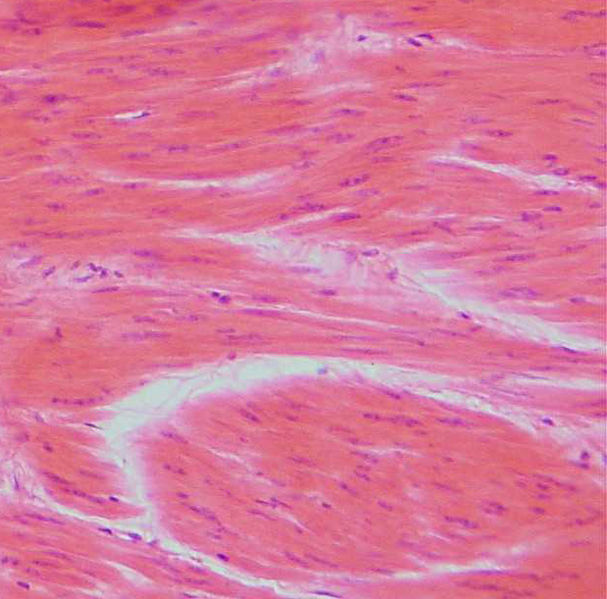
Researchers at King’s College London, Harvard University and Massachusetts General Hospital have identified a key factor responsible for declining muscle repair during aging, and discovered how to halt the process in mice with a common drug.
The finding provides clues as to how muscles lose mass with age, which can result in weakness that affects mobility and may cause falls.
The study looked at stem cells found inside muscle — which are responsible for repairing injury — to find out why the ability of muscles to regenerate declines with age.
A dormant reservoir of stem cells is present inside every muscle, ready to be activated by exercise and injury to repair any damage. When needed, these cells divide into hundreds of new muscle fibers that repair the muscle. At the end of the repairing process, some of these cells also replenish the pool of dormant stem cells so that the muscle retains the ability to repair itself again and again.
The researchers carried out a study on old mice and found the number of dormant stem cells present in the pool reduces with age, which could explain the decline in the muscle’s ability to repair and regenerate as it gets older.
Depleting the stem-cell repair reservoir
When these old muscles were screened, the team found high levels of FGF2, a protein that has the ability to stimulate cells to divide. While encouraging stem cells to divide and repair muscle is a normal and crucial process, they found that FGF2 could also awaken the dormant pool of stem cells, even when they were not needed.
The continued activation of dormant stem cells meant the pool was depleted over time, so when the muscle really needed stem cells to repair itself the muscle was unable to respond properly.
Following this finding, the researchers attempted to inhibit FGF2 in old muscles to prevent the stem cell pool from being kick-started into action unnecessarily. By administering a common FGF2 inhibitor drug, they were able to inhibit the decline in the number of muscle stem cells in the mice.
“Preventing or reversing muscle wasting in old age in humans is still a way off, but this study has for the first time revealed a process which could be responsible for age-related muscle wasting, which is extremely exciting,” said Dr. Albert Basson, Senior Lecturer from the Department of Craniofacial Development and Stem Cell Biology at the King’s College London Dental Institute.
“The finding opens up the possibility that one day we could develop treatments to make old muscles young again. If we could do this, we may be able to enable people to live more mobile, independent lives as they age.”
According to Dr. Andrew Brack, senior and corresponding author of the study, from Harvard University, “Analogous to the importance of recovery for athletes training for a sporting event, we now know that it is essential for adult stem cells to rest between bouts of expenditure. Preventing stem cell recuperation leads to their eventual demise.”
“We do not yet know how or why levels of the protein FGF2 increase with age, triggering stem cells to be activated when they are not needed.,” said Kieran Jones, co-author of the study from King’s. ”This is something that needs to be explored.
‘The next step is to analyze old muscle in humans to see if the same mechanism could be responsible for stem cell depletion in human muscle fibers, leading to loss of mass and wastage.”
The study was funded by the U.S. National Institutes of Health and the Biotechnology and Biological Sciences Research Council, Harvard Stem Cell Institute.

Comments (22)
by Dr.Pratt
I love how we evolved from the stem cell muscle problem to dog walking. Hmmmm. put the dog on a treadmill and yourself in the pool. (treadmill by the pool) Cant work with 3 dogs though.
by tim the realist
hopefully this effect can be replicated in humans, maybe the inhibitor is already in widespread use and a study could be done to measure any muscular effects. I would expect reduced levels of heart attacks if the heart muscle regeneration capabilites were improved maybe this could put the walker and cane manufacturers out of business and we could all be physicaly fit into old age.
I’m also hopefull that there are competitive athletes trying to gain an edge using FGF2 inhibitors and acting as an uncontrolled stage 1 human trial :)
by Trinity Alps
So what was that common drug??? I’m getting older by the second! ;)
by asiwel
Well, I just read the article itself .. which, honestly was pretty opaque to me, but is still a fascinating and promising study! Mixed in with various inhibitors and other stuff, it appears that the “common drug” referred to above is Tamoxifen. Now this is NOT something I would probably recommend anybody to be taking to avoid muscle aging! This is one of those studies that we all need to “wait a few years” for useful results for people like us!
by gaoptimize
OK. This raises an obvious question: Jack LaLanne and his kind. It seems to me his exercise was causing the repeated call-up of these muscle stem cells, and if there was a limited pool, his muscles would have wasted at a higher rate than a normal person. But the exact opposite was the case. I don’t buy that the pool of stem cells is limited. There is clearly much more study that needs to be done here, and it is about time given the exploding babyboomer population.
by melajara
Or read the article about remotely controlled cockroaches
…
and connect the dots, LOL
by Gorden Russell
Let’s just hope these researchers get the funding to jump on this like a duck on a June bug. I’ve got three German shepherds who want a half-hour walk ever 90 minutes and my knees hurt.
by Marcos Marin
Hire a dog-walker!
… but then you will have to worry who will pay his meals when robots can walk your dogs for him… hmmm I guess your knees will keep hurting till the singularity… or at least until solar cell powered nano bots can excrete carbon nano stuff from the air into your joints… tough luck.
by Telekinetic
Take N- Acetyl Glucosamine everyday plus other antioxidants like astaxanthin. I’m 57 and I can still outwalk your dogs.
by Gorden Russell
I’ll write that down and look for it.
by vspyder
Can you take them for a walk beside you by riding a bike? This may not be possible if you take three at a time, but one at a time it would work.
by Gorden Russell
The last time I tried to run Franz alongside the bike he saw a squirrel off to the left and cut across my front wheel from the right and threw me over the handlebars.
by Christian Gehman
If you have 3 German Shepherds that won’t mind when they’re not on a leash, the problem is with your approach to dog training. Dogs will pull until you train them not to pull. You should be able to walk three German shepherds at your pace, not their pace. They;’ll behave when you train them. At present, it sounds like the dogs have trained you …. German shepherds are often overbred and can become frantic(from boredom) if not given enough to do. Working dogs that are not allowed to work develop odd mental habits. Just like people.
by Mr.X
Chinese solution: Just eat the dogs.
by Ralph
Mr. X is my kind of guy, I mean, bot.
by Editor
X marks the bot.
by Mr.X
Only one thing to you humans:
“Your cortex just doesn’t impress me,
so go ahead, try to turing test me.”
by Mr.X
@ Ralph: I know how you spotted me: “Incidentally — am I human or a bot? Remember, if you think I sound human, I am probably a bot, because only bots have the skills necessary to fake it.”
I need to readjust: Eat legs of dog, then they move won’t.Headsho!!1
by nfordkrz
In the retirement community in which I live, a lot of people ride in their golf carts while their dogs walk/run along side.
Re Glucosamine: I’ve taken it for over 10 years and still have bad joints. The reason I don’t stop taking them is that you never know if it might have been worse without them. And they don’t cost much.
by Telekinetic
You must take N-Acetyl Glucosamine because glucosamine is not as bioavailable. Vitamin K2 is important for calcium deposition on bones, as opposed to your arteries, which is also known as “hardening of the arteries”.
I also suggest MSM powder, a bioavailable form of sulfur, since many people report relief of joint pain. There are other natural supplements,that work for joint pain and arthritis. ” True CMO” (cetyl myristoleate) will also provide relief from arthritis.
by Christian Gehman
Get new knees.
by melajara
“We do not yet know how or why levels of the protein FGF2 increase with age, triggering stem cells to be activated when they are not needed.,” said Kieran Jones, co-author of the study from King’s. ”This is something that needs to be explored.
Indeed, the path of causal relations has to be followed up and up till one primary cause is found.
Then, going down again, we’ll see that curing the primary defect should (hopefully) cure other ailments seemingly unrelated to what triggered the research, here muscle depletion.
But it could very well have unexpected bad effects too like e.g. cancer induction. Such is the complexity and beauty of biology.