Nanosensor detects toxic airborne chemicals, iPhone alerts authorities
September 30, 2011
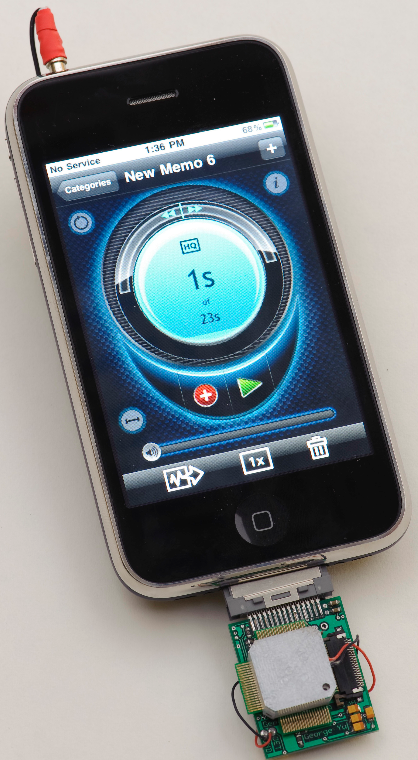
(Credit: Dominic Hart/NASA)
Jing Li, a physical scientist at NASA’s Ames Research Center, and associates have developed a tiny gadget that would plug into your iPhone to detect low concentrations of toxic airborne ammonia, chlorine, or methane, autodial the authorities, and automatically transmit the data.
About the size of a postage stamp, is uses a compact, low-cost, low-power, high-speed sensor of chemicals in the air, using a “sample jet.”
It has a multiple-channel silicon-based sensing chip with 16 nanosensors, and sends detection data to another phone or computer.
It was developed for the Cell-All program in the U.S. Department of Homeland Security’s Science and Technology Directorate.
Because the data is delivered digitally, Cell-All reduces the chance of human error, and by receiving alerts from many people at once, Cell-All avoids false positives. The objective is to get emergency responders to the scene sooner and cover a larger area than stationary sensors can.
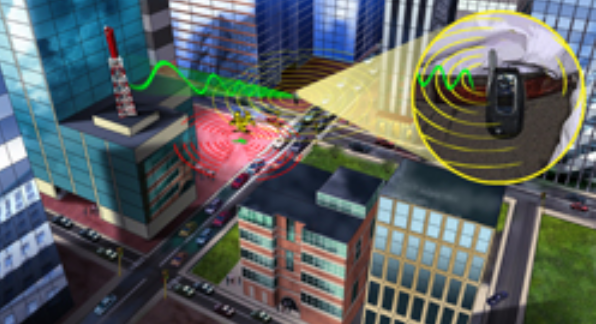
Cell-All aims to equip your smartphone with a sensor capable of detecting deadly chemicals and autodialing the authorities (credit: U.S. Department of Homeland Security)