Omega-3 improves working memory in healthy young adults
October 31, 2012
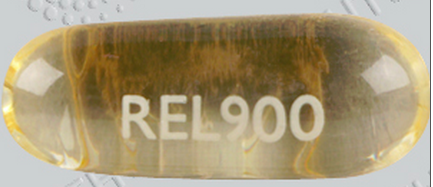
Researchers at the University of Pittsburgh have determined that healthy young adults ages 18–25 can improve their working memory by increasing their Omega-3 fatty acid intake.
Before they began taking the supplements, all participants were asked to perform a working memory test in which they were shown a series of letters and numbers. The young adults had to keep track of what appeared one, two, and three times prior, known as a simple “n-back test.”
After six months of taking Lovaza — an Omega-3 supplement approved by the FDA (and similar to over-the-counter fish oil supplements) — the participants were asked to complete this series of outpatient procedures again, which showed improved working memory of this population.
References:
- Rajesh Narendran et al., Improved Working Memory but No Effect on Striatal Vesicular Monoamine Transporter Type 2 after Omega-3 Polyunsaturated Fatty Acid Supplementation, PLOS ONE, 2012, DOI: 10.1371/journal.pone.0046832 (open access)
- Association between fish consumption, long chain omega 3 fatty acids, and risk of cerebrovascular disease: systematic review and meta-analysis, BMJ 2012;345:e6698, Oct. 30, 2012 (open access)

Comments (24)
by Dr.Pratt
Practice effects ? Learning may have taken place, on how to encode the data. But If there was no testing for 6 months, that would eliminate all but the very best memories anyway. A task like AFXC 7391 recall letters first in alphebetical order, followed by the numbers in their countable order in pairs: So the correct response would be A1 C3 F7 X9. If a task like this showed improvement….you have improved memory.
by Marcos Marin
That’s why I said below “the only merit seems to be[...]“.
Well, I think the task you describe is much harder than n-back, the one used in the research. (as far as I can tell)
by Editor
I just added a related study published Tuesday (Oct. 30) to References: Association between fish consumption, long chain omega 3 fatty acids, and risk of cerebrovascular disease: systematic review and meta-analysis, BMJ 2012;345:e6698, Oct. 30, 2012 (open access). Conclusion: available observational data indicate moderate, inverse associations of fish consumption and long chain omega 3 fatty acids with cerebrovascular risk.
by Editor
I forwarded your excellent questions to the researchers.
by Marcos Marin
I trust your finesse have filtered their.. raw.. form. =)
by Editor
Nah, I let ‘em have it :)
by Marcos Marin
hahhaha! I hope they are not as sensitive as Bri (was?)…
Just as a warning though, they do mention “controls” there, but they are controls to themselves (as baselines), thus my previous comment on a possible “training effect”… (just once, except for mentions of other research most to do with polyunsaturated fatty acids, which doesnt count because, well, it is “other’s research” =))
by Alain Tapp
No control group and only 11 subject.
I am skeptical. Is this science?
by high carbfoods
As a regular senior user of Hemp seeds in cereals for many years, I can say it promotes cellular healing, noticeable. Hemp offers the correct natural ratio of about 4:1 ( Omega 6 to Omega 3) recommended by the WHO as the optimal ration that body requires. We consume anywhere 10 to 20:1 which causes inflammation. So, these facts demand our consideration before you hear otherwise. MY findings there is no conflict and I am not funded by anyone in the Universe!
by Marcos Marin
You obviously smoke it too.
by Mr.X
Nice reply;) Maybe a troll!?
by Marcos Marin
Nah… It would deserve more respect. ;)
by Philip
Btw correct ratio is 1:1 (Omega 6 to Omega 3) or even 1:2, WHO or USDA food pyramid are jokes too.
by Sherrie
Poor article for Kurzweil.
by Doc c
No controls?! Funded by the government. What a waste of money. We know almost nothing more than we did before this trial. As one physicist I know put it, bad science is not even science at all.
by Marcos Marin
They probably have controls, as you say, it would be unacceptable otherwise. BUT, this summary states nothing about it! Have you followed the link? I didnt, so I cant confirm… but at least this summary is incomplete. If the study itself doesn’t, well, I quote your friend there too then..
by Marcos Marin
wow.. i just followed the link, and apparently no controls at all!!
The only merit seems to be no “training” during the 6 months, but this is insufficient to rule out a “training effect” for the simple matter of having done it before. (not to mention no way of telling they havent practiced on their own, specially with such a low sample size! 11 indiviiduals!)
How hard it is to add a few placebo controls? we already know people improve in the n-back task! I want to know by how much omega-3 boosts this effect, or rather, by how much lack of omega-3 decreases it.
by GatorALLin
Love to hear how this may also work (or not) for 26-45 range or older.
So many of the 18-25 are already taking Adderall or other “study drugs”, so I hope they removed those other issues from the study. http://en.wikipedia.org/wiki/Adderall
http://www.studydrugs.net/
by Marcos Marin
Incomplete. How they compare to controls? Even older, non-omega-3 ingesting individuals (not measured) have been shown to improve in the n-back test (up and beyond 6-back) for much shorter periods of time.
by omran al-kandari
Maybe what they meant it works better for people at this age , but as you said this is nothing new at all.
by Marcos Marin
Omega-3 “works” for everyone, it is an indispensable structural element.
What I want are percentages. Quantitative details. Pragmatic information. NOT THIS!
by Casey
I was born in 1987 and turn 26 in 2013, does that mean that this is the last year Omega-3 will work for me?
by Marcos Marin
It apparently already has…
by Editor
No