Online schooling is exploding in US
September 6, 2012
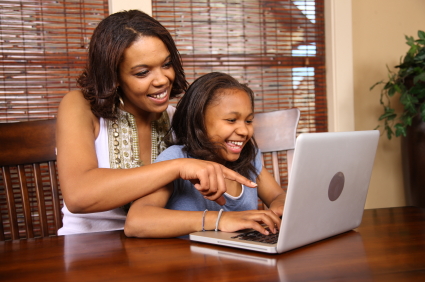
A small but rapidly growing number of families are turning to the Internet as an alternative to chronically under-resourced brick and mortar institutions, New Scientist reports.
Proponents say online primary and secondary education, whether full-time or as part of a “blended” program of online and face-to-face education, could usher in a new era of personalizing education that will give each child the best chance of success.
According to the Evergreen Education Group, an educational consultancy based in Durango, Colorado, around 250,000 students attended online-only schools in the 2010–2011 school year.
“We anticipate continued growth until around half of courses are taken online in high school,” says Kerry Rice, an education researcher at Boise State University in Idaho. A 2009 analysis by Clayton Christenson of Harvard Business School in Boston, suggested this could happen as early as 2019.
A 2009 meta-analysis of over 1000 studies of online learning, conducted by the U.S. Department of Education, found that students participating in either fully or partially online courses scored higher on average than 59 per cent of their traditionally educated peers on performance tests.
Silicon Valley-based start-up Knowmia, launched in August, is building a recommendation engine for the ever-expanding collection of free online educational videos. The site aggregates teacher and professionally produced material from sites like YouTube and creates custom collections based on feedback that students give on how they learn best. Some students may like to be able to see the teacher in a video, for example, while others prefer flashy graphics.

Comments (11)
by Christian Gehman
The online experience is good, but .. note the robotic expressions of people staring at computers in artist Kyle McDonald’s illicit covert study of robotic staring mode people interacting with their computers at
peoplestaringatcomputers.tumblr.com.
and here is a link to an article about the project:
http://www.guardian.co.uk/technology/pda/2011/jul/12/artist-apple-store-camera-project
Online education is being pushed just now, but … keep in mind that a great deal of intelligence, including what are possible the most valuable parts of education probably are transferred most efficiently in a human to human interface that allows the student’s mirror neurons an opportunity to learn these intellectual behaviors in a process similar to learning to dance. It seems very likely that students probably can’t learn the most important elements of what we might call “the dance of the intellect among facts” just by staring at a computer?
by Christian Gehman
Here’s a link to McDonald’s project on Vimeo that is still working …
http://vimeo.com/groups/openframeworks/videos/25958231
by Nicholas Wind
The school system in the U.S. and here in Canada are based on the same German model of the 1800′s.
Out of all the wonderful aspects of the German culture, what is unfortunate is that we so eagerly adopted one of the very worst educational systems deliberately designed to create dependence on the state and produce mediocre intellegence….
It’s liberal/socialist/marxist indoctrination is all.
One of the most important architects of the 20th century is James Bryant Conault who was president of Harvard from 1933-1953.
We can Google his name and read on and we’ll see it’s all been done with a purpose.
From the very beginning the founders of COMPULSORY SCHOOLING was aimed at collectivizing and socializing the ordinary population through habits of dependency….
And it’s working very well ehhh ?
Look at how dumbed down our kids are getting as the years go on.
More information available than ever before in the history of the world and yet a more ignorant society than ever in the history of the world.
So to me this all good.
Give folks educational choices.Get them away from the indoctrination.
by Mr.X
Wow. You want to say we have only mediocre intelligence?How humble from you, to be judging us that way (you must be smarter, or how can you do that).
Of course you are right about this raving statetism.I dislike that too.But I tell you something about our system, so that you see how baseless your claim is. Living in Germany as normal pupil means you are too unimportant to be fed much propaganda.Sure, you get some WW (both) evil Germans stuff and pro multiculturalism education, mixed with some green energy propaganda.But that’s about it, they don’t care how you earn your living (“your problem, or ask your parents”), you do not learn how to do anything that has to do with the state, and most schoolhours consist of various sciences and maths, some art, practical technology, communication(computer science), and if you are especially lucky, you can exchange religion (which teaches about most religions, not a religion) for philosophy.In addition you can learn, depending on which school you get to go (our system tries to seperate people according to aptitude after elementary school), some Latin, and 300 words of French (pronuncing everything, even the endings which are not to be pronunced usually, and forget the liason), and 800 English words with German pronunciation.In some cases there is also Russian, Italian, or Spanish (extremely rare), to be exchanged for French or Latin .
Your system looks nothing like our systems, past or present (starting from 1871).I had an anti-German bias before I actually went out and saw how much English native speakers have in common with people from third world countries (religious talk, ignorance of basic science and geography, highly selective knowledge about history, seeking out only confimation, blaming others and jingoism, coupled with selective moral relativism).Your religious right, bible belt and new age fanatics (many of latter are to be found in Canada,) have generally speaking, less than mediocre intelligence (aside from the leaders who gain considerably by leading these groups).
The basics of our system have been the same since its conception, the only differences being that heritage and money were more important than scholary aptidute in the past, and a more heavy emphasis of classical education (latin+greek and philosophy) was given.After WW2 it lost these attributes and got to be less centralized.That’s it.
The reason of compulsary schooling in Germany was to ensure that people are smart enough to partake (be used) in the industrial revolution.Everything else was an addition to that.
Where is the school induced state dependency there?If you have such a thing in the USA or Canada it is of your own design.
Furthermore, I claim that the younger generations are smarter than the older.This complaint about dumbing down is older than Socrates.
But I agree that being unschooled in thinking (logics, debiasing, probability theory, statistics, rhetorics [to better avoid being influenced]) can lead to a new kind of ignorance born out of the easy availability of confirming opinions.
I bet you are one of these guys who think Europe is socialist.Without state schools, poor people would be even more educational disadvantaged than today.Where is the fair competition in that? Maybe everyone should get internet access, and in conjunction to much more free online schooling kids of well-off parents will not be that heavily favored (you can even network online).Oh yes, that’s a marxist thought.I am sorry.
Anyway I agree that these developments are very good.
Have a nice day;)
by Rob Larson
The problem is that we have too many bad teachers out there. You know, the ones who are only in teaching for the benefits. Good teachers, much like people who are good at anything, are rare individuals. Most people just go along to get along. This, interestingly enough, is true of students too. So this talk about motivating students is mostly wasted time.
Our schools expect kids to be experts in everything. Nobody except rare people like a da Vinci are. Most people find one thing they like and stick to it. Which is what we need to encourage. If you find what someone likes and let them do it, they motivate themselves. How much time, effort and money (schools are funded with taxpayer money so they really should be frugal) would we save if we took that approach? What what you’ll find, I think, is that online schools offer those sorts of programs which is why this, admittedly small sample, of students do better than their peers.
by Gorden Russell
I’m sure glad to hear that there is an 8th grader excited by science. I worry so about the kids today. When school lets out each day, I see too many 8th graders walking by while carrying no books.
by shakespeake
I’m not totally clear on the context or “hows” of this particular approach. The image suggests the online learning is conducted in a classroom setting where there would be a supervisor or teacher of some sort. This must be the “blended” concept? In my district this is not the case. Here, when a student goes to online (or cyber) school he or she withdraws from our bricks to “attend” any and all classes from home. The incredible flexibility to such a home-oriented approach is laudable. Some kids just don’t function until noon. Unfortunately it is typically those who stay up until 3am…those whose parents have no clue what’s happening upstairs at any given moment.
Such online learning places all the responsibility for learning on the individual student and his or her parent(s). While this has the potential to provide a better education, I wonder if it will? By my reckoning, if a student is not motivated to do on his or her own, then in an online setting there’s no engine to force him or her except mom or dad. We moms and dads are a tired lot, generally speaking. So, sadly, it is this lack of motivation or consequence and dis-involved parents that typically leads a student to fail any given class. I’d defend the intellect of my kids till the sun sets, but the motivation, the “work” ethic just isn’t there. That’s why they begin to fail for me. That’s why they flee to a perceived easier, freer curriculum online. (It is not ironic at all when they return to me nearer the end of the school year disillusioned by the lack of a magic result, understanding that they actually need a greater structure and guidance to their studies.)
And for those who stay and put in the sweat? I have students who manage to eek through only because I’m on their backs like a baby chimp. If they were left to their own I am skeptical that they’d actually be on task at any given moment. Heck, the boys can text blindly in their pockets as can the girls in their purses. Online learning has promise but it’s not the panacea hoped for. No more than simply putting computers in classrooms would make better students.
Oh, and the fact that “these” students scored 59% higher on standardized tests needs to be taken with a grain of salt in the context of public education because the report wasn’t looking at primary or secondary students but students in higher education and/or specific trade schools. The 2009 Meta-Analysis from which the fact is cited warns on page ix that “[i]n light of this small corpus, caution is required in generalizing to the K–12 population because the results are derived for the most part from studies in other settings (e.g., medical training, higher education).”
by Editor
Image replaced (posted in error)
by GatorALLin
If Tebow can do it….then… well ok maybe you can’t do it…. bad example.
http://en.wikipedia.org/wiki/Tim_Tebow
But seriously if you want to learn more about how to get the most out of your public school education, then you should watch this documentary on why our school system is so broken.
watch this (please) http://www.amazon.com/gp/product/B003Q6D28C?ie=UTF8&tag=participroduc-20&linkCode=xm2&camp=1789&creativeASIN=B003Q6D28C
take action here http://www.waitingforsuperman.com/action/
by Robert H. Pike
On line schools serve a growing need; but having that warm body in front of a group is, and will be invaluable for a long time in to the future. Good teachers are facilitators and coaches; pushing the student to accel, motivating him/her, helping them when they’re confused, off track. Only those there for just the cash – the boring, the tedious, the low standard teacher….those will be the ones replaced by on-line courses….and the on line courses still need a person to receive the work done, evaluate it, give it back, and challenge them to do better…so this is an evolution, not a revolution.
by Hoss
Positive change is definitely occurring in education. My 8th grade son comes home each day inspired and supercharged by what he has learned in science, and is hopeful about his future.