Outage in India could be a harbinger for the rest of the world
August 3, 2012
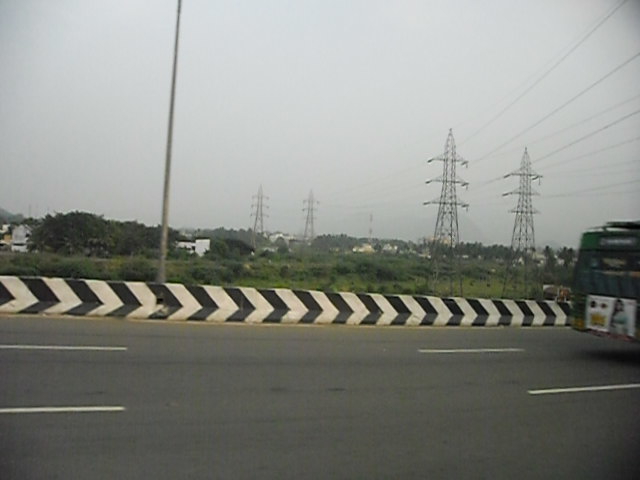
An estimated 670 million Indians were affected by this week’s grid outage (see “How Power Outages in India May One Day Be Avoided“). But it would be a mistake to think that India is uniquely vulnerable to large-scale grid failures, Technology Review reports.
The growing complexity and reliance on the electric grid in both developed and fast-growing countries is making stability tougher to achieve.
India, in particular, operates its grid with one very large handicap: insufficient power. With demand for electricity regularly outstripping supply, grid operators ration out power by periodically cutting service in some areas. The situation has been made worse this year by a drier monsoon season, which has prompted northern farmers to run pumps and draw more power than usual.
India’s disaster illustrates the perils of relying on manual control of the grid as these systems get overtaxed and more complicated. To make grids around the world more reliable, operators need to incorporate more advanced control technology, which can help grids recover gracefully from disruptions.
Grid operators in the United States are increasingly using automation to manage demand-response programs that lower consumption at big power users at peak times. These types of technologies as well as microgrids (see “Microgrids Keeps the Power Local, Cheap, and Reliable“) stand to make electricity grids more reliable as more renewable resources come online and weather-related events, such as heat waves, strain generating resources.

Comments (10)
by Kevin Haskell
They don’t need ‘better control over energy sources,” they just need massive amounts of more energy that right now, only fossil sources can provide. Hardly rocket science.
by longnow
I saw a pic of a topical street in poorer areas…
airconditioners seemingly piled on top of each other
with the cramped living spaces. I never asked the question,
what kind of strain does that put on their grid? What is the
average temperature where it crashed?
I don’t wonder why the Republican tea party denies global
warming. I don’t ask if the computer models are too
conservaative. I ask what will happen to the southern
political strategy if the US south experiences exponential
weather changes. All the demographics go out the window
which means they will need a technological fix besides
aircknditioning to save their ass-ets
by longnow
In addition to cramped living in parts of India you can
always rely on the cramped keyboard on the Kindle to
mangle spelllllling.-)
by DrJDSJr
All human activity adds 5 gegatons of CO2 to the atmosphere annually. Insect and bacterial life add 150 gegatons over the same period. Assertions of anthropomorphic atmospheric warming are a red herring used as an excuse to manipulate, tax and control. Real science is about intellectual integrity and it has been sorely lacking in the “debate”. That needs to change.
by trakk
Insects and bacterial life cant survive without doing what they do. We can still survive by taking steps to decrease our excessive carbon footprint WHEREVER POSSIBLE.
by Mr. Farrell
Indian farmers could be supplied solar-powered pumps at great advantage to the electrical grid.
by trakk
True. If there is anything which is desperately in need of automation….its electrical grids. Hundreds of thousands of watts at the least can be saved by avoiding wastage and diverting the right amount of electricity to the right place at the right time.
by Bob
More like it’s a warning of what happens when you implement price controls on electricity. India’s electric companies cannot charge what electricity is actually worth or the populace will reject politicians who promised then cheap energy. As a result they can’t raise funds to upgrade power plants, build new ones, and maintain the power grid, and large-scale power failures are inevitable. You see a similar situation in Venezuela where, despite oil production, rolling blackouts are the norm. The government in Venezuela artificially lowers the price of electricity to “protect” people from those vile capitalist pigs running utility companies against the spirit of the “revolution”.
by Bri
I don’t understand what went wrong with Daniel Nocera’s artificial leaf. Before sending it out to be developed, he stated 80% efficiency. The team working on developing it said it had a two percent efficiency. All those bubbles coming off that little wafer, I’ll take it. Cover one third my roof in that many bubbles of hydrogen per hour, seems to be pretty good to me! I don’t know calculus, don’t know the formulas necessary, heck I don’t even have the imput numbers, but I know that in my minds eye, I could fill a very large ballon in no time at all. Once the inexpensive material itself is paid for, that gas would be free, for as long as the material lasts, and Daniel said it was self healing. One chunk, a couple of none scientific experiments, and I’d know what the truth is. “A playing card sized piece could power a third world home” was his own words, and the bubble rate appears to support his initial statements!
by Mr. Kirk
http://web.mit.edu/newsoffice/2011/artificial-leaf-0930.html
for those wondering about the artificial leaf. no update i can find on the implementation of such a system.