Over-65s at increased risk of developing dementia with benzodiazepine
October 1, 2012
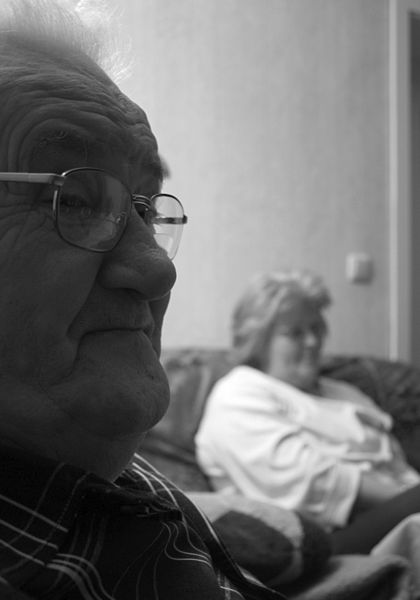
Patients over the age of 65 who begin taking benzodiazepine (a popular drug used to treat anxiety and insomnia) are at an approximately 50% increased risk of developing dementia within 15 years compared to never-users, an open access study published on bmj.com suggests.
The authors say that “considering the extent to which benzodiazepines are prescribed and the number of potential adverse effects, indiscriminate widespread use should be cautioned against.”
Benzodiazepine is a widely prescribed drug for the over 65s in many countries: 30% of this age group in France, 20% in Canada and Spain, 15% in Australia. Although less widespread in the UK and U.S., it is still very widely used and many individuals take this drug for years despite guidelines suggesting it should be limited to a few weeks.
Previous studies have found an increased risk of dementia, but others have been inconclusive.
So researchers from France carried out a study on 1063 men and women (average age 78) in France who were all free of dementia at the start. The study started in 1987 and follow-up was 20 years.
In absolute numbers, the chance of dementia occurring was 4.8 per 100 person years in the exposed group compared to 3.2 per 100 person years in the non-exposed group. A “person year” is a statistical measure representing one person at risk of development of a disease during a period of one year.
The authors say that although benzodiazepine remains useful for treating anxiety and insomnia, there is increasing evidence that its use may induce adverse outcomes in the elderly such as serious falls and fall-related fractures and this study may add dementia to the list.
They say that their data add to the accumulating evidence that the use of benzodiazepines is associated with increased risk of dementia and, if true, that this “would constitute a substantial public health concern.” So taking the evidence of potential adverse effects into account, physicians should assess expected benefits, limit prescriptions to a few weeks, and uncontrolled use should be cautioned against.
They conclude that further research should “explore whether use of benzodiazepine in those under 65 is also associated with increased risk of dementia and that mechanisms need to be explored explaining the association.”
Among the many common brand names for benzodiazepines are Xanax, Librium, Valium, and Halcion. President George W. Bush’s Halion use came to light in January 1992 during his trip to Japan, in which he vomited and collapsed in a faint during a state dinner with the Japanese prime minister.

Comments (15)
by Bob Blackledge
I have not read the full paper, but the brief review could have been more clear. The review states: “Benzodiazepine is a widely prescribed drug – - -”
This is incorrect. Benzodiazepines refer to chemical compounds that all have the same basic structure but differ in terms of their functional groups. One could correctly say: “A benzodiazepine was prescribed” but not: “Benzodiazepine is a – - -” It would seem unlikely that all of the various benzodiazepines (Wikipedia lists 36 different chemicals that have commercial use) would have the same risk of increasing the odds of developing dementia in individuals over 65.
by Mr.Roboto
That may explain conservatism brain damage.
by Mike
I would rather see political comments like this posted somewhere else besides this website. There are plenty of places that are better suited for this type of commentary. Just my opinion.
by Editor
Agreed
by GatorALLin
At what point does a study like this show statistical significance vs importance? The difference of 4.8/100 to 3.2/100 seemed small 1.6/100. They did confirm that previous studies have found an increased risk of dementia, but others have been inconclusive. http://www.statpac.com/surveys/statistical-significance.htm
… I liked both Tony and Mikes comments below. These mysteries or puzzles are rarely a direct relationship, but rather indirect by at least 1-2 other mechanisms with the way the body tries to heal or repair itself or how we medicate for one thing, but accidentally affect another system or process. These drugs can get in the way of other natural processes that take years to see and I would also guess that anyone age 65-80 is taking a lot of other medicines that will be hard to account for what other effects may be at work.
What if dementia is tracked back to plaques found in the brain that can not be cleared normally, so they build up a bit like scar tissue. In a way they are like the brain trying to plug a leak…. like the way blood clots. The problem is not really the plaques themselves, but they show up easily and sure look like the problem. At some point too many plaques do become a problem, but maybe they are more of s symptom (like a runny noise is to a cold). The bigger question is why is the brain needing to be plugged with clotting like plaques, or does it even get fooled into over producing these plaques in a disease repair process (host response, triggered accidentally throughout the body by inflammation). Maybe that baby aspirin that you take to thin your blood and that does reduce stress to your heart, later thins the blood to allow micro leaking in the brain for example. Helping one, hurts the other…. and maybe our repair systems that can handle these stresses at age 45 or 65 don’t do as well at 80 of course.
…anyhow… just a thought… hurry up with those nanobots please or get these stem cells going.
by Editor
“At what point does a study like this show statistical significance vs importance? The difference of 4.8/100 to 3.2/100 seemed small 1.6/100.”
Yes, seemed small to me too. I passed on this question to the study authors.
by Editor
I omitted this part of their statement for readability reasons:
“The researchers used the first 5 years to identifying the factors leading to benzodiazepine initiation and evaluated then the association between new use of this drug and the development of dementia. They also assessed the association between further benzodiazepine initiation during the follow-up period and risk of subsequent dementia. Rates were adjusted for many factors potentially affecting dementia, such as age, gender, educational level, marital status, wine consumption, diabetes, high blood pressure, cognitive decline, and depressive symptoms.
“95 out of the 1063 patients started taking benzodiazepine during the study. 253 (23.8%) cases of dementia were confirmed, 30 in benzodiazepine users and 223 in non-users. New initiation of the drug was associated with shorter dementia-free survival.”
by Editor
The authors reply:
“As there is a high use of benzodiazepine in the population, these numbers would indicate that 33% of dementia cases were caused by the drug. (number of cases exposed – number of cases unexposed) divided by the number of cases exposed. if you do this you will get 33% in our study.
I would not consider this small. Again, this calculation assumes causality and I believe that this number should only be communicated with great caution.”
by GatorALLin
Thank you for posting this extra info…. 33% is huge IMHO.
by asiwel
Well, using their numbers, you have a 2×2 contingency table: [ [30,65], [223,745] ]. This produces a chi-square statistic = 3.48 with dfs=1 and a p-value=.062 … which is greater than alpha=.05 and hence would be considered statistically insignificant.
by asiwel
Just for fun, here is a web site with a little Chi-Square calculator.
http://math.hws.edu/javamath/ryan/ChiSquare.html
by Marty Super
This is another use where medical marijuana seems to be a better choice. Many people use Marijuana to treat anxiety and insomnia, long term, and in some studies it seems to protect the brain with users developing dementia at lower rates than people who have never used it.
by GatorALLin
…good point on use of medical marijuana… but I have to think that people of the age 45 or younger group would be more open to it. I would think that older people…. age 65 now or older would see a stigma with using any form of marijuana…for any reason (especially if their doctor was not aware of these negative findings and would suggest prescription based drugs first).
by Tony
Is it possible that the early beginnings of dementia, when it has yet to be recognised in the individual, may in some people bring on anxiety and insomnia, which is treated with benzodiazepine thus creating the statistic that is showing up in the reasearch.
by Mike
That is a good thought/explanation, but this is how these things play out:
When clinicians first suspect a link between benzos and dementia, they might do an observational study, looking retrospectively at the possible relationship. When there is high enough suspicion, they do a prospective double-blind (patient doesn’t know if they are taking a benzo or a placebo and neither does their clinician) randomized controlled study. The data from this type of study shows: if a person takes a benzo, how much more likely is a person to get dementia. So, the double-blind randomized controlled study is the most costly study, giving the most reliable data.
To put it another way, let’s say we give everyone a benzo. Would there be more cases of dementia? If your explanation were true, then there would not be more cases of dementia. However, the study looked at just this type of situation with just a subset of the population. What they found is that giving benzos would cause a lot more cases of dementia.