PC makers bet on gaze, gesture, voice, and touch
January 11, 2013
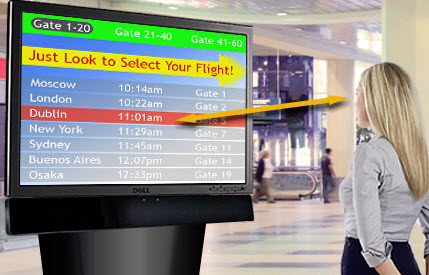
Products that could make it common to control a computer, TV, or something else using eye gaze, gesture, voice, and even facial expression were launched at the Consumer Electronics Show in Las Vegas this week, MIT Technology Review reports.
The technology promises to make computers and other devices easier to use, let devices do new things, and perhaps boost the prospects of companies reliant on PC sales. Industry figures suggest that interest in laptop and desktop computers is waning as consumers’ heads are turned by smartphones and tablets.
Intel announced a new webcam-like device and supporting software intended to bring gesture, voice control, and facial expression recognition to PCs. “This will be available as a low-cost peripheral this year,” said Kirk Skaugen, vice president for Intel’s PC client group.
Intel also announced that, before the end of the year, it would release software that adds a voice-activated assistant to PCs, powered by technology from voice-recognition company Nuance.
Intel’s new gesture-sensing hardware device, made in partnership with the software company SoftKinetic and webcam maker Creative, has a combination of conventional and infrared cameras, and several microphones. The supporting software enables applications on a computer to track each of a person’s 10 fingers, recognize faces, and interpret words spoken in nine languages.
Software developers can already download Intel’s enabling software and ask the company to send one of the prototype devices, a move intended to encourage the development of applications that support new forms of interaction.
Gaze control was touted as a crucial feature of future PCs and other gadgets by two companies at CES.
Tobii, a Swedish company, introduced a standalone USB device called the Rexx that allows any Windows 8 PC to track eye movement. The small black box is initially being made available to software developers, but will go on general sale late in 2013. Tobii’s eye-tracking technology shines infrared light at a PC user, and tracks the reflection of it in his pupils.
EyeTech, a smaller company based in the U.S. that has previously focused on users unable to operate mice and keyboards, showed similar technology, touting a new sensor that can be integrated into PC peripherals, large desktop computers, and TVs.