Proteins remember the past to predict the future
October 5, 2012
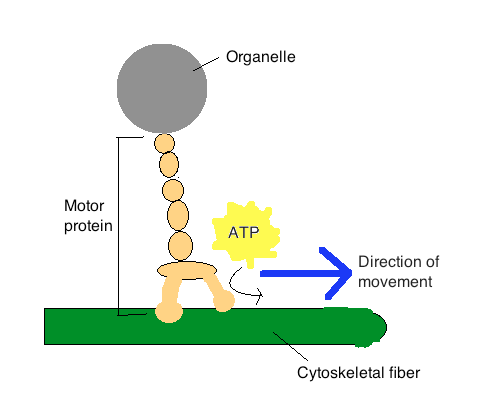
The most efficient machines remember what has happened to them, and use that memory to predict what the future holds.
That is the conclusion of a theoretical study by Susanne Still, a computer scientist at the University of Hawaii at Manoa and her colleagues, and it should apply equally to “machines” ranging from molecular enzymes to computers, Nature News reports. The finding could help to improve scientific models such as those used to study climate change.
Information that provides clues about the future state of the environment is useful, because it enables the machine to ‘prepare’ — to adapt to future circumstances, and thus to work as efficiently as possible. “My thinking is inspired by dance, and sports in general, where if I want to move more efficiently then I need to predict well,” says Still.
Alternatively, think of a vehicle fitted with a smart driver-assistance system that uses sensors to anticipate its imminent environment and react accordingly — for example, by recording whether the terrain is wet or dry, and thus predicting how best to brake for safety and fuel efficiency.
That sort of predictive function costs only a tiny amount of processing energy compared with the total energy consumption of a car.
But for a biomolecule it can be very costly to store information, so its memory needs to be highly selective. Environments are full of random noise, and there is no gain in the machine ‘remembering’ all the details. “Some information just isn’t useful for making predictions,” says Crooks.
Because biochemical motors and pumps have indeed evolved to be efficient, says Still, “they must therefore be doing something clever — something tied to the cognitive ability we pride ourselves with: the capacity to construct concise representations of the world we have encountered, which allow us to say something about things yet to come”.
This balance, and the search for concision, is precisely what scientific models have to negotiate. If you are trying to devise a computer model of a complex system, in principle there is no end to the information that it might incorporate. But in doing that you risk simply constructing a one-to-one map of the real world — not really a model at all, just a mass of data, many of which might be irrelevant to prediction.
Efficient models should achieve good predictive power without remembering everything. “This is the same as saying that a model should not be overly complicated — that is, Occam’s razor,” says Still. She hopes that knowledge of this connection between energy dissipation, prediction and memory might help researchers to improve algorithms that minimize the complexity of their models.

Comments (9)
by Vin
This article seems like circular logic to me. Machines are efficient because of predictive power is first proposed. Then it is noted that biological machines are efficient. Therefore biological machines have clever predictive power. Therefore research funding must be diverted into looking for that. Now If i substitute ‘tomato ketchup’ for ‘predictive power’, the argument still works. Sounds dodgy. But I must admit I do like tomato ketchup.
by Peter Kinnon
“But in doing that you risk simply constructing a one-to-one map of the real world — not really a model at all, just a mass of data, many of which might be irrelevant to prediction.”
Absolutely! And this input filtering is exactly what is observed in living creatures as they increase in complexity.
Particularly in our own species , where the feature is an essential component of our own special quality, which can be defined as imagination and is a correlate of consciousness.
by Jim Mooney
And of course, we now know genes can be expressed dynamically, rather than inter-generationally. Lamarck was on to something. I sometimes suspect that his exampled pillorying, and others, causes scientists with good ideas to “hide out.” There is now evidence that MIT fudged the results of cold fusion experiments, leaving out anomalous heat generation. Although that may have been explainable data, and I have no opinion either way, it was wrong to leave it out.
That’s all ;’)
by Marcos Marin
yes, MIT sucks! I waste no opportunity to bash it. Jeff Hawkins had to go elsewhere because with their (unjustified*) hubris refused to study the ONLY SAMPLE of intelligence limited humans can identify, i.e. the brain. I mean, how stupid is that?! that was decades ago, imagine where humans would be now… *if at least it was backed by reality, I’d have no complaint, I do it all the time =P BUT… there is nothing to it! They are simply Idiot savants with a capital I…
by Marcos Marin
Oh.. so now simulations of the brain must account for proteomics memory too, huh? mwahaha! How further away this pushes our new threshold, ChrisF? =) [clue: Log,2 of #proteic component of neurons (and astrocytes ;-))^1.5
by Jim Mooney
Since nature has already created many of our “discoveries” (like sonar), I’ve often thought punctuated evolution could be explained by intra-genomic gaming. That is, genes, in a way, must model the environment they are to apply to. So why not also “game” that environment dynamically inside the gene structure? “Winners” would prepare organ systems that are most likely to succeed in the real world.
Some organ systems that appear suddenly in the fossil record are hard to explain. Their components have no survival value until the system as a whole appears, and would not tend to survive from generation to generation. This idea would explain how a whole and viable system could appear suddenly.
by Jim Mooney
I forgot to add, if this occurs it has been going on for a long time, so unexpressed intra-genomic systems would be sitting in the genome right now. This might explain some of “junk” DNA. These systems would only be expressed when a species is under stress, since otherwise there is no need, and they would be counterproductive.
Right now the human species is under a great deal of stress. Not so much due to physical conditions, which have improved (see the book “The Good Old Days – They Were Awful”) but because the media focuses almost entirely on the bad. Then that bad is magnified by writers and commentators who even add lies to it. So if this idea has any validity expect mutations ;’)
by JC
My genes are reading the news along with me? I thought so! Seriously though, I think you are on to something. If the organ sets appear fully formed then they must have been modeled in a replica of a nearly real world. Where do you think this ‘game room’ is in the organism?
by Peter Kinnon
The idea that latent neutral genes could become expressed by environmental changes as well as the exaption of those previously active seems very plausible.
In any case, punctuated evolution is entirely explicable in terms of the developments having to “wait” for particular diversifications to take place.
The requirement for the oxygenation of the atmosphere to allow the emergence of large multicellular organisms being an example.
By the way, we should not forget that “our discoveries” are better described as creations of nature too.
Check free e-books on my website for more on this.