Seeing terror risk, US asks journals to cut flu study facts
December 21, 2011 | Source: New York Times
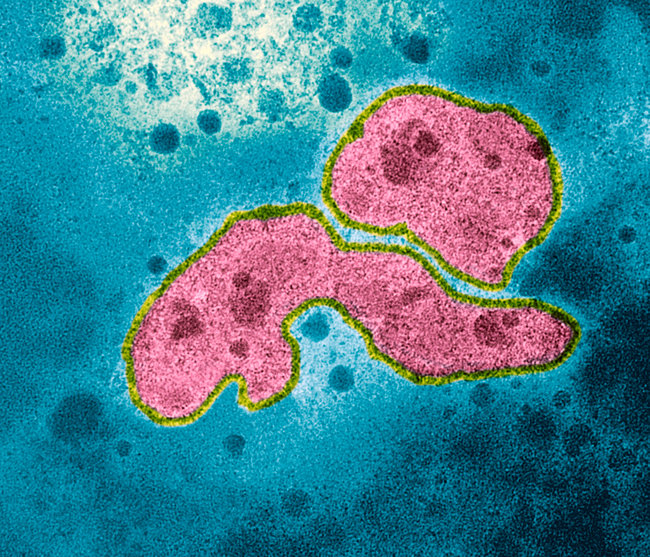
The A(H5N1) virus largely affects birds and rarely infects people, but it is highly deadly when it does (credit: National Institute for Biological Standards and Control)
For the first time ever, a government advisory board is asking scientific journals not to publish details of certain biomedical experiments, for fear that the information could be used by terrorists to create deadly viruses and touch off epidemics.
In the experiments, conducted in the United States and the Netherlands, scientists created a highly transmissible form of a deadly flu virus that does not normally spread from person to person.
A government advisory panel, the National Science Advisory Board for Biosecurity, overseen by the National Institutes of Health, has asked two journals, Science and Nature, to keep certain details out of reports that they intend to publish on the research. The panel said conclusions should be published, but not “experimental details and mutation data that would enable replication of the experiments.”
See also: Let’s tell everyone how to make a virus that could kill millions!