Should we live to 1,000?
December 13, 2012

Peter Singer (credit: Bbsrock/Wikimedia Commons)
Aubrey de Grey, Chief Science Officer of SENS Foundation and the world’s most prominent advocate of anti-aging research, argues that it makes no sense to spend the vast majority of our medical resources on trying to combat the diseases of aging without tackling aging itself, writes ethicist Peter Singer on Project Syndicate.
De Grey believes that even modest progress in this area over the coming decade could lead to a dramatic extension of the human lifespan.
All we need to do is reach what he calls “longevity escape velocity” — that is, the point at which we can extend life sufficiently to allow time for further scientific progress to permit additional extensions, and thus further progress and greater longevity.
What most attracts de Grey about this prospect is not living forever, but rather the extension of healthy, youthful life that would come with a degree of control over the process of aging.
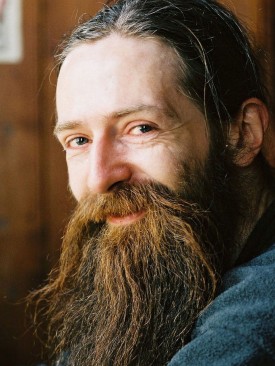
Aubrey de Grey (credit: SENS Foundation)
On the other hand, we still need to pose the ethical question: Are we being selfish in seeking to extend our lives so dramatically? And, if we succeed, will the outcome be good for some but unfair to others?
People in rich countries already can expect to live about 30 years longer than people in the poorest countries. If we discover how to slow aging, we might have a world in which the poor majority must face death at a time when members of the rich minority are only one-tenth of the way through their expected lifespans.
That disparity is one reason to believe that overcoming aging will increase the stock of injustice in the world. Another is that if people continue to be born, while others do not die, the planet’s population will increase at an even faster rate than it is now, which will likewise make life for some much worse than it would have been otherwise.
De Grey might be mistaken, but if there is only a small chance that he is right, the huge pay-offs make anti-aging research a better bet than areas of medical research that are currently far better funded.
(More)
Comments (95)
by bmh1985
Should we live to be 1,000? Do we really need a consensus on this? If you were dying of cancer would you poll the entire human population on what WE should do? Should WE have chemotherapy? Or should WE just die? The question doesn’t make sense. WE don’t have to do anything. But I know what I am going to do.
by Giulio Prisco
@bmh1985 – I totally agree with your comment, and I think it is the wisest comment in this thread. The only think that WE should do is to develop life extension technology and make the _option_, to live 1,000 years and longer, available to those who want to choose it for themselves.
by Khannea Suntzu
It would be somewhat bitter if we were to ‘affordably’ able to extend life expectancy with a modest treatment – if only to lose our modern western standards of living on account of resource depletion.
In other words – we find a silver bullet for life extension, and we live centuries in a favella. Because there isn’t enough energy to have a modern standard of living.
Imagine a world with ten billion people of which 75% is on welfare forever.
by SputnikDave
I find the “boredom” argument somewhat amusing, and a little sad. I cannot recall once in my life ever being “bored”. If I’m stuck in traffic, my mind is still active, I’m making plans, solving problems, or maybe just re-enjoying a pleasant moment in my memory. If you truly believe you’d become “bored” in the post-Singularity universe, then your mind was assembled from different stock than mine. More’s the pity. Feel free to age and perish, should you so desire, but please kindly don’t hold me to that standard. I’m looking forward, with eager anticipation, to what the next few billion years will reveal…
by Editor
Right on! Stick around, it’s going to get exponentially interesting, folks!
by John
Then it’s gonna get plateaued equally fast. This all is like “scarcity thinking” when constant lack of something makes things interesting. When you are godlike, everything to you is like playing tetris for billion years, not having anything else to play.
Not an argument against longevity though.
by NumberOneHeadband
Come on! That has to be bull! You must’ve been bored at some point during YOUR ENTIRE LIFE. Unless you’re a really smart 7 year old (Which would explain you’re enthusiasm to dance in the blue flame). What about when you pulled a sick day expecting it to be fun, but actually everyone else is at school so there’s no contact? what about when Mommy said she’d be back in 5 and forgot you at Ikea? How bored were you for those 5 days?
I have a personal mantra ‘If I don’t live to be 1000, I’ll be severely disappointed in myself’. The latest technology and the beautiful minds of humanity are doing wonders for my future pride!
by James
While I’m in support of life extension technologies, I strongly caution that any attempts to make this technology “exclusive” would have significant social repercussions, as well as other effects in other domains. I think we need to analyze all sides of this issue so that we can make better decisions on how and when to implement this technology. I have many questions which I hope are being actively worked today: How will this technology be made available to the public? Will it be so expensive that it would be only available to the ultra wealthy? Will it require upkeep, and thus become a further dependency on this system? Will it be a barganing chip as a form of control? What really happens to a person’s psyche (especially the ego) when people live beyond 100 years in a state of relative youth? What happens when a megalomaniac or a sociopath or a powerhungry CEO or Politician lives past 100 years in a state of relative youth? What happens when someone with a high degree of empathy lives past 100 years? Do people become more mentally healthy or less healthy? How would long-term planning be effected? Will “immortals” conduct long-term planning to benefit themselves or all of humanity? Will immortals be more honest or less honest?
I really could go on, but if anyone has any insight into these sorts of questions, I’d like to learn more about any studies or think tanks that are taking on these issues.
by Mr.X
“Will “immortals” conduct long-term planning to benefit themselves or all of humanity?”
Depending on how confortable you are with switching between levels of abstraction, you could note that there is a strong possibility that both things are significiantly related.
by Saravanan
Here is a question: Since the poor world (I am from a poor country) is continuing to reproduce in frantic page and marches on its way to subsume the rich world, what is wrong with the rich world if it tries to stabilize its numbers by resorting to life extension?
by GatorALLin
Not sure if you have watched this very good ted.com video about how they can predict the population details of all countries… (I am sure they did not yet calculate any extended lives beyond 100 years max) still worth a watch from ted.com http://www.ted.com/talks/hans_rosling_on_global_population_growth.html
by chinamike
Years ago I read a fascinating article in Playboy magazine regarding the consequences of immortality or significant life extension. I thought it was written by Arthur C. Clarke, but I cant find it. In any case, it posed some interesting reactions to immortaility. The issue of overpopulation would take care of itself because having children would become much less important as we have them now to continue our DNA and our species whether consciously or unconsciously. Young people go to war, perhaps less than willingly, but do it because life is short and giving one’s life for country, religion, etc., takes on meaning. If you could live indefinitely that decision would be much different. The same would also be true of death resulting from intentional risky behavior. Boredom would be overcome by taking on new challenges (mostly intellectual) that would be enhanced by all that one knew from ones previous avocation. I can’t remember all the other points he made, but the conclusion was that as humans we would quickly adapt to that new reality.
by road_runner321
Clarke wrote a novel called Against the Fall of Night which dealt with humans achieving immortality.
by Gabriel
You read an article like that in a Playboy magazine? 0_o
by J. Braun
Let us do it. I have 70k sq. feet facilities in a city of 400k inhabitants in South America with 3 Universities and a lot of less expensive scientist labor eager to work. I am willing to lend those facilities to the right foundation or NGO. Who is up to the challenge? Contact by mail. I am serious person.
BTW congratulations to KAI very nice work!
by Tj Green
Most diseases now are the effects of aging. It does seem incredibly stupid to spend money on treating the effects of aging and ignore the cause.
by twm114
I swear,if tomorrow somebody figures out a way to provide free sex and ice cream-all you want!- some of you guys would be worried about attracting flies.
by Editor
Added quote in article from Singer: “De Grey might be mistaken, but if there is only a small chance that he is right, the huge pay-offs make anti-aging research a better bet than areas of medical research that are currently far better funded.”
by twm114
“Are we being selfish in seeking to extend our lives so dramatically?” is the silliest thing I’ve ever read. Hmmm, certain death or indefinite life, that’s a toughie – if they do figure out how to do it, every last, sane human being on earth will be feverishly clamoring to jump on that bus!
by steve
I just wish he had spoken a little about possible psychological issues. What would it be like if Charles Manson lives forever? What do you do to fight off boredom once you’ve done everything? What do you mean by “long term relationship?”
by Harold Katcher
I believe I’m the one who convinced Aubrey that aging can be reversed, that rejuvenation has occurred in the laboratory, entirely gainsaying the philosophy of the SENS Foundation, their’s being that aging is the result of irreversible degradation of the cell due to free radical,s mitochondrial dysfunction, DNA lesions, etc. – but the truth is that all of those phenomena are the results of aging not the causes. The experiments using cross-age transplantations and the Studies of the Conboys, Villeda and others have shown conclusively that tissues and organs can be rejuvenated. (And work in the ’80s by Ludwig hinted whole organisms could). If cells can,rejuvenate themselves by merely receiving the proper signals (via the blood) then they cannot have been irreversibly damaged since their damaged was reversed by themselves! I told him I had a way of using this principle on human beings, a very simple way that has a good chance of working and he agreed that it had merit – but he said if it did would it would hurt scientific research!!! Why?
Because it is simple and medium-tech and doesn’t require finding yet another protein or gene (they can be different) that affects lifespan. So who is delaying?
As for FEDUP’s reply – total agreement. The specious argument that lack of aging would increase the rate of population increase (a tiny bit, and long after population pressures already exceed the Earth’s carrying capacity) has been discredited numerous times, but it still persists. So does the notion that aging cannot be programmed, in spite of the huge amounts of evidence to the contrary.
.
by FedUp
-”On the other hand, we still need to pose the ethical question”
I don’t see why we would need to create more cold abstractions over the basic truths in life. It’s always the same with such superficial “ethical” questions: they all boil down to control over others.
-”Are we being selfish in seeking to extend our lives so dramatically?”
Read instead: what kind of authority must we create in order to dictate to everyone else how long they should live? Why are such questions even treated as if they have any relevance? Maybe it’s because of the religious undertones in Western civilization that any kind of fulfillment is somehow “bad”. No – the only people who are “selfish” are the ones that want to dictate to others how long they should live. Denying others this right is nothing but rationalized murder dressed up in some philosophical smokescreen – plain and simple.
It pains me how humanity’s priorities are so turned upside down that they cannot even see the obvious anymore. Are they so far removed from their own sense of self that they don’t care about others anymore? I would love for everyone to live as long as they want in the best way they can, and even more so, I think everyone should have the right for a peaceful and painless death if he or she desires it and doesn’t want to live on. It’s not about how long we should live, but what quality this life will have. The best one would be both an indefinite and fulfilling life. We live to maximize pleasure and minimize pain, or at least make it optional.
-”And, if we succeed, will the outcome be good for some but unfair to others?”
There is a simple solution: respect freewill, then everyone wins. The fact that some people suffer is not magically corrected if you keep more people in suffering. The pathos of this question is cleverly hidden jealousy. Is it unfair that the West lives in luxury while the rest of the world starves? Arguably so. However, the knowledge the West has gained can potentially lift the whole world out of poverty. This is more of a political dilemma than a question of possibility, and that’s where people should focus upon. Towards a world of post-scarcity.
Let’s not waste our time on the same short-sighted, insidious questions and create some real changes for the better that everyone in the whole world can benefit from. For example pushing governments for a basic income & consumer tax system that goes well with total automation so that this petty cry for a “loss of jobs” can finally be put to rest and we can spend our time and energy on more important things to improve our own lives and therefore, if done wisely, the lives of everyone else.
by mitydk
Excellently put!
It’s not fair that some people live long happy healthy lives and some people live short, painful lives full of suffering. People who already live better lives should not be allowed to live even longer, healthier lives with a higher quality of life.
So let’s make everyone live short painful lives full of suffering in order for it to be fair.
That’s how I read the ethical question argument. It is complete bull$hit.
As if we have that much control over life on this world, the incredible arrogance of some people to say what is or isn’t fair, who are they to judge? How about we just strive to let people live free and do the best they can with what they have instead of trying to dictate and regulate fairness and equality of outcome for everyone, a stretegy that cannot ever succeed until mankind becomes both omnipotent and omniscient.
by pt
Well said…there’s also the element, in addition to the matter of accusing someone of being selfish while trying to control their behavior, of whether or not someone who lives much longer has more selfless outlook on reality or not. Relative immortality would seem to bring a level of ego death that would make people more concerned with the long term impacts that human behavior has on the environment, as well as a more global mindset rather than one centric to the person’s local culture.
by Gabriel
Well said FedUp – I 100% agree that these ‘big’ questions are really psychological more then anything, and that it’s not anywhere near as complicated as others make it out to be.
by trakk
I am personally more interested in not being born again in any form, in any place, on any planet, in any galaxy, in any universe (if multiple universes exist).
I hope my soul attains moksha after the end of this life of mine.
Nothing serious….i am quite pleased and satisfied with my life :) Its just that life or immortality is not all whats its cracked up to be. ( This is just my opinion)
by Cybernettr
“immortality is not all whats its cracked up to be “
How do you know until you’ve tried it?
by trakk
I know because i am immortal.
by trakk
hence the frustration….
by Mr.X
“immortality is not all whats its cracked up to be “
You are right, it is MORE than average joe thinks…
by trakk
The question is not whether it is more or less, but is it similar or different to what the average joe thinks it will be.
by Mr.X
If I say it is more, then it is logically entailed that it must be different.
by trakk
The point i was trying to make when i said ” immortality is not all what its cracked up to be” is its different than what people think, i dint mean to say its more than what people think. ”more” can mean ”different” but ”different” doesnt necessarily mean ”more” always.
by Mr.X
@Trakk: Yeah.^^
I know.When I said more, I consciously chose to contradict you;)
This was possible because your comment was somewhat ambiguous, which btw indicates that your reasoning behind it was “fuzzy”.
In case you didn’t notice, I disagree with your view.
Have a nice day.
by trakk
Ofcourse my reasoning about immortality (if thats what you meant) was fuzzy….cuz i am not immortal:)
And I dont mind you disagreeing with it and the rest of the comment,because that was merely my opinion and i was not stating it for a fact.( i hope i chose the right words as english is not my first language)
by Mr.X
Trakk:
“Of course my reasoning about immortality (if thats what you meant) was fuzzy….cuz i am not immortal:)”
You don’t need to be something to make specific statements about it;)
“…I don’t mind you disagreeing..because..that was merely my opinion and i was not stating it for a fact.”
Even if someone states something for fact, it may turn out to really have been opinion.Therefore, imho, we all should not mind too much what is in other’s minds.
I only wrote explicetly about my disagreement with your comment, because your comment implies that I didn’t understand your first comment, while in reality it seems you didn’t understand my first comment.
I know that you didn’t know that I knew what you thought you know.
Of course ,given my writing-”style”, it is a little hard to keep trakk;)
by trakk
When it comes to immortality…one has to really be immortal to make statements about it :)
As with regards to the rest of your comment….it definitely sounded like you dint know what i meant by my first comment, anyways….i will take your word for it that you knew.
by Mr.X
“When it comes to immortality…one has to really be immortal to make statements about it ”
I don’t know how to give a polite answer to this, which would still be honest^^
by Mark
Kurzweil predicted 6 yeras ago that in 15 yeras we would live many more years thanks the medical advances. So that should be before 8 years.
But now I know about the farmaceutical mafia whose goal is to have is all chronically ill so the medical advances won’t happen so easily.
We first need to get rid of the criminal elite running the world and then we can see some real progress beind made.
by Bruce Wright
This “Big Pharma” meme is another of those tinfoil hat conspiracy theories that has little basis in reality. The fact of the matter is that there just isn’t a single controlling conspiracy agreeing on who gets to bring out what drugs in order to maximize everyone’s profits – which you would know if you ever took the time to actually read any of the financial reports from that industry.
Yes, it can be profitable to continue selling drugs to treat chronic conditions – but it can also be extremely profitable to bring out drugs that cure major diseases. And regardless of whether a drug is used to treat a chronic condition or to effect an outright cure, the patent will have a limited life span – so the drug is a rapidly depreciating asset regardless of whether it’s a long-term maintenance treatment or an outright cure. If you know that you have a drug that cures cancer, it’s in your interest to make as much money off of it as possible before the patent runs out. If you don’t, then it’s likely that your competitors will, because very often in that field once something is discovered by one research team it usually means that a half dozen others are right on their heels – to say nothing of the difficulty of keeping such a discovery secret from the scientific community.
Example: Let’s say that a maintenance drug sells for $100 per month. That works out to $1200 per year or a lifetime total of $60000 even if you take it for 50 years, which might work out to a net present value of around $15,000 (the actual present value of that future revenue stream). Let’s also say that you’ve found a curative drug that eliminates the condition and all of its debilitating effects – you might be able to sell it for more than the NPV of the maintenance drug – say for $25,000. Or if the condition isn’t so debilitating that this is an attractive proposition for the patient, you could still undercut your competitor by a substantial margin (say, charging $10,000) and still pocket a tidy sum. There most certainly can be major profit potential in curing disease.
Where our drug system really falls down is not in deliberately withholding curative drugs, but rather that the financial incentives tend to encourage finding minor tweaks to existing drugs (because those are lower-risk investigations than looking for something completely new) in order to patent the minor tweak even if it’s only a slight improvement over the old drug. Similarly, there is little incentive for companies to look for new applications for old drugs that are out of patent – though Universities and government research organizations sometimes pick up some of the biggest opportunities in that case and do the necessary investigation. The result is that progress in this area is often extremely slow and pedestrian, not because the world is being run by a criminal elite but because the financial incentives in our patent system are all too often designed more for the 19th century than for the 21st.
by Bruce Wright
To expand a bit on my example, let’s say that given the market forces you find that you should sell your curative drug for $10,000, undercutting your competitor by $5000. If the advantages of your new drug are sufficiently compelling (both from a financial and health perspective), it’s very possible that you’ll convert all of your competitor’s customers to taking your drug and since they’re now cured, they’ll no longer need his maintenance regime. The NPV of his drug has now gone from $15,000 to $0. Suddenly it doesn’t look like his decision to focus on long-term maintenance drug therapy was very smart.
by Damon Montano
This is like the legality and prohibition of cannabis. If you think smoking or eating cannabis is bad, than by all means don’t consume it. However, don’t even be telling other people THEY can’t use it either. Likewise if you want to die, please, rest in peace, but don’t preach to us that we should be lying in the ground rotting away, never to exist again. The Universe is 15,000,000,000 years old, and it will be around another 15,000,000,000 years after you die. Don’t anyone dare tell us we shouldn’t extend our window of existence.
by Giulio Prisco
@Damon – Exactly, well said!
by Paul in Vancouver
I believe we will reach so called “escape velocity” within 50-75 years, meaning that anyone who can live another 50+ years just might end up living until the year 3000. So stay healthy everyone.
by Bruce Wright
If Ray Kurzweil is even approximately correct, this will happen much sooner than 50-75 years – more like 20-30, maybe even less, possibly even in 10-15. Personally I have some doubts that we’ll ever reach a true “singularity” (virtually nothing that we know about in the physical universe continues growing exponentially forever), however I do expect the rate of scientific and technical progress to continue to grow for quite some time yet. From our vantage point at this time, this may appear to be a bit of a quibble because I expect progress to become extremely rapid even if it never becomes truly incomprehensible; to us today however, that world would appear incomprehensible even if it won’t be to those who will be living in it.
by Gabriel
You don’t even have to look at Kurzweil — look at De Gray himself….he said from the Singularity is Near DVD from 2009, and I quote:
“I think the singularity of longevity is fairly near, probably; I have to be very speculative because I don’t think it’s really “near”, I think we have a 50% chance of reaching what I call ‘longevity escape velocity’ within about 25-30 years subject to good funding of the preliminary research over the next 10 years or so. But I think a 50% chance is quite enough to be working hard toward.”.
Martine Rothblatt is someone else in the biotech field who showed lots of enthusiasm in her interview. Ultimately I also want to bring up the point that this is all just referring to Biotech which will overlap with Nanotech and everything else….which is why Kurzweil does the “bridges” approach – rather then saying that people need to hang on for 50+ years, they only need to hang on for, say, 10 or so years to take advantage of one means of prolonging life, which would lead to another and to another and so on. Ultimately, if all of this comes to pass, everyone withing our lifetime can achieve an indefinite lifespan so long as they proactively take advantage of newer therapies when they become available.
by Daniel Davis
> Are we being selfish in seeking to extend our lives so dramatically?
Yeah, the desire to be remain alive is a selfish desire – is that somehow a problem?
by Dwee
Whose life are you extending? That person you call yourself? Oh, if only there really was one person in there beyond the illusions and delusions of one. If an A.I. device is allowed to grow at its own rate of learning, it won’t be long before it is waaaaaaaaaay more intelligent than the most brilliant human. It will see us as we see ants, just programmed little creatures that think all they do is so important, when in reality…oops, a foot. Nope, humans will evolve via A.I., not life extension. If at all, it is that.
by Jack Reeve
Live forever or die trying. Y’all won’t recognize this place in 100 years. Won’t recognize yourselves either. We all will be part human/part machine. I’m OK with that, as compared with the blackest black of all – nothingness. Let’s chat again on 11/11/11111. It’ll be my birthday. Y’all are invited.
by dv
Radical (to us in 2012) “life extension” must become the “norm” eventually. The human race will not last beyond a billion years without the ability to colonize space. Space is big. It takes 1000-year beings to volunteer to take a 500-year “ride” to another star system. Those who cannot get beyond fretting about today’s population of New Delhi are staring at their own shoelaces.
by Aaron Wright
I agree that it would take a 1,000 year being to make it to another planet (unless we find some loophole in the laws of physics). But it is further complicated by the need to have age-extension capabilities on board the spacecraft itself. The life extension technologies can’t be reliant on any kind of complex infrastructure. This certainly complicates matters even more.
by AZryan
He said another ‘solar system’. You said ‘planet’. People could get to Mars without living to be 1,000.
But the idea of what we’d need to do to last another BILLION years is profoundly silly. 200 years ago airplanes were fantasy and now we’re at the dawn of nano/bio tech. We won’t even be ‘human’ 1,000 years from now much less a billion.
by Giulio Prisco
I find it very significant that a prominent mainstream bioethicist like Singer is, basically, endorsing Aubrey. Of course he dutifully mentions “ethical concerns,” whatever that means, but he says quite clearly things like “in the long run, anti-aging treatment will benefit everyone. So why not get started and make it a priority now?”
Singer’s endorsement of Aubrey, SENS and radical anti-aging research has been noticed by, among others, Wesley J. Smith, who says “Oh good grief. Peter Singer has embraced Aubrey de Gray’s quest to defeat human aging.”
Link: http://www.nationalreview.com/human-exceptionalism/335337/peter-singer-falls-immortality-quest
by Gabriel
Boiled down, I agree with De Grey himself in that many of the philosophical issues are actually more psychological.
You are not selfish for wanting to survive and live longer, you are not immoral for wanting to transcend your limitations and become the best you can be….this is what I feel it comes down too — overcoming the engrained fear that somehow all of these things are “wrong”.
Like he says, we have this entrenched masochistic-like tendency to accept Death on principle because, till now, their really hasn’t been anything else we can do about it….and now that their is a chance that we can, people are fearful, skeptical, and offended.
I want to live my life to the fullest – I don’t fear and want to escape death, but neither do I rationalize it….being happy concerns me more then thinking on death….but if the day comes when biotech (perhaps in the next decade or so) can enable us to achieve “negligible engineered senscence”, I will definitely take advantage it….It’s a life-changing decision, and not one to be made likely….but rather then asking “Why”, I feel it’s more important to ask “Why not”?
Ethical concerns? What are these ethical concerns? Even if Overpopulation, boredom and so on were real tangible issues that would need to be dealt it, isn’t it still worth it for the sake of saving human lives? Boiled down, that’s what it comes down too….life or death – it shouldn’t be something hard. We’d find ways to alleviate overpopulation, perhaps by expanding out into the cosmos, and boredom (which is silly really) would be alleviated by the historically exponentially growing quality of life.
Whatever happens, whatever the price is, I find it would be hard-pressed to say it’s not worth it. We all have to decide for ourselves what to do with our lives….You get out what you put in, and the fear of death unconsciously spurs us on to make the most of life. Eventually, when the day comes, we have to decide how long we want to live….but let’s at least give people the choice in the first place. Death (i.e. Fear) shouldn’t be the thing to spur us on and drive us to make the most out of life….that’s just tragic — Life, and People, are bigger and better then that.
by AZryan
You ARE being selfish for wanting to live longer. The problem is that you misuse the word, thinking that selfish is a ‘bad thing’ when it’s morally neutral on its own.
If you eat a sandwich you’re being selfish. If you eat one in front of a staving child you’re being ‘overly, immorally’ selfish.
Same as ‘selfless’. Alone it’s not inherently a trait to be worshiped or praised.
by Ian Clarke
Hi Guilio – thanks for the link.
Smith’s response to Singer seemed excessively tabloid. Describing de Grey as a “long lost member of ZZ-Top” and “wild-eyed” and implying that Singer only agrees with de Grey because he’s an atheist and therefore has “no hope” – it all really smacks of someone who is unable to debate the issue.
He asks why SENS should receive funding while there are still kids dying of malaria in Africa. On that basis, nothing should receive funding. Let’s fund both. It doesn’t have to be ‘either or’.
He says life extension will be a “tomorrow that never comes” – showing that he doesn’t think it’s a possibility. Well yeah, it certainly wouldn’t if he had his way.
It’s hard to argue against Smith’s article as there’s so little substance. Instead, he prefers to question motives and poke fun.
If given the opportunity to extend his own life, I wonder if Mr. Smith will refuse any SENS treatment on principle?
by Gabriel
He would, probably — when I’m sick in bed, I’m not going on philosophically on whether or not this is a good thing or not…I just want to get this over with so I can get back with my life. For all the philosophy, rhetoric, ethical talk and “big” questions……it’s all talk — when tangible means become available to radically extend life and conquer disease, people are going to take it greedily, they won’t have to think about it for a second.
And they aren’t selfish, immoral or whatever for doing so – they are just trying to survive and pursue a better life for ourselves, like everyone else including Mr.Smith undoubtedly. People will pursue these therapies far more then they say they will, and they aren’t corrupt or evil for doing so.
by Gabriel
As for what he said….Ad hominem attacks are not worth dignifying with a response.
by Ian Clarke
Yeah, commenting on de Grey’s appearance was a cheap shot. I like reading articles that challenge my beliefs, and make me question whether I should still hold them. Articles like Mr Smith’s, only make me question the author’s credibility.
by Mr.X
“Should we live to 1,000?”
I don’t know about you, but I need more time to decide.Let’s say, like a thousand years.Yeah.
“Are we being selfish in seeking to extend our lives so dramatically?”
Isn’t that a little bit collectivistic?Selfishness isn’t bad in principle, but only when it leads an individual to harm others.
If someone is annoyed just because I’m not dead already, I honestly don’t care about his/her(it’s^^) opinion (besides the fact that I’d watch out if s/he is trying to do something about it).
“That disparity is one reason to believe that overcoming aging will increase the stock of injustice in the world.”
I have a great idea.To optimize justice, given what we know, we just have to kill everyone.Then everyone is equally dead.That way, we can avoid adding more injustice to some abstract, non-existing (outside your head) total.
Isn’t that great!?By the way; it would solve the human overpopulation issue…
Ps: Overpopulation is local, the USA or Europe (only partly) are not really ovepopulated, much of the population growth comes from nice countries in which religion mandates many children.These can then be exported.Some people talk as if we were one united, democratic (^^- united, one demos) humanity.
Why should westerners be deprived of the possibility to pass on their genes, just because people in poor countries chose to mutiply endlessly!?Or less technically, why should westerners be deprived of the joys (and other things) that parenthood entails? While others just take this, without any concern about humanity at large.
Politically “incorrect”: The logical consequences of such a view would be either a world without westerners or at least a large majority of humanity coming from countries whose historical contributions to humanity, and especially ethics too, is rather low.
by de Broglie
I agree with Mr. X. In addition, the average IQ’s are lower in the countries with the highest fertility.
by de Broglie
I agree with Mr. X. In addition, the average IQ’s are lower in countries with high fertility. We need a smart future.
by Gorden Russell
de Broglie, I.Q. tests are designed by people of the Western culture. People in Africa don’t test well with them because they are culturally loaded. There has been a lot of discussion about this online. You could look it up.
by Mr.X
@Gorden:
“de Broglie, I.Q. tests are designed by people of the Western culture.”
Like science, and all it’s technical applications by the virtue of derivation.Maybe cultures aren’t equal?
Notice how most people have no problem with praising any chosen culture, but get defensive if you hint at negative aspects of other cultures.Of course, it’s ok if you are insulting Europeans.But that’s the one exception.
How can it be that they don’t notice that sincerely praising the achievements of some group does entail the existence of some inequality in the first place?
How else would any achievement even be noticed, be remarkable!? If there is nothing to compare a given thing to, most adjectives become meaningless, because they designate qualities whose nature is relative.
If you hold any values whatsoever, then you should be able to admit that some groups confirm more to these values than others, and that it is possible to evalute -and rank – groups, cultures etc accordingly.
One yardstick could be the betterment of the human condition, something in which “western culture” reigns surpreme, despite all it’s shortcomings.
This cultural and moral relativism that seems to dominate any discussion… maybe people should ask themselves whose interest are being served…
For example, encouraging mass immigration of poor people is a way to reduce the cost of labor.
This relativism is nothing but a tool to activite some basic human insticts (morality: group cohesion etc) to get people to go along with things they’d otherwise refuse.
by de Broglie
Mr. X, very well said.
by de Broglie
Even people of African descent raised in Western cultures perform below average relative to the people in that culture. This is a large reason for the white-black achievement gap in schools. One should be a realist about these things. Given that human groups evolved separately and have significant physical differences, why would all the human groups have the same average IQ?
by Whittaker
IMHO, as a moral being you should start making some effort to improve the percieved low IQ of black people. Try nootropic drugs, brain training and any other remedy you can think of.
by Bruce Wright
It is not simply that the test is culturally loaded (although it is) – it’s also because one’s performance on such tests is highly dependent on one’s early home environment. Better nutrition and better educational opportunities at a young age make a significant difference in one’s measured IQ.
by Mr.X
@Bruce: I actually agree with you.The reason some people who are brought up in western societies still perform badly is their home environment.
For example: I once had to read a paper about this, and there was written that some 5 years in white middle-class homes have a higher vocabulary than the mothers of most “ghetto-kids”.
And this is just one disadvantage.
The middle class kid has allegedly heard around 6 times the amount of word by the age of 5(or 6) than his less well-off counterpart.
Many things I have read in that paper confirm my personal experience (e.g no future orientation beyond some days, etc).
by Bruce Wright
@Mr. X, I was not attempting to imply that all cultures are equal – quite the opposite, in fact; the “ghetto” cultures to which you refer generally do not value education or learning, so it’s hardly surprising that kids from that environment don’t score well on IQ tests.
If anything, the comment was more in response to several comments implying that the difference in performance of these kids was primarily due to genetic factors. There MAY be a small effect like that in the aggregate, but if so its effect on IQ is very small relative to these other factors – perhaps at most 5 IQ points on average, and even that is highly debatable in academic circles. By contrast, the differences caused by education/culture and nutrition are each in the double digits in their effect on IQ. It is not enough to simply grow up in a Western society if one’s early home life (and also the early home life of one’s parents) was not as enriched as one’s peers.
A hundred years ago, immigrants to this country from places like southern Italy and Ireland often scored very low on IQ tests; they came from cultures that were undoubtedly Western, but for various reasons (poverty and lower class status) they lacked a good home environment. But over decades they were able to reduce those differences and now score virtually identically to others of European origin. There is good reason to think that something similar will happen with blacks and south Asians, but it may take longer since in many cases they’ve never really embraced Western culture.
by Mr.X
@Bruce: Take a look at the sequence of comments.My comment about culture was in response to Gordens comment about IQ tests;)
“t is not enough to simply grow up in a Western society if one’s early home life (and also the early home life of one’s parents) was not as enriched as one’s peers.”
Yes.And this is a point many here don’t seem to get.There is a difference between just being physically at a certain place and actually live like the majority of said place.
Anyway: I think IQ is grossly overated.
Btw: There are countless ethnic groups with black skin, so I think it superficial to lump them together and say: Low intelligence due to genetic make-up.Literally superficial.
Ps: European IQ varies, too.Despite our great genetic similarity.
by Cybernettr
I.Q. tests are designed by people of the Western culture. People in Africa don’t test well with them because they are culturally loaded.
Then why do Asians tend to do better on these tests than non Asians? After all, by definition, Asians are not Westerners.
by Gorden Russell
Don’t worry about it, Mr. X. Once the self-assembling photovoltaic carbon nanocells come online, we will enter the age of abundance. Not one person on Earth will be poor.
When they see that they can live richly for thousands of years, people will have fewer children. We’ve seen that in the West.
Also, graphene can be used to filter out salt from seawater via reverse osmosis. When nanocells can take carbon out of the air and build carbon nanotubes and all the other carbon compounds, great desalinization plants can be grown off shore and pipelines the size of the Great Wall of China can be grown to carry the water far inland to make green all the desolate wastes of the Earth. This will make space for all the poor of the world. Before things get too crowded, great cables of carbon nanotubes can be lowered from geosynchronous orbit to pull up space elevators. There is more than enough matter in all those carbonaceous asteroids to provide for this. Nickel-iron asteroids can be turned into starships dozens of miles across and hundreds of miles long. We just have to hope that fusion power will be perfected after the Singularity. If so, we can power immense charged particle accelerators to thrust ships along at one gravity. It takes a bit more than a year of “falling” at one g to get up close enough to light speed to feel the effects of time dilation. At those speeds, a grain of dust will hit the ship like a bomb, so the lip of the ramscoop will need to be surrounded by powerful radars and lasers to spot and zap all incoming debris.
Of course, the Alpha Centauri system seems like the most likely place to go, but let me go search out some other stars of similar spectral class.
by Gorden Russell
At Wikipedia there is a “List of exoplanetary host stars” that has all the latest discoveries by astronomers all over the world. Of 573 stars on the list, “…There are 474 stars with one confirmed planet, and only 99 stars with two or more confirmed transiting planets…”
I have spent hours looking at the stars on this list, and have yet to scratch the surface. You gotta check it out.
by Mr.X
@Gorden:
“When they see that they can live richly for thousands of years, people will have fewer children. We’ve seen that in the West.”
Really!?I didn’t know we can already live thousands of years.With that much time at hand, I will stop worrying^^
But ok, you’re right: Theoretically it should be possible to give everyone, measured against todays average, a high living standard.
Ps: I don’t know if I’d want to emmigrate towards the stars, because one could miss out enhancements here on earth.
by Bri
Who is the more selfish, the one who wants to live to a thousand, or the one that wants 15 kids? There is an answer, and it does have to do with ones impact on the totality of the system. The conversion of sugar into alcohol by yeast stops because the alcohol is a toxic byproduct of the yeast just trying to survive. Ones actions can be toxic in insidious ways. As we extend our lives, we have to extend habitability, which will include space and teraforming the other usable planets. Eventually even in other solar systems. The times of wanton proliferation are coming to a close. This is evident in westernized nations. We do need to be more mindful of these issues and our impact on Gaia. Humanity needs to do some heavy thinking. We need a better understanding of morals and ethics, and they are not derived from religion. If anything morals and ethics in relation to religion are an oxymoron.
by FedUp
It is full-blown collectivism. I’m reminded of Nietzsche’s “preachers of death”…
by Satan
Advances in life extension will coincide with other advances, which will make people’s worrying over overpopulation and inequality seem like an historic epidemic of obsessive compulsive disorder.
by GatorALLin
…before anyone worries about over population, this Ted.com video is worth watching… http://www.ted.com/talks/hans_rosling_on_global_population_growth.html
by Gabriel
…..Did you HAVE to pick that screenname? Really? XD
My name has a biblical origin, sure, but still…..XD.
by Ian Clarke
I don’t consider it selfish to want to live longer, or even forever! Survival is hardwired into us. To my mind, any species intelligent enough to be aware of its own mortality will naturally want to defeat it. We’re problem solvers, and death is just another problem to solve. Religion has been our coping mechanism for death for far too long.
There are no ethical issues here. Medical advances will spread quickly around the globe, and will lessen in cost quickly. Injustice lessens with each passing generation, and there’s no reason to think that will change. There will be an outcry if it does.
Increased longevity will not increase the rate of population growth. I don’t believe that those living longer will want to continue having offspring, so while it’s something to monitor, the increases will be modest.
Is it a good thing? I think we just start to get into our stride in our dotage. The knowledge lost when someone dies is such a waste. Let’s keep living and contributing!
And besides, no-one can stop it now.
by Jason Silva fanboy
>There are no ethical issues here. Medical advances will spread quickly around the globe, and will lessen in cost quickly. Injustice lessens with each passing generation, and there’s no reason to think that will change. There will be an outcry if it does.
This is the correct answer. I think the author was just trying for some “balance” with that objection, but it sounded so weirdly forced – “but won’t improving a thing be unfair to the guy that doesn’t have the thing?”
Yes. Yes it will. Until the thing gets better, and cheaper, and eventually everybody has the thing. As with everything else that has ever been invented, and ever will be invented, ever.
by Timothy
Much of the impact on our environment isn’t from overpopulation per se, but from the fact that people are short-sighted and selfish. They want to live high-impact lives–living in huge inefficient houses, driving Hummers, and eating meat every day–and to hell with the rest of us. That short-sightedness is a result of the knowledge that they only have a short time to live.
Maybe a 1000-year lifespan would make us more concerned about long-term impacts and sustainability. If you know you’ll be alive to see the results of your overindulgence, you might be less prone to be short-sighted.
by Bruce Wright
Many of those sorts of things are likely to become much cheaper in 20 or 30 years …. meat, for example. If you can grow something closely resembling meat in a vat without spending all of the space required for keeping all those animals and growing all their food, it suddenly starts to look a lot more sustainable even under high population growth.
by Jerry
I’m confident of over population being a non-issue. Since being healthier for longer increases our quality of life it’s likely we’ll continue to reproduce under the rate of sustainability. We already do for developed society, the rate of sustainability being 2.1 kids and my country (Australia) is 1.92, US is at 1.9 and UK is 1.94 (more: http://en.wikipedia.org/wiki/Total_fertility_rate#Replacement_rates)
The trend suggests we need longevity to survive as a species, though I’m sure if it came to it we’d put all put aside our differences, get together and.. “survive” ;)
by Gorden Russell
Yes, Jerry, birthrates will drop long before all the greened deserts become crowded. After that, there will also be space elevators and starships.
by jbs
Thank you. I hate the stupid overcrowding argument.
by Jerry
… Not sure if you’re being sarcastic or not? I’m assuming from your last sentence that you are, if so care to present evidence against the trends showing we’re on track for 0 population? My only belief is that when we get to a certain low population we’ll naturally level out.
by Jason Silva fanboy
You’re posting on Ray Kurzweil’s website, and you think starships are sarcastically improbable?
by melajara
Read Brian Stableford “Emortality” cycle for enlightening speculations on all those points. First volume is “The Cassandra Complex”
see http://www.amazon.com/The-Cassandra-Complex-Future-History/dp/0765342898/
by Camaxtli
Peter Singer’s concerns are valid. Overpopulation and increased inequity could result from increases in lifespans.
However these are not forgone conclusions. I believe it is possible to intelligently plan for this change in lifespans so that overpopulation pressures and inequity are minimized.
If Peter Singer’s purpose is to start a conversation about these issues and point out that there are potential negatives in this progress, then I believe that is very good. But I would like to know what Singer’s own opinion is concerning what should be done to avoid those negative outcomes. If those opinions include mandated population control or halting longevity research, which is really medical health research, then that would change the light in which I personally view his commentary on the matter.
by Gorden Russell
Yes, Camaxtli, there is already great inequity, not just between the First and Third worlds, but even here within the boundaries of the contiguous 48 states.
Last week there was a map from NASA posted here, showing the city lights of the dark side of the Earth. I noticed a lot of dark areas along the Pacific coast of California, and thought that these spots would be great places to bring ashore the freshwater pipelines from the offshore desalinization plants that will be grown out in the sea after self-assembling photovoltaic carbon nanocells become a reality.
But when I went to Google up some maps, I found that the coast is pretty well settled, except for all the large national parks. The only place that looked good for running the pipeline was along the border with Mexico. That made sense, too, in that the further south the pipeline is, the more direct the rays of the sun will be, and the quicker the line will grow.
Running along the border, I saw that the line would have to pass under or over major highways south of San Ysidro and along a street in Calexico (but there is an interstate highway passing north of the city, so maybe the line could grow along the right-of-way). But after that the border runs straight as an arrow over rising hills and mountains straight to Yuma, AZ.
Once in Arizona, I changed over from Google maps to USGS Topographical maps, just to look for a flat piece of desert to grow a new city for all those left homeless by robots taking their jobs.
I spent hours looking up and down and sideways, but only found that all the suitable real estate was already inhabited by white men’s cities and towns. All the roughest, steepest, most uninhabitable terrain was already occupied by the reservations of the Navajo, Zuni, Hopi, and other peoples. I felt such shame looking at those maps that now I tell you that when these pipelines are grown they must be routed through all of the reservations so that the dispossessed will be well-watered. Also, the tribes must receive all the same nanocells that the homeless white people get, so they may grow their own shining marble palaces. (Oh yeah, CaCo3 is calcium carbonate. If there is calcium in the soil, as the nanocells take carbon out of the air, they can join it with calcium out of the ground to make limestone and marble.)
by bladerunner
I think we are nearly there, the turning point is nearly upon us, time to expand out into the universe, finally…..
by Gorden Russell
Glad you think that way, bladerunner. Here’s a star you might like.
HD 8535 in the constellation Phoenix. It’s spectral class G0, with a surface temperature of 6,020 degrees Kelvin. It’s a bit bigger and hotter than Sol, so a habitable world would need to be a greater distance from the star than Earth’s one astronomical unit. But the star’s only discovered companion is a gas giant of 0.68 Jupiter mass orbiting out at 2.45 A.U., leaving plenty of space for an Earth-like planet in the habitable zone.
This star is 171 light years away, but once your starship gets near the speed of light, the trip seems to just fly by.
by Whittaker
Gas giant planets (Jovian planets) are great places to live too, given that you have the proper genetic tweaking that adapts your body for the high gravity. Or a robotic, non-biological body may be more suitable.
Here is science fiction writers’ idea of what a balloon habitat in a gas giant planet’s atmosphere is like.
http://www.orionsarm.com/eg-article/4f181b2caeccf
Disclaimer: I am not an Orion’s Arm staff, just a fan.