Sony announces PS4 PlayStation
February 21, 2013
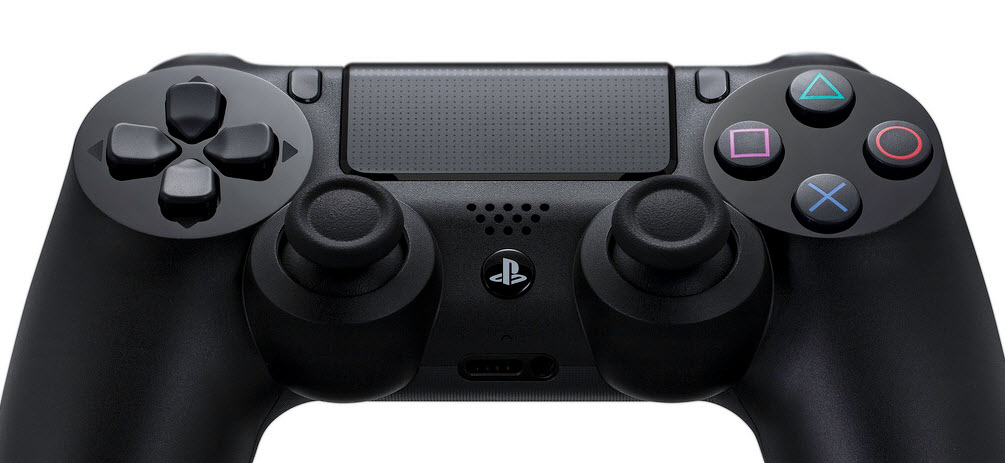
The PlayStation 4, as you’d expect for a seven-years-later follow-up, has impressively bumped specs. An eight-core X86 AMD “Jaguar” CPU and a 1.84 Teraflop AMD Radeon graphics engine (with “18 compute units”) comprise the central processing on the PS4, CNET reports.
There’s also 8GB of fast GDDR5 memory. The PS4 will use a hard drive for storage versus an SSD, but the included capacity in the box (and whether it’ll be as easily swappable as the PS3′s hard drive) hasn’t been specified.
Immediacy of response reducing lag time while accessing content is also one of the promised PS4 features (unlike the extremely laggy Wii U, perhaps). The PS4 will allow speedy background downloading, and Sony claims games will even be playable as they’re being downloaded.
(More)

Comments (15)
by Dan Pendergrass
I have a hard time with the whole Neuron as a quantum computer model. I see it as a quantum imprinting device that either propagates or mitigates energy wave forms. Sort of like watching waves form on the surface of a lake. noticing that sometime they enhance each other and other times they cancel each other out. Only in this case the shore of the lake is 3d and can transmit the propagated or attenuated signal to the next recognition level or recognizer group (as the case may be). I think cracking the neuron is going to easier than anticipated – not harder. As for the PS4 – marketing is too much a factor to make any assumptions.
by snake0
All of you are overlooking Sony’s plans with Gaikai. Obviously it won’t work perfect day 1 but soon we will see fully realistic raytraced games running on Sony’s server farms to be played through the cloud. The main obstacle in the near future is broadband speed, not doubling of transistors.
by Editor
How realistic is that? This might work for South Korea, for example, but any info on Sony’s assumptions for bandwidth increases in the U.S.?
by SmartAndSober
Such things like “raytracing” and other technology/techniques used in video games should be combined with AI and cyborgization researchs.
Ask yourself: how may such techs (PS, XBox and the like) do “direct benefit” to the world?
by Hoss
The time that it takes for the world’s most powerful supercomputer to be reduced to a $400 consumer gadget is now just 17 years. Whoa!
by DrDubious
Is anyone else noticing that the rate of change of technological advancement seems to be slowing?
After SEVEN YEARS this is the best Sony can do? Back in mid-2000 I was expecting a lot more in the next 10-15 years than we have actually seen. Back in 2006, a PS5 with photorealistic 360 degree immersive display seemed a possibility by now. Instead, we get examples of PS4 games that could have been produced for the Sega Dreamcast in 1999.
I just upgraded my PC from a model produced in 2008 and, while the specs look better on paper, the user experience is hardly different from 12 years ago.
Just piling up gigabytes and petaflops doesn’t necessarily improve things any more than a bigger hammer makes a better house.
If you look at what neuroscience DOESN’T know about the brain and consciousness, we are less than Australopithecus trying to figure out a cell phone.
Better stop wishing for Mind Downloads and electronic immortality folks.
It ain’t gonna happen in any or our lifetimes.
by Erik
I think the problem is that games today relies on polygon based 3d hardware acceleration. There was more innovation when game developers had to write their own rendering algorithms; Wolfenstein (1992), Doom (1994), Quake (1996), Half Life (1998). That was a lot of progress in a few years.
Today all the games look the same. Let’s hope we don’t see hardware accelerated neural networks.
by A4i
AMD Jaguar CPU core is exactly 3.1mm^2, so it’s smaller than Intel Atom core and compatible with ARM Cortex-A15. That is not a supercomputer core, but tablet/smartphone CPU core. This year there will be 8 core smartphones on the market, so PS4 is a glorified tablet/smartphone, that will be outpaced by the mobile gadgets in the same year of it’s announcement. Don’t make general concussions just from a single Sony product.
by SmartAndSober
Again, I wish to quote Dr. Vinge (his 1993 essay):
And yet there was another minority who pointed to, and conjectured that the computational competence of single neurons may be far higher than generally believed. If so, our present computer hardware might be as much as _Ten_ Orders of Magnitude short of the equipment we carry around in our heads. If this is true, we might never see a Singularity.
Ten orders of magnitude equals 10 billion. It takes, assuming 2 years per doubling, 20 years to growth tenfold (in other words, grow a “magnitude”).
10-billion-fold growth takes about sixty-seven years to reach.
1993 (time of Vinge’s essay) plus 67 equals 2060. Give another 20 year for the maturity of brain-scanning technology.
Which takes 2 to 4 more decades than Kurzweil’s scenario, but reachable nevertheless.
by SmartAndSober
Correction: “… 20 years to growth tenfold (in other words, grow a “magnitude”).”
Should be: “20 years to growth a thousandfold (in other words, grow 3 “magnitudes”). 20 years gives 10 doublings. 2 ^ 10 equals 1024, which may be rounded to one thousand.
by SmartAndSober
I also believe that the biological brains contain a large amount of Goldberg-ic unnecessary details. A cleverly written AI will probably occupy a smaller storage, use less energy while perform every work humans can perform.
Neglecting unimportant functions like art, a swarm of (many different types of) intercommunicating robots will probably suffice to replace humanity.
by melajara
@DrDubious
You are right. IMHO, the problem stems in that the buds of innovation concentrate in downsizing. The wave passes and the other segments upstream are relatively untouched anymore, even if, obviously they benefit from the trend in their building blocks.
Mainframes were less innovative when the minis came up. Then innovations concentrated in workstations, then in the PC revolution, then in laptops, now it is in tablets and smartphones. Tomorrow it will be in wearable computing.
Fortunately I see a true paradigm shift with the advent of “cognitive” computing with high density/low power memristors based hardware.
This move will fuel truly versatile robots too.
In the mean time (up to 4 years) we have to be patient.
by von
The fact that many people find the PS4′s specs unsatisfactory for a 7-year wait speaks only on the competitiveness of Sony and their business model. Of course we do not fully understand consciousness; it’s just 2013.
by SmartAndSober
I believe that, with decades of development, we should be able extract large amount of data (on psychology, photography, military planning and other fields) from video game developers and players.
I believe that are more useful data available than the amount we had already extracted and used.
I am also aware of the fact that video games are great tools for artistic expression.
Dr. Vinge, in his famous 1993 essay, wrote: “Develop human/computer symbiosis in art: Combine the graphic generation capability of modern machines and the esthetic sensibility of humans. Of course, there has been an enormous amount of research in designing computer aids for artists, as labor saving tools. I’m suggesting that we explicitly aim for a
greater merging of competence, that we explicitly recognize the cooperative approach that is possible.” The actual progress from then to now, I believe, must had outperformed his expectation.
by SmartAndSober
I believe the human sensibility in the art (and less so in science and technology) is caused by the great parallelism (and perhaps some degree of quantum computing) of the human brain. Actually, in special cases, humans can have a equal sensibility in science, like the autist-genius from the movie Rain Man.
If we can channel (thoroughly) such enormous computing power for research in science and technology, we can bring forth the Singularity much earlier.