Unleash your inner Asimov
October 28, 2012
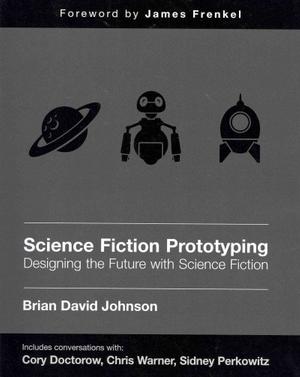
Writing science-fiction stories about encounters with imaginary worlds and futuristic devices could have a decisive influence on innovation, G. Pascal Zachary, writer and professor at Arizona State University, suggests in IEEE Spectrum.
David Brian Johnson, Intel’s staff futurist, even insists in a recent book, Science Fiction Prototyping, that by writing stories about future products, engineers can do a better job of actually making them, he says.
“Recall that, in 1988, Apple made a promotional video that introduced an imagined tablet computer called the Knowledge Navigator, which even possessed a talking virtual assistant uncannily similar to the iPhone’s Siri. Twenty‑two years later — when the key components became small, cheap, fast, and smart enough — the fictional Knowledge Navigator morphed into the iPad.”
Also, human values are sometimes not reflected in new gadgets and systems and that engineers can better account for the “human dimension” in their work if they imagine what the world would be like — and what adaptations people would have to make — if their inventions came into widespread use, he says.
He recommends three easy steps to getting started in the article.
Comments (7)
by godot
“…Knowledge Navigator morphed into the iPad.”
It was really Alan Kay’s “Dynabook” writings from the ’60s which morphed into all its children.
by Matthew
A lot of the things/ideas we take for granted today, have been laughed at before they became reality.
Science Fiction is a great medium for thinkers/authors to share ideas with, ideas that might be laughed at if written as non-fiction. Ideas relating to technology/science or political & ideological/moral in nature.
Some sci-fi is written purely for entertainment, but then again…this could apply to some presidential speeches.
by Gorden Russell
When Asimov was alive he hated the term “sci-fi.”
“Is that something you would play on your sci-fi set?” he would quip.
by emhodew
SciFi is not about science, but Sociology and Politics. It is a discussion about how we interact together. It is a tool created in a land without the freedom of speech (England) to present perceived evils of the governments policies. (Gulliver’s Travels) It has lasted because it obfuscates the arguments in a way that allows us to consider other ideas without the feeling we are being preached to.
by Aaron
Eh? You seem a little pessimistic for some reason…In the end, you’re both right and wrong (in my opinion). Most fictional literary works (and indeed some non-fictional works) are about sociology and politics and how we interact with each other. SciFi simply incorporates fantastical and unreal ideas to add more room for intrigue and development. It’s called SCIENCE fiction when not abbreviated, so of course it has a relation to science. In the case of science fiction, it uses what most people popularly generalize as “advanced” or “advanced science” and then works that into the story while subtly emphasizing those things like sociology and politics and human interaction. It certainly does help us to “obfuscate the arguments in a way that allows us to consider other ideas without the feeling we are being preached to,” but that is definitely not the reason why it has lasted as long as it has.
by emhodew
Have you read much Asimov? Especially his anthologies? He covers exactly what and why great SciFi works. As far at the reason for SciFi, I am being accurate, not pessimistic. The first work of ‘Science Fiction’ was Gullivers Travels. A work, that had it not been guised as fiction, would have landed the author in jail. The ‘Science’ in good science fiction does not have to be real, or work. It is just a tool used set up a situation. To exaggerate an idea beyond the ‘real’. Asimov’s Pisotronic brain, his robots. The Mule’s powers in the Foundation series. I was commenting on SciFi because the article seems to imply by writing more fictional stories we will advance scientifically. Yes many scientists have been stimulated by SciFi stories. But the real impediment to scientific advancement is our current copyright/patent system. A system being changed into a method of crushing any advancement that threatens current market leaders.
Here is some great non-fiction to read about our ability to advance new ideas.
http://papers.ssrn.com/sol3/papers.cfm?abstract_id=2158874
by infinitos
I always said that to my friends when we see a SCI-FI movie but they luagh at me :S