Why some nations become wealthy and powerful, while others remain stuck in poverty
March 26, 2012
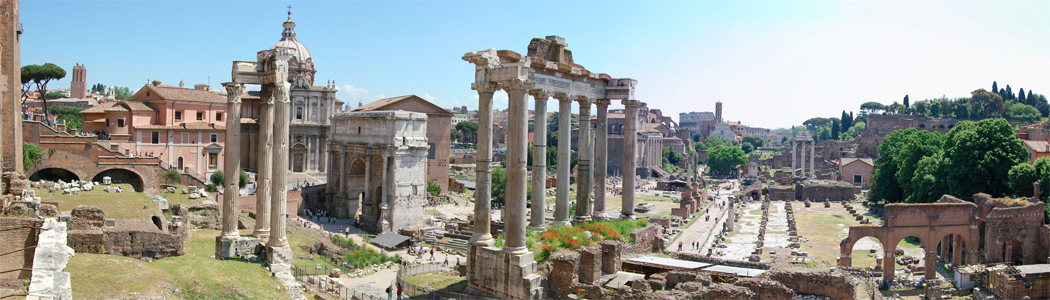
Why do some nations, such as the United States, become wealthy and powerful, while others remain stuck in poverty? And why do some of those powers, from ancient Rome to the modern Soviet Union, expand and then collapse?
Politics makes the difference, say economists Daron Acemoglu of MIT and James Robinson of Harvard University in their new book, Why Nations Fail. Countries that have what they call “inclusive” political governments — those extending political and property rights as broadly as possible, while enforcing laws and providing some public infrastructure — experience the greatest growth over the long run.
By contrast, Acemoglu and Robinson assert, countries with “extractive” political systems — in which power is wielded by a small elite — either fail to grow broadly or wither away after short bursts of economic expansion.
As Acemoglu and Robinson see it, the “turning point” in world economic history was England’s “Glorious Revolution” of the late 1600s, the key moment in a longer-term process that expanded the political and property rights (including patent protections) available to people. Plenty of innovators existed before then, but had not been rewarded for their efforts; by the late 1700s, England had embarked on the largest sustained period of economic growth since the Neolithic age.

Comments (23)
by V
Tradition is the enemy. The U.S is wealthy and powerful because it’s not being held back by years of tradition. We are free to carve our future as a country. We are young. Perhaps the way to solve this problem: Countries that are full of tradition are split up and new countries can rise up with new modern governments and modern economies: micro-countries. One can dream.
by Cybernettr
Don’t expect a Harvard prof to be honest on a subject like this or to avoid obfuscating the issue. The reason a nation succeeds or fails is quite simple: its people. When the population changes, e.g through widespread immigration, what once made a nation great ceases to be. This is the reason nations have fallen throughout history. It’s really that simple.
by NakedApe
Oh my! What a foolish comment! The exact opposite is true. Immigrants value the better system of their adopted country and work like the dickens to make something of themselves. I should know, since I escaped to Canada from Communist Eastern Europe. It is the long-time residents of a country who take it for granted and often become lazy and complacent.
by Harry Pachty
This reminds me to the theory that all ratios between good and evil gods depend on the day and night ratio of the birthplace of the religion.
Or that most prosper nations have a balanced ratio of the four seasons and all poor nations have only 3 seasons.
This is not science, this is equal to top the head of a chicken and pick the word on which the body falls after running headless.
by DKebab
Sounds like 1950s bollocks dragged through 1990s BS and with a fresh coat of toady to me.
by Jon
So, you can get a chair in MIT an say all this bullshit and even publish a book???? WTF? It was USA the country with slaves until recently (free people that can innovate :), and what about the “indians” in North America?
In South America “indians” had the status of citizens of the Spanish Empire and more or less free.
Good lord, please hand this guy a book on history… or movies/documentaries if he is not able to read.
by Paul Brennan
Chinese society is famed for its inclusiveness.
by thane
I think the neocons will run with this, but ignoring half the story. The part about public infrastructure is critical. Consolodated power can be the preatorian guard, east india trading co, a military industrial complex, or anything labeled as too big to fail. There should be a balance of capitalism and socialism, just like sodium and chlorine, alone they deadly, together they’re quite tasty :)
by Spikosauropod
Salt swells your ankles and raises your blood pressure. Drink the pure water of liberty.
by Spikosauropod
So Laissez-faire works and central planning doesn’t. Not really a big surprise.
The truth will make libertarians of all of us.
by GamerFromJump
And now we’re in a place where the 5 richest counties in the US are adjacent to or part of Washington DC.
Explains a lot.
by Fred Stitt
Past historians have had difficulty accepting the obvious:
People who are freest are also the most productive. They
create the most wealth, and generate the most advances
in the arts and sciences.
The cultures of Ancient Greece, Republican Rome, enlightened
Islam, the Renaissance (of Florence, Venice, Amsterdam), then
the Enlightenment and the Industrial Revolution were relatively
free and prospered accordingly.
The cultures that are most repressed economically, politically,
and intellectually have been and continue to be the most poverty
stricken in wealth, culture, and technology.
It seems the word is getting around.
Fred Stitt
Free Minds Institute
by Diana
The U.S. wealth is a matter of perspectives, what about the trillions of debt & deficit? Also how is that wealth distributed amongst the citizens? To compare the success of the U.S. a nation only a few hundred years old to civilizations such as the Roman etc. which existed for millennia is myopic to say the least (possibly tinged w/hubris).
by Riche
Why should weatlh be distributed.You should only be limited by your drive, ambition, education and intelligence.Not all of us are Jobs or Gates nor do we deserve their success.You should only have the opportunity to succeed not the guaranty.
by Bennie Beaver
A good study. An interesting video.
No one can present this complete idea in just a small article or video, but it reads and sounds like a good book to read.
by Remove all Doubt
Geography matters more than politics. It would be nice to think that the political system is the key component but that is not the case. This is not to say that politics don’t play a part but good geography trumps bad politics the best politics will not offset bad geography.
by Rob Larson
It’s gratifying to see that at least some academics are starting to get a clue. Truth be known, the ideas espoused in this book are not new. Ludwig von Mises in particular and the Austrian School of Economics has been saying much the same thing for a century now.
The real fight will come if and when governments are allowed to police the Web. It remains to be seen if this means of communication is as thoroughly compromised by spin and bias as older forms of media like television and film.
Or will the message of liberty, property and natural rights spread too far, too fast before those who wish to control people can clamp down on what few outposts of liberty remain.
With any luck there will be more men and women like Acemoglu and Robinson who light the way for a brighter future for mankind.
by Wesley
Freedom & Unalienable Rights
by Vlad
this is pure propaganda. Why do some countries fail? why does the US support either militant rebels or oppressive dictators throughout the developing world? The answer to why do some countries fail can be written in a page. Ignore the propaganda piece “Fall of Nations” I’m actually pretty surprised this article is on this website and considering not even visiting it again. Horrible. Not to mention “the small elite” are the ones running the US so this whole argument is quite laughable, but of course why listen to me when a Harvard professor is spewing his rhetoric? What a beautiful system.
by Aezel
Yes indeed, why would I listen to you when someone who has actually spent their life researching the history of this topic.
Another armchair critic with nothing but hot air to back it up………
by Aezel
“…..when there is someone……”
-whoops, fixed.
by Schrodinger's Cats
I think your characterisation of the US political system is a recent phenomena: It wasn’t always this way. The US was reluctant to exert political and economic power over other nations prior to WW II. I would suggest that the greatest period economic growth and wealth started during WW II, and accelerated with the growth of civil rights and the rise of the “middle class”. Unfortunately, positions of wealth and power attract the corruptible. They attempt to concentrate wealth and power to insure their surviva, without with they would very likely perish. Witness the decline of the middle class. One can argue that there are more millionaires in the US now then at any other time, however I wonder if the rate of growth of the upper class isn’t outstripped by the decline of the middle and lower classes. Many (most?) politicians are former lawyers, a profession that has a reputation of excelling at twisting words, deception, and misdirection. And the lawyers almost always get paid regardless of the outcome of their case. The American Dream ™ is getting increasingly difficult to realise. It used to be along the lines of “Be honest and honourable, work hard, and your Dream shall be within your grasp”. But as many discovered, you can do much better if you don’t play fairly, especially if you aren’t particularly well adept at your trade/profession. Much better to break the law / screw the public over, etcetera, and ask for forgiveness than to ask permission: A tried, tested, and true principal practised by corrupt corporations everywhere (PG&E, Enron, MCI WorldCom, Purdue Pharma, the tobacco industry – the list goes on). Unfortunately, the problem is more than a few corrupt officials; the system itself is broken. Many acts of great evil have been accomplished by distributing the ill amongst many players so that no one individual was evil, but the combined result certainly was. Just my opinion; worth every penny you didn’t have to pay.
by Editor
Re “your characterisation”: As noted, KurzweilAI quoted Daron Acemoglu of MIT and James Robinson of Harvard University. Their opinions do not necessarily represent ours.